
Emergency
How to Spot Hail Damage on an Austin Roof (Visual Guide)
Published 2026-07-17T00:00:00+00:00
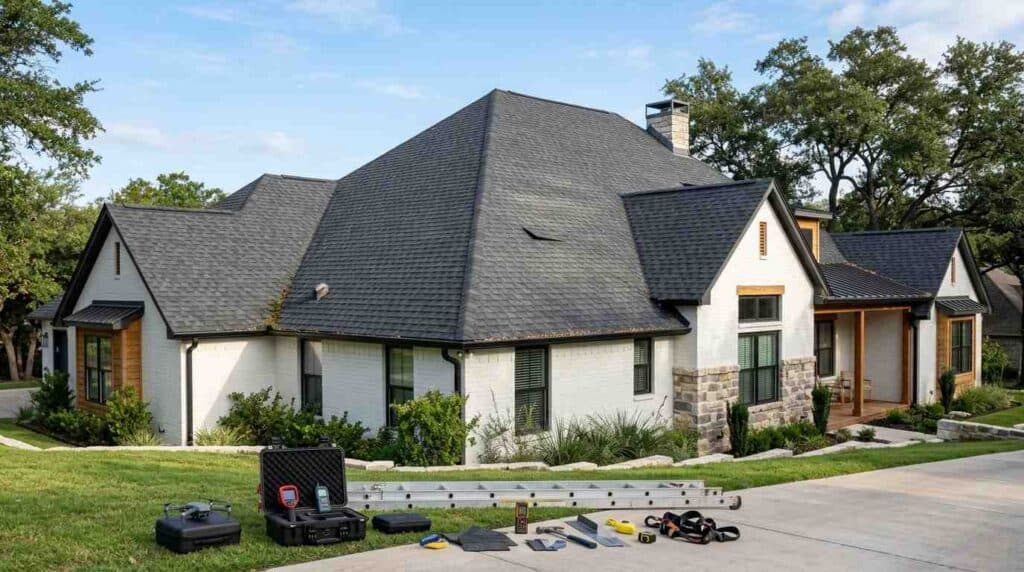
Hail damage on an Austin roof shows up as circular impact marks 1/2 inch to 2 inches in diameter with granules knocked away, exposing the black asphalt mat underneath. Damage is often invisible from the ground, the reliable diagnostic markers are granule accumulation in gutters and downspouts, dents on soft metals (gutters, downspouts, HVAC fins), and impact marks in test squares chalked out on the roof.
Hail damage on an Austin roof shows up as circular impact marks 1/2 inch to 2 inches in diameter with granules knocked away, exposing the black asphalt mat underneath. Damage is often invisible from the ground, the reliable diagnostic markers are granule accumulation in gutters and downspouts, dents on soft metals (gutters, downspouts, HVAC fins), and impact marks in 'test squares' chalked out on the roof by inspectors.
What does hail damage look like on asphalt shingles?
Circular impact marks 1/2 inch to 2 inches in diameter where granules have been dislodged, exposing the darker asphalt mat below. Impact marks feel slightly soft or spongy when pressed with a fingernail (the shingle mat has been compressed). Fresh impacts are cleaner-edged; old ones weather over. On architectural (dimensional) shingles, impacts often show up as scuffed or crushed granule clusters at the shingle center rather than crisp circles.
Why is hail damage usually invisible from the ground?
Two reasons. First, impact marks on asphalt shingle are small (1/2 inch to 2 inches) and blend visually with the shingle texture at even 20 feet distance. Second, most Austin homes are 1-2 stories with roof pitches that hide the outer 6-8 feet of roof surface from ground-level view. A ground-level walk-around will miss 80-90% of hail damage on a typical hail event.
What are the reliable non-roof indicators of hail damage?
Four ground-observable indicators tell you a hail event was significant enough to damage your roof: (1) granule accumulation in downspout discharge areas, after rain, look for dark sand-like granule deposits at the base of downspouts; (2) dents on gutters, downspouts, and gutter guards, soft-metal denting is diagnostic of hail size 1 inch or larger; (3) damaged window screens and window frames, hail large enough to dent screens is large enough to damage shingle; (4) scars on wood fence tops, deck rails, or exposed lumber, hail impacts leave clean bright marks on weathered wood.
What is a 'test square' and why do insurance adjusters use them?
A test square is a 10-foot by 10-foot area chalked out on the roof by an inspector. The inspector counts qualifying hail impact marks within the square, then repeats on multiple slopes and orientations. Most Texas insurance carriers require 8 to 10 qualifying impacts per test square across multiple slopes to approve a full roof replacement. Fewer impacts trigger partial repair, not full replacement.
How can I check for hail damage safely from the ground?
Walk around the house immediately after any storm event and photograph the following: (1) gutter dents and damage, take close-up photos of any dented sections; (2) downspout condition; (3) window screens; (4) any wood fence, deck rail, or exposed lumber; (5) HVAC condenser fins, hail bends aluminum fins, visible on the outdoor AC unit; (6) any obvious roof damage visible from the ground like missing shingles, exposed underlayment, or displaced ridge cap. These photos become primary claim evidence.
When should I call a contractor for a professional inspection?
Immediately after any hail event where hail size reached 1 inch (nickel-sized) or larger, including brief cells that dropped only a few minutes of hail. Also after any significant wind event (60+ mph gusts). And after any storm where you find granule accumulation in downspouts, dents on gutters, or damaged window screens. Tarrytown Roofing offers free storm-damage inspections across Greater Austin within 24-48 hours of the event.
What does a professional hail damage inspection include?
Our standard inspection: 60-90 minute roof walk-through with a senior estimator; 20-60 annotated photos of every problem area; granule-loss quantification and mat-vs-substrate impact classification; test-square documentation on multiple slopes; NWS storm-report matching to the specific event date and hail size; written report within 24 hours; and, if damage is claim-worthy, adjuster-meeting attendance at no additional cost.
Can I inspect the roof myself?
We strongly recommend against it. Post-storm roofs are wet, may have missing sections you can't see from below, and roof access without proper safety equipment is the #1 cause of homeowner injury after storm events. Additionally, homeowner-collected damage documentation without contractor context is often disputed by adjusters. A professional inspection is the safer and more effective path.
How long do I have to file a hail claim in Texas?
Under most Texas homeowner's policies, you must notify the carrier of loss 'promptly' after the event, practically 3-7 days. Most carriers accept claims filed within 1 year of the storm date; some policies extend to 2 years. Filing quickly makes it easier to match damage to the specific storm via NWS SPC storm reports.
What happens if I file a claim and no damage is found?
Nothing negative in most cases. A single filed-and-closed claim without payout typically does not raise premiums directly, though it does appear on your CLUE report for 7 years. To avoid an unnecessary file, get a professional inspection first, if damage isn't claim-worthy, we'll tell you honestly and you can decide whether to file or not.
What if the damage looks minor, should I still get it inspected?
Yes, for two reasons. First, granule loss and impact damage that looks minor from the ground often reveals more extensive substrate damage on close inspection, small impacts can create long-term leak paths. Second, if a future insurance claim ever asserts prior damage, having a professional baseline inspection documented immediately after this storm event is your best defense.
Ready to have your roof inspected after a hail event?
Tarrytown Roofing offers free storm-damage inspections across Greater Austin. Call (512) 777-1219 or book online, we typically respond within 24-48 hours during major storm response and prioritize homes with active leaks.
Ready for the next step?
Free inspection, real answers, no pressure.