
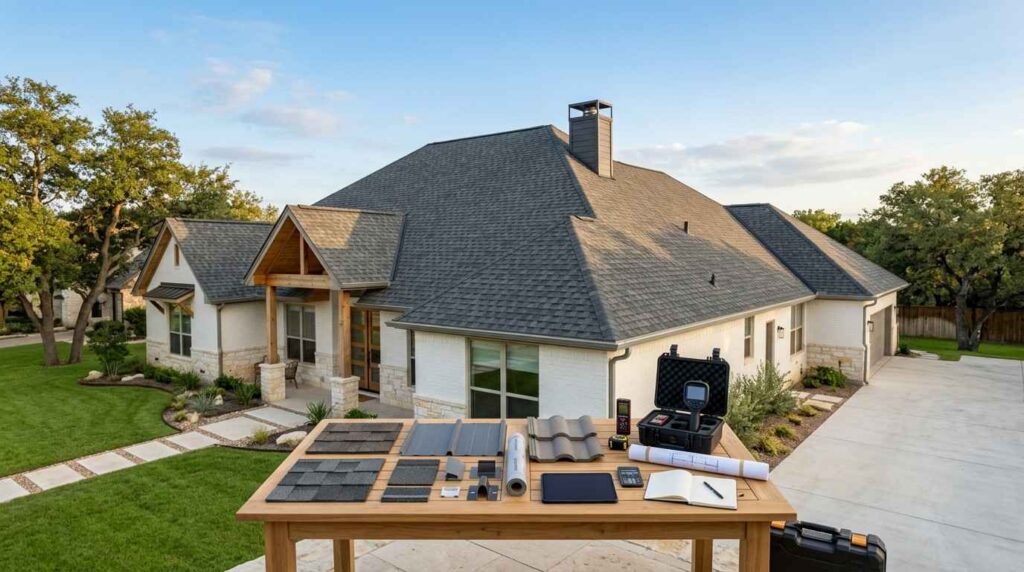
A new roof installation in Austin, TX typically costs between $8,000 and $25,000, depending on the size of your home, the roofing material you choose, and the complexity of the labor involved. Most homeowners pay somewhere in the $12,000 to $18,000 range for a standard asphalt shingle replacement on a 2,000-square-foot home.
Knowing what drives that number and what can push it higher helps you budget accurately and avoid surprises when the estimate arrives. This breakdown covers material pricing, labor rates, and the additional costs that often catch homeowners off guard.
This guide covers material costs by type, Austin-area labor rates, overlooked fees, and how to decide between repair and full replacement.
These figures reflect material and labor combined. Roof pitch, existing damage, and material upgrades all affect where your project lands within these ranges.
Understanding the full cost of a new roof starts with knowing what the replacement process involves our roof replacement guide walks through every stage homeowners in Austin should expect before the first nail is driven.
What Does a New Roof Installation Cost in Austin, TX?
The total cost of a new roof installation depends on three core variables: the size of your roof, the material you select, and the labor required to complete the job. In Austin, where summer heat and seasonal hailstorms put real stress on roofing systems, material selection carries extra weight. Most roofing contractors price jobs by the square a roofing square equals 100 square feet of roof surface. A 1,500-square-foot home typically has a roof surface of 1,700 to 2,000 square feet once pitch and overhang are factored in. A 2,500-square-foot home may have a roof surface closer to 2,800 to 3,200 square feet. Here is a general cost range by home size for a standard asphalt shingle installation in the Austin market:| Home Size (sq ft) | Estimated Roof Surface | Estimated Total Cost |
| 1,000–1,500 | 1,200–1,800 sq ft | $7,000–$12,000 |
| 1,500–2,500 | 1,800–3,000 sq ft | $10,000–$18,000 |
| 2,500–3,500 | 3,000–4,200 sq ft | $16,000–$26,000 |
| 3,500+ | 4,200+ sq ft | $24,000–$40,000+ |
Roofing Material Costs Compared
Material selection is the single largest variable in your roofing budget. The price difference between the most affordable and most premium options can be significant, and the right choice depends on your budget, your home’s architecture, and how long you plan to stay in the property.Asphalt Shingles
Asphalt shingles are the most common roofing material in Austin and across the country. They offer a reliable balance of affordability, durability, and ease of installation. Three-tab shingles sit at the lower end of the cost range, while architectural (dimensional) shingles cost more but last longer and carry better wind resistance ratings. Material cost range: $1.50 to $5.50 per square foot installed. Architectural shingles are the standard recommendation for most Austin homes. They typically carry a 30-year manufacturer warranty and perform well against the hail and wind events common in Central Texas.Metal Roofing
Metal roofing has grown significantly in popularity across Austin due to its longevity, energy efficiency, and low maintenance requirements. Standing seam metal roofs are the premium option, while metal shingles and corrugated panels offer lower entry points. Material cost range: $7.00 to $18.00 per square foot installed. The higher upfront cost is offset by a lifespan of 40 to 70 years and reduced cooling costs metal roofs reflect solar heat rather than absorbing it, which matters in Austin’s climate.Tile Roofing
Clay and concrete tile roofing is common in Austin neighborhoods with Spanish or Mediterranean architectural styles. Tile is extremely durable and handles heat well, but it is heavier than other materials and requires a roof structure built to support the added load. Material cost range: $10.00 to $20.00 per square foot installed. Concrete tile is the more affordable option within this category. Clay tile costs more but offers superior longevity, often lasting 50 years or more with minimal maintenance.Wood Shake and Flat Roofing Options
Wood shake roofing provides a natural aesthetic and moderate insulation value, but it requires more maintenance than other materials and carries higher fire risk a consideration worth weighing in Texas. Material costs typically run $6.00 to $11.00 per square foot installed. Flat roofing systems including TPO, EPDM, and modified bitumen are common on low-slope residential additions, garages, and some contemporary home designs. Costs range from $4.00 to $10.00 per square foot depending on the membrane type and installation method. Choosing the right material affects both your upfront investment and your long-term maintenance costs our roofing materials guide covers the full performance and durability profile of every major option available to Austin homeowners.Labor Costs for Roof Installation in Austin
Labor typically accounts for 40 to 60 percent of the total cost of a new roof installation. In Austin, roofing labor rates have risen steadily alongside the region’s construction demand and population growth. For a standard asphalt shingle installation, labor costs in Austin generally run $2.00 to $4.50 per square foot. For metal roofing, labor costs increase to $3.50 to $7.00 per square foot due to the specialized skills and tools required. Tile installation labor runs $4.00 to $8.00 per square foot.What Drives Labor Pricing Up or Down
Several factors affect where your labor cost lands within these ranges: Roof pitch: Steeper roofs require more safety equipment, slower movement, and additional crew time. A roof with a 6:12 pitch costs more to install than one with a 4:12 pitch. Tear-off requirements: Removing one or more layers of existing roofing adds labor time and disposal costs. Most Austin building codes allow a maximum of two shingle layers before a full tear-off is required. Roof complexity: Roofs with multiple valleys, dormers, skylights, or chimneys require more precise cutting, flashing work, and installation time than simple gable roofs. Crew size and scheduling: Peak season demand typically spring and fall in Austin can affect both availability and pricing. Scheduling during slower periods may offer some cost flexibility. Before any installation begins, a professional assessment of your existing roof structure is essential our roof inspection services identify structural issues that could affect labor scope and final project cost.Additional Cost Factors Homeowners Often Overlook
The material and labor estimate covers the core of your project, but several additional costs are standard parts of most roofing installations and should be included in your budget from the start. Permits: Austin requires a building permit for most full roof replacements. Permit fees typically range from $150 to $500 depending on project scope. A reputable contractor will pull the permit on your behalf and include it in the estimate. Tear-off and disposal: Removing old roofing material and hauling it away adds $1.00 to $2.00 per square foot to the project cost. This is separate from the installation labor rate. Decking repair or replacement: If the plywood or OSB decking beneath your shingles is rotted, warped, or damaged, it must be replaced before new roofing is installed. Decking replacement typically costs $2.00 to $4.00 per sheet of plywood, and the number of sheets needed is not always known until tear-off is complete. Flashing replacement: Flashing seals the joints around chimneys, skylights, vents, and roof valleys. Replacing failed or corroded flashing adds $200 to $500 or more depending on the number of penetrations. Underlayment upgrades: Standard felt underlayment is included in most base estimates. Synthetic underlayment or ice-and-water shield recommended in areas prone to wind-driven rain adds cost but improves long-term protection.Permits, Disposal, Decking, and Flashing
When these additional items are factored in, it is common for the final project cost to run 10 to 20 percent higher than the initial material-and-labor estimate. Budgeting for this range from the start prevents surprises at the invoice stage. When decking damage or failed flashing is discovered during tear-off, the project scope can expand quickly understanding roof repair costs in advance helps homeowners budget for these common surprises without delay.Repair vs. Replacement: How to Know Which One You Need
Not every roofing problem requires a full replacement. Understanding when repair is the right call and when replacement is the smarter long-term investment can save or cost you thousands of dollars depending on which direction you choose. Repair is generally the right choice when:- The roof is less than 15 years old and damage is isolated to a specific area
- Less than 25 to 30 percent of the roof surface is affected
- The underlying decking and structure are sound
- The existing shingles are still within their warranty period
- The roof is approaching or past its expected lifespan (20 to 25 years for standard asphalt shingles)
- Damage is widespread across multiple sections
- Repairs have been made repeatedly in recent years
- Energy bills have increased noticeably, suggesting insulation or ventilation failure
- A home inspection or insurance adjuster has flagged the roof for replacement
How to Get an Accurate Roofing Estimate
A roofing estimate should be detailed, itemized, and based on a physical inspection of your roof not a satellite measurement alone. When comparing estimates from multiple contractors, look for the following in every proposal:- A line-by-line breakdown of material costs by type and quantity
- Labor costs stated separately from material costs
- Permit fees included or explicitly excluded with explanation
- Tear-off and disposal costs itemized
- Warranty terms for both materials and workmanship
- A clear timeline and payment schedule