
Roof Replacement Financing and Payment Options
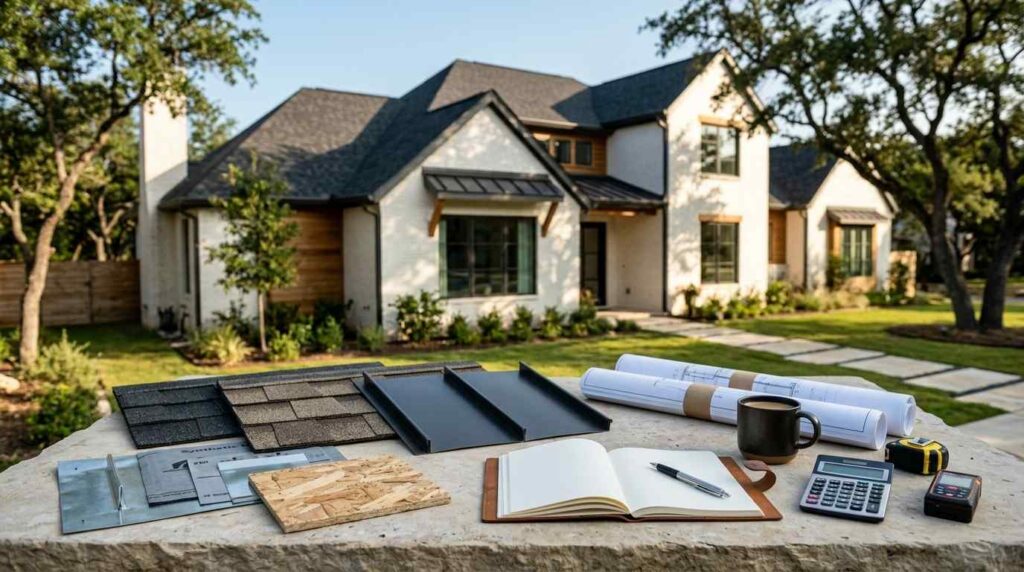
Replacing a roof in Austin, TX typically costs between $8,000 and $20,000 or more depending on size, materials, and labor and most homeowners need a clear plan for how to pay for it before work begins.
Understanding your financing options now prevents rushed decisions later, especially when storm damage or a failing roof forces the timeline.
This page covers every major payment path available to Austin homeowners, from contractor financing and home equity loans to insurance claims and practical budgeting strategies.
What Does a Roof Replacement Actually Cost in Austin, TX?
Before choosing a payment method, you need a realistic number to work with. Roof replacement costs in Austin vary significantly based on the size of your home, the roofing material you select, and the condition of your existing roof deck.
For a standard single-family home in the Austin area, most homeowners spend between $8,000 and $18,000 for an asphalt shingle replacement. Metal roofing systems typically range from $15,000 to $30,000 or higher. These figures include materials, labor, tear-off of the old roof, and disposal but not always upgrades like improved underlayment, ventilation corrections, or flashing replacements, which add to the total.
Key Factors That Affect Your Total Roofing Cost
Several variables move the final number up or down. Roof pitch is one of the most significant steeper roofs require more safety equipment and slower installation, which increases labor hours. The square footage of your roof (measured in roofing squares, where one square equals 100 square feet) directly drives material costs. Deck condition matters too: if your plywood sheathing has rot or damage, repairs add cost before a single shingle goes on.
Local labor rates in Austin also reflect the region’s construction demand. Contractor availability, permit requirements through the City of Austin, and material lead times all factor into your final quote. Our roofing costs and pricing breakdown explains how each variable is calculated and what you can do to reduce unnecessary expenses before you request your first estimate.
Average Cost Ranges by Roofing Material
| Roofing Material | Estimated Cost Range (Austin, TX) |
| 3-Tab Asphalt Shingle | $7,000 – $11,000 |
| Architectural Asphalt Shingle | $9,000 – $15,000 |
| Metal Roofing (Standing Seam) | $18,000 – $32,000 |
| Tile (Concrete or Clay) | $20,000 – $40,000+ |
| Wood Shake | $14,000 – $22,000 |
These ranges are estimates for a 2,000 sq. ft. home. Your actual quote will depend on your specific roof dimensions, pitch, and material grade. Understanding the full scope of what goes into a replacement from material selection to labor and disposal is covered in our roof replacement guide, which walks through every cost component Austin homeowners should plan for before signing a contract.
Roofing Financing Options Available to Austin Homeowners
Once you have a cost estimate, the next step is choosing how to pay. Most homeowners have four realistic paths: contractor-offered financing, personal or home improvement loans, home equity products, or government-backed programs. Each has different qualification requirements, interest structures, and timelines.
Contractor-Offered Financing Plans
Many roofing contractors, including Tarrytown Roofing, offer in-house financing or work with third-party lenders to provide payment plans at the point of sale. These plans are convenient because they are arranged directly through the contractor and often require minimal paperwork. Some promotional offers include deferred interest or low-APR periods for qualified buyers.
The tradeoff is that contractor financing terms vary widely. Some plans carry high interest rates after a promotional period ends, and others include origination fees that are not always disclosed upfront. Before accepting any payment plan from a roofing company, it pays to understand what separates a fair offer from a costly one our page on contractor financing terms outlines the specific clauses, interest structures, and red flags every homeowner should review.
Home Improvement Loans and HELOCs
A home improvement loan is an unsecured personal loan used specifically for renovation or repair projects. These loans do not require home equity and can be funded quickly sometimes within a few business days making them a practical option when a roof needs immediate replacement. Interest rates for unsecured loans are typically higher than secured products, ranging from 7% to 20% or more depending on your credit profile.
A home equity line of credit (HELOC) or home equity loan uses your property as collateral, which generally results in lower interest rates. HELOCs offer flexible draw periods, while home equity loans provide a lump sum with fixed repayment terms. A home equity loan or HELOC can be one of the most cost-effective ways to fund a roof replacement when you have sufficient equity our overview of home equity loan options for roof replacement explains qualification requirements, typical rates, and how to compare lenders.
Government-Backed Loan Programs
The FHA Title I Home Improvement Loan program allows homeowners to borrow up to $25,000 for home improvements, including roof replacement, without requiring home equity. These loans are issued by approved lenders and backed by the federal government, which makes them accessible to homeowners who may not qualify for conventional financing. The U.S. Department of Housing and Urban Development administers the Title I program and maintains a list of approved lenders by state.
Additionally, the Texas State Affordable Housing Corporation offers home repair assistance programs for qualifying low-to-moderate income homeowners in Texas, which may cover roofing costs in certain circumstances.
How to Use Homeowners Insurance to Pay for a Roof Replacement
Homeowners insurance can cover some or all of a roof replacement cost but only under specific conditions. Insurance typically pays when damage is caused by a covered peril, most commonly hail, wind, or falling debris. Damage from normal wear and aging is almost never covered.
What Insurance Typically Covers and What It Does Not
After a qualifying storm event, your insurer will send an adjuster to assess the damage. The adjuster’s report determines whether the damage meets the threshold for a full replacement or only partial repair. Your payout is calculated based on either actual cash value (ACV), which accounts for depreciation, or replacement cost value (RCV), which covers the full cost of replacement with like materials.
Most standard homeowners policies in Texas include wind and hail coverage, but deductibles for these perils are often calculated as a percentage of your home’s insured value commonly 1% to 2% rather than a flat dollar amount. On a home insured for $400,000, a 2% hail deductible means you pay $8,000 out of pocket before insurance contributes anything.
Filing a claim for storm or hail damage involves documentation, adjuster coordination, and contractor estimates our roof insurance claim process guide walks Austin homeowners through every step to maximize their approved payout.
Comparing Payment Options: Which One Is Right for Your Situation?
No single payment method is right for every homeowner. The best choice depends on your equity position, credit score, timeline, and whether insurance is involved.
When to Finance vs. Pay Out of Pocket
Paying cash or writing a check from savings eliminates interest costs entirely and simplifies the transaction. If you have the liquidity and the replacement is not urgent, this is the lowest-cost option over time.
Financing makes sense when the replacement is urgent, when your savings would be significantly depleted by a cash payment, or when a low-interest promotional offer is available. The key is comparing the total cost of financing including all fees and interest against the cost of delaying the replacement or drawing down savings.
The right payment strategy depends partly on whether a full replacement is actually necessary our repair vs. replacement decision guide helps homeowners evaluate their roof’s condition and determine which path delivers better long-term value before committing to a major expense.
How to Evaluate a Roofing Contractor’s Financing Terms
When a contractor presents a financing offer, ask for the full loan agreement before signing anything. Key terms to review include the annual percentage rate (APR), the length of any promotional period, what happens to the interest rate after that period ends, and whether there are prepayment penalties.
Deferred interest plans sometimes marketed as “same as cash” can be particularly costly if the balance is not paid in full before the promotional period expires. In these structures, all accrued interest from the promotional period is added back to the balance if any amount remains unpaid at the deadline.
Legitimate contractors will provide clear written terms and give you time to review them. Pressure to sign financing paperwork on the same day as the estimate is a red flag worth noting.
Budgeting for a Roof Replacement: A Practical Framework
A realistic budget starts with getting at least three written estimates from licensed Austin roofing contractors. Estimates should itemize materials, labor, tear-off, disposal, permit fees, and any identified deck repairs. Comparing line items not just totals reveals where pricing differences actually come from.
Set aside a contingency of 10% to 15% above your highest estimate. Deck damage, ventilation corrections, and flashing replacements are common discoveries once tear-off begins, and these add cost that was not visible during the initial inspection.
If insurance is involved, do not finalize your financing plan until you have a written scope of loss from your adjuster. The insurance payout determines your out-of-pocket gap, which is what you actually need to finance or pay from savings.
A realistic budget accounts not just for the replacement itself but for the ongoing maintenance that protects your investment our roof maintenance planning resource outlines the annual costs and inspection schedule that extend roof life in Austin’s climate.
Conclusion
Roof replacement financing in Austin involves real choices with real cost differences from contractor payment plans and home equity products to insurance claims and government-backed loans. The right path depends on your financial position, your roof’s condition, and how quickly the work needs to happen.
Understanding each option before you receive an estimate puts you in a stronger negotiating position and helps you avoid costly financing mistakes that outlast the roof itself.
At Tarrytown Roofing, we help Austin homeowners navigate both the roofing work and the payment process contact us today to get a detailed estimate and discuss which financing option fits your situation.
Frequently Asked Questions
What credit score do I need to qualify for roofing financing?
Most contractor-offered financing programs require a minimum credit score between 580 and 640, though better rates are available above 700. Some lenders offer options for lower scores with higher interest rates or co-signer requirements.
Can I finance a roof replacement with no money down?
Yes, some contractor financing programs and personal loan products offer zero-down options for qualified borrowers. Government-backed FHA Title I loans also do not require a down payment, though they do have income and property eligibility requirements.
How long does it take to get approved for roofing financing?
Contractor-offered financing decisions are often made within minutes at the point of sale. Personal loans from banks or credit unions typically take one to five business days. HELOCs can take two to six weeks due to the appraisal and underwriting process.
Does homeowners insurance always cover roof replacement?
No. Insurance covers roof replacement only when damage results from a covered peril such as hail, wind, or fire. Damage from age, wear, or lack of maintenance is excluded. Your policy’s deductible and coverage type (ACV vs. RCV) also affect how much you actually receive.
Is a HELOC a good option for paying for a new roof?
A HELOC can be a cost-effective option if you have sufficient home equity and a strong credit profile, since interest rates are typically lower than unsecured loans. The risk is that your home serves as collateral, so missed payments carry more serious consequences than a personal loan default.
What is the FHA Title I loan and how does it work for roofing?
The FHA Title I Home Improvement Loan allows homeowners to borrow up to $25,000 for home improvements without requiring equity. The loan is issued by an approved private lender and insured by the federal government. Repayment terms typically range from 12 to 20 years depending on the loan amount.
Should I get financing before or after getting roofing estimates?
Getting estimates first is generally the better approach. Knowing your actual project cost lets you borrow only what you need and compare financing options against a real number. Pre-qualifying for financing before estimates can also strengthen your position when reviewing contractor offers.