What Not to Say When Negotiating
The wrong words in a roofing negotiation cost homeowners real money. Not because contractors are dishonest but because certain phrases signal exactly how much leverage you’re willing to give away before the conversation even starts.
Knowing what not to say is just as important as knowing what to ask. This matters whether you’re getting a repair quote or pricing a full replacement.
We cover the specific phrases that hurt your position, why they work against you, and what to say instead to stay in control of the conversation.
Why Your Words Carry More Weight Than Your Budget
Most homeowners walk into a roofing negotiation thinking the number on the quote is fixed. It rarely is.
Contractors build quotes with some flexibility built in. Where that flexibility goes toward the homeowner or absorbed into margin often depends on the signals you send before the price is even written down.
I’ve seen homeowners with identical roofing scopes get quotes that differ by thousands of dollars. The difference wasn’t the roof. It was how they talked about the project.
Contractors are experienced readers of buyer behavior. They pick up on urgency, uncertainty, and commitment signals fast. When those signals say “this person will pay whatever I quote,” the quote reflects that.
Phrases That Signal You’ll Accept Any Price
These are the phrases that tell a contractor you’re not going to push back. They’re not dishonest things to say they’re just expensive ones.
“I Need This Done as Soon as Possible”
Urgency is the single fastest way to lose pricing leverage. The moment you signal that timeline matters more than cost, you’ve handed the contractor a reason to charge a rush premium.
Roofing schedules have real flexibility. A contractor who hears urgency knows you’re less likely to wait for a competing bid. That changes the number.
Say this instead: “We’re looking to get this scheduled within the next few weeks.” It communicates a reasonable timeline without creating pressure that works against you.
“I Don’t Really Know Much About Roofing”
This one feels honest. And it is. But it’s also an invitation for a contractor to skip the explanation and go straight to a higher number.
Informed buyers get better quotes. Not because contractors are predatory but because they spend less time justifying scope when the homeowner already understands what’s involved.
Before any conversation, learn the basics. Know your roof’s approximate square footage. Know whether you need a repair or a replacement. Know what material is currently on your roof. That knowledge alone changes how the conversation goes.
“Just Tell Me What It’s Going to Cost”
Skipping straight to price before scope is defined almost always works against you. A contractor who quotes before the full scope is clear has every reason to quote high because unknowns get priced conservatively, and conservatively means expensively.
Walk through the scope first. Ask what’s included. Ask what’s excluded. Ask what could change the price once work starts. Then ask for the number.
Phrases That Reveal Your Budget Before You Should
Budget disclosure is one of the most common negotiation mistakes homeowners make. Once a contractor knows your ceiling, the quote tends to find it.
“We Were Hoping to Keep It Under [Dollar Amount]”
This is anchor-setting in reverse. Instead of anchoring the contractor to a competitive price, you’ve anchored them to your maximum. Quotes have a way of landing just below whatever number you name.
Let the contractor quote the job based on scope. If the number comes in higher than you expected, that’s the moment to discuss options not before.
“Our Insurance Is Covering Most of It”
This phrase is well-intentioned but costly. When a contractor hears that insurance is paying, the mental math shifts. The homeowner isn’t spending their own money, so price sensitivity drops and quotes can reflect that assumption.
Your insurance situation is your business. Keep it that way until after you have a quote in hand. At that point, you can discuss how payment works without it influencing the original number.
Phrases That Undermine Your Leverage
Leverage in a roofing negotiation comes from one place: the contractor’s belief that you might choose someone else. These phrases eliminate that belief entirely.
“You’re the Only Contractor We’re Talking To”
Getting multiple roofing quotes is one of the most effective things a homeowner can do both for pricing and for understanding what the job actually involves. Telling a contractor they’re the only one you’re considering removes the competitive tension that keeps quotes honest.
You don’t have to be aggressive about it. Simply not volunteering that information is enough. Let the contractor assume you’re comparing options, because you should be.
“We Really Love Your Work We’ve Already Decided”
Enthusiasm is fine. Premature commitment is expensive. Once a contractor knows you’ve decided, there’s no reason to sharpen the pencil on price.
Save the compliments for after the contract is signed. Before that, let the work speak for itself and keep your decision to yourself.
What to Say Instead Phrases That Keep You in Control
The goal isn’t to be adversarial. It’s to sound like an informed buyer who has options and is making a careful decision. That posture alone changes how quotes come in.
A few phrases that work in your favor:
“We’re getting a few quotes and making a decision by the end of the month.” This signals a real timeline without urgency, and it confirms you’re comparing options.
“We’ve done some research on what this type of project typically costs in Austin.” You don’t have to cite a specific number. Just signaling awareness of the market is enough to shift the dynamic.
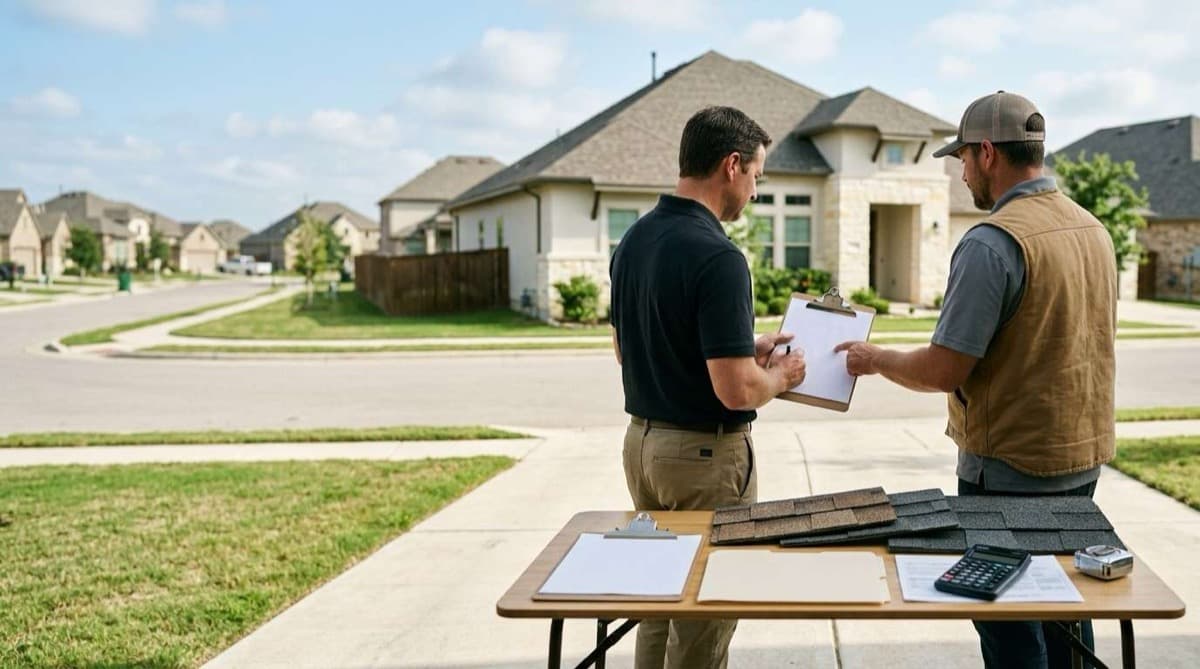
“Can you walk me through what’s driving the cost on this quote?” This is one of the most powerful questions a homeowner can ask. It opens the door to scope adjustments, material alternatives, and legitimate flexibility without asking for a discount directly.
“Is there anything in the scope we could adjust to bring the cost down without affecting the quality of the work?” This invites the contractor to find savings rather than putting you in the position of demanding them.
How Roofing Contractors Actually Price a Job
Understanding where the money goes makes you a better negotiator. A roofing quote isn’t a single number it’s a combination of several cost categories, each with different levels of flexibility.
Materials make up a significant portion of any roofing project. Shingle grades, underlayment quality, and accessory components all affect the total. There’s often legitimate flexibility here a contractor can walk you through material options at different price points without compromising the integrity of the roof.
Labor is largely fixed based on crew size, project complexity, and local market rates. According to the U.S. Bureau of Labor Statistics, roofing labor costs vary meaningfully by region, and Austin’s market reflects strong demand for experienced crews. This is the least flexible line item in most quotes.
Overhead and margin cover the contractor’s business costs insurance, equipment, licensing, and profit. Established contractors with strong reputations carry higher overhead than newer operations, and that’s generally worth paying for.
The flexibility in most quotes lives in materials and project timing. Scope changes, material grade adjustments, and off-peak scheduling are the legitimate levers not pressure tactics.
Negotiating Roofing Costs the Right Way in Austin, TX
Austin’s roofing market has its own rhythms. Storm season drives demand spikes, and demand spikes drive prices up not because contractors are taking advantage, but because crews are genuinely booked and materials are moving fast.
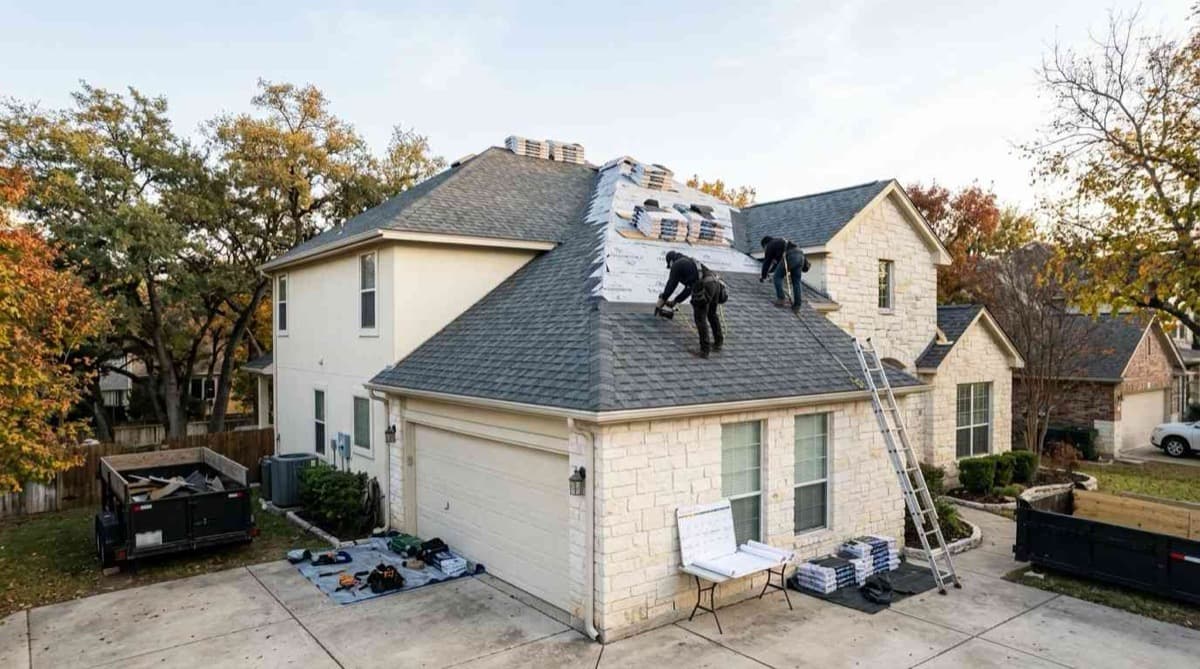
The best time to negotiate roofing work in Austin is outside of peak storm response windows. Late fall and winter typically offer more scheduling flexibility and, in some cases, better pricing on materials. Planning a roof replacement in Austin before the spring storm season puts you in a stronger position than calling after hail has already hit your neighborhood.
We recommend getting at least three quotes for any project over a few thousand dollars. Not to play contractors against each other but because three quotes give you a real picture of what the market looks like for your specific scope.
At Tarrytown Roofing, we walk every homeowner through the full scope of their project before we talk price. We want you to understand what you’re buying and why it costs what it costs. That’s how we build relationships that last longer than a single roof.
Conclusion
The words you use in a roofing negotiation shape the outcome more than most homeowners realize. Urgency, budget disclosure, and premature commitment are the three fastest ways to give away leverage you didn’t need to give.
Informed homeowners consistently get better results not because they’re aggressive, but because they ask the right questions and let the process work in their favor.
We’re here to help you make a confident, well-informed decision about your roof. Contact Tarrytown Roofing today for a transparent quote and a straightforward conversation about what your project actually needs.
Frequently Asked Questions
Is it rude to negotiate with a roofing contractor?
Not at all. Asking questions about scope, materials, and pricing is a normal part of the process. Most reputable contractors expect it and respect homeowners who come prepared.
How much can you typically negotiate on a roofing quote?
It depends on the project, but material upgrades, scope adjustments, and timing flexibility can sometimes move a quote by several hundred to a few thousand dollars. Labor costs are generally less flexible than materials.
Should I tell a contractor what my insurance is paying?
Hold that information until after you have a quote. Insurance coverage can influence how a contractor prices a job, and you want the quote based on scope not on what someone else is paying.
What is the best time of year to negotiate roofing costs in Austin?
Late fall and winter tend to offer more scheduling flexibility and occasionally better material pricing. Avoiding the post-storm rush in spring and early summer puts you in a stronger negotiating position.
How do I know if a roofing quote is too high?
Get at least three quotes for the same scope. If one quote is significantly higher than the others, ask the contractor to walk you through what’s driving the difference. Sometimes it’s justified sometimes it’s not.
Can I ask a contractor to match a competitor’s price?
You can ask, but a better approach is asking if there are scope or material adjustments that bring the price in line. Direct price-matching requests can put contractors in an awkward position and sometimes backfire.