The 2 Main Reasons Insurance Claims Are Denied
Most roofing insurance claims get denied for one of two reasons either the damage isn’t covered under the policy, or the claim wasn’t filed and documented correctly. Knowing which one applies to your situation changes everything about how you respond.
These two denial reasons account for the vast majority of rejected roofing claims homeowners face after storm damage or unexpected roof failures.
This article breaks down both denial reasons, explains what proper documentation looks like, and shows you exactly what to do if your claim gets rejected.
What It Actually Means When an Insurance Claim Gets Denied
A denial means your insurance company has reviewed your claim and decided it does not qualify for a payout under your current policy. It is a formal decision, not a suggestion and it comes with a written explanation you have the right to challenge.
Most homeowners treat a denial as the end of the road. It rarely is.
The denial letter tells you exactly which policy language the insurer used to reject your claim. That language is your starting point for understanding whether the denial is legitimate or worth disputing.
The Difference Between a Denial and a Partial Payout
A denial means the insurer pays nothing. A partial payout means they accepted the claim but calculated a lower settlement than the actual repair cost covers.
Both outcomes leave homeowners short. But they require different responses a denial triggers an appeal process, while a partial payout often calls for a supplemental roofing claim with additional documentation.
Understanding which situation you are in determines your next move.
Reason #1: The Damage Isn’t Covered Under Your Policy
This is the most common denial reason, and it catches homeowners off guard because most people assume storm damage is always covered. It is not.
Every homeowners insurance policy contains exclusions specific types of damage the policy will not pay for. The insurer reviews your claim against those exclusions, and if the damage falls into an excluded category, the claim gets denied regardless of how severe the damage is.
The exclusion language is buried in your policy documents, and most homeowners never read it until after a denial arrives.
Common Policy Exclusions That Catch Homeowners Off Guard
The exclusions that generate the most roofing claim denials fall into a few consistent categories.
Wear and tear is the most frequent. Insurance covers sudden, accidental damage not gradual deterioration from age. If your roof is 20 years old and shingles have been breaking down over time, the insurer will argue the damage is maintenance-related, not storm-related.
Pre-existing damage is closely related. If an adjuster finds evidence that damage existed before the storm event you are claiming, they will use that to deny or reduce the payout. This is why pre-storm documentation matters so much.
Cosmetic damage is another common exclusion. Dents in metal flashing or surface scuffs on shingles that do not affect the roof’s function are often excluded from coverage, even when they are clearly storm-caused.
Flood damage is excluded from standard homeowners policies entirely. Flood coverage requires a separate policy, and many homeowners in Austin, TX discover this gap only after a major rain event.
How a Roofing Contractor Can Help You Understand What Your Policy Covers
A roofing contractor who works regularly with insurance claims reads damage the way an adjuster does. We know which damage patterns insurers classify as storm-related versus maintenance-related, and we document accordingly.
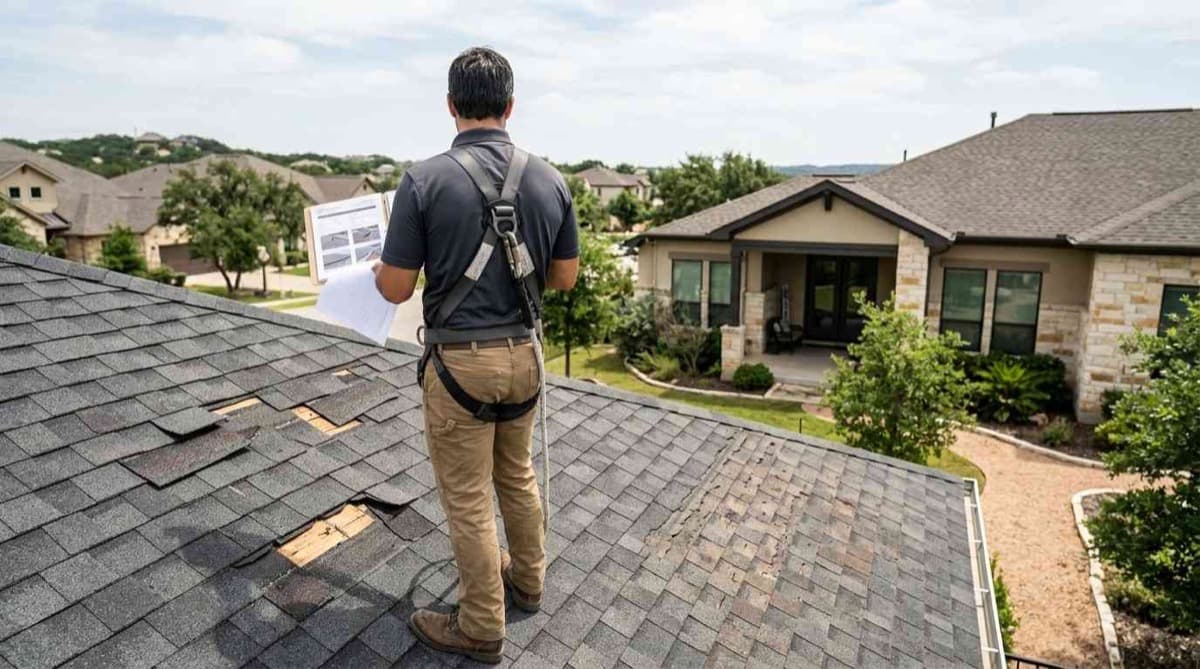
Before you file, having a professional roof inspection gives you an independent assessment of the damage that is separate from the insurer’s adjuster. That report can establish the cause and timeline of damage in terms that directly address the exclusion language in your policy.
It is not about gaming the system. It is about making sure legitimate storm damage gets documented as storm damage not misclassified as wear and tear.
Reason #2: The Claim Wasn’t Filed or Documented Correctly
The second major denial reason has nothing to do with your policy language. The damage may be fully covered but the claim still gets denied because of how it was filed.
Insurance companies have strict procedural requirements. Miss a deadline, submit incomplete forms, or fail to provide adequate proof of loss, and the insurer has grounds to deny the claim on procedural grounds alone.
This type of denial is frustrating because the damage is real and the coverage exists the process just failed.
The Documentation Mistakes That Lead to Denials
The most common filing errors we see fall into a short list.
Late filing is the most avoidable. Most policies require you to report damage within a specific window often 30 to 60 days from the date of loss. Filing after that deadline gives the insurer grounds for an automatic denial.
Insufficient photo documentation is the next most common issue. Photos taken after temporary repairs are made, or photos that do not clearly show the extent and location of damage, leave too much room for the adjuster to minimize the claim.
Missing contractor estimates create another gap. An adjuster’s estimate alone is not always sufficient. A written estimate from a licensed roofing contractor provides an independent cost basis that supports your claim value.
Incomplete proof of loss forms round out the list. These forms require specific information about the date of loss, the cause of damage, and the estimated repair cost. Errors or omissions on these forms give the insurer a procedural reason to deny.
What Proper Claim Documentation Looks Like
Strong claim documentation tells a clear, chronological story: when the damage occurred, what caused it, what it affected, and what it costs to repair.
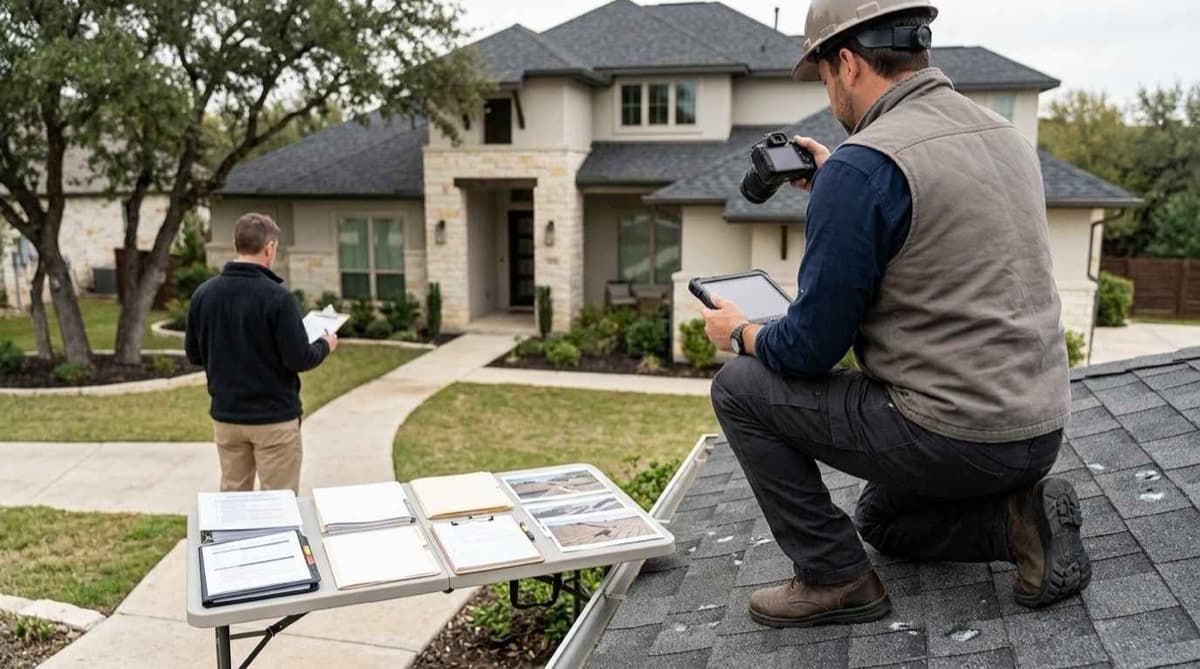
That story needs photos taken immediately after the damage event before any cleanup or temporary repairs. It needs a written inspection report from a licensed roofing contractor that identifies the cause of damage and distinguishes it from pre-existing wear. And it needs a detailed written estimate that breaks down materials and labor by line item.
The adjuster’s job is to find reasons to minimize the payout. Your documentation’s job is to make that difficult.
What to Do After Your Roofing Claim Gets Denied
A denial is not final. Every homeowners insurance policy includes an appeal process, and a well-documented appeal overturns denials regularly.
Start by reading the denial letter carefully. The insurer is required to cite the specific policy language used to justify the denial. That citation tells you exactly what you are arguing against.
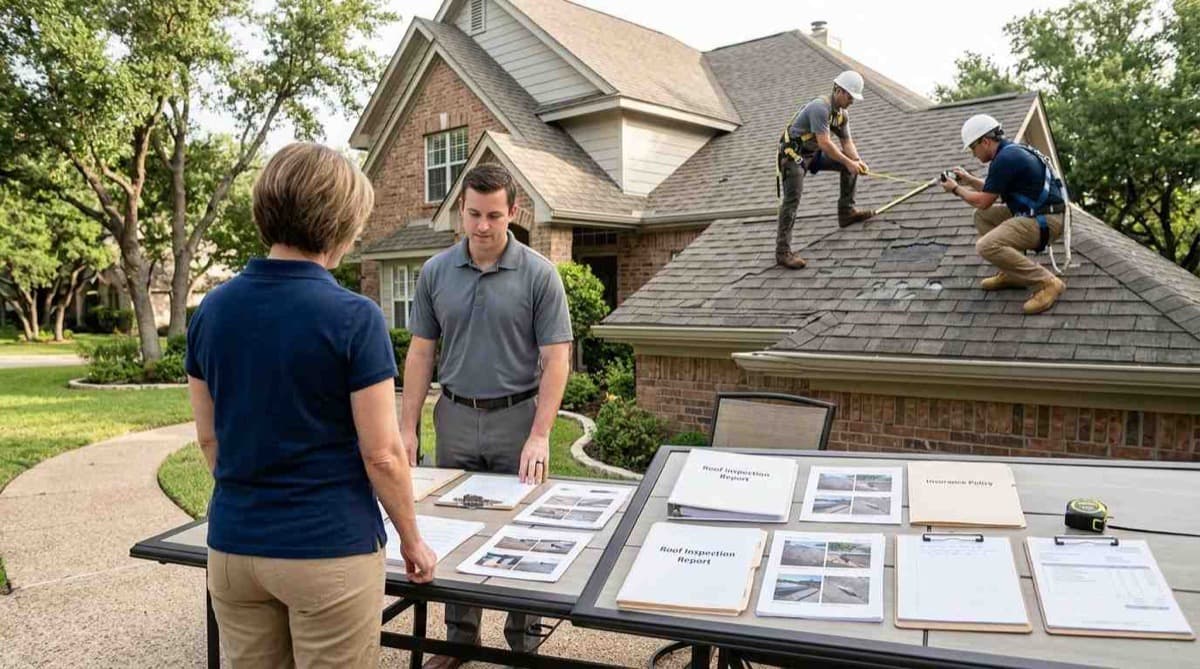
Request a re-inspection if the denial was based on the adjuster’s damage assessment. You have the right to have the damage evaluated again, and bringing a roofing contractor to that re-inspection changes the dynamic significantly.
When to Bring in a Roofing Professional Before You Appeal
An appeal without new documentation rarely succeeds. The insurer already reviewed what you submitted submitting the same information again produces the same result.
What changes an appeal outcome is new evidence. A detailed re-inspection report from a licensed contractor, written specifically to address the denial reason, gives the insurer something new to evaluate. We write those reports to speak directly to the policy language used in the denial, not in general roofing terms, but in the specific cause-and-damage framing that adjusters respond to.
A public adjuster is another option for complex disputes. But in most cases, a strong contractor report is the first and most effective step before escalating further.
How to Protect Your Claim Before You Ever File It
The best time to protect a roofing insurance claim is before any damage happens. That sounds counterintuitive, but the homeowners who get the smoothest claim outcomes are the ones who already have documentation in place.
An annual roof inspection creates a dated record of your roof’s condition. When storm damage occurs, that record establishes a clear before-and-after baseline that makes it much harder for an insurer to argue the damage was pre-existing or maintenance-related.
Keep records of any roof repairs, including contractor invoices and photos. Review your policy once a year specifically the exclusions section so you know what is and is not covered before you need to file. And after any major weather event, photograph your roof immediately, even if you do not see obvious damage. That documentation costs nothing and protects everything.
Conclusion
The two main reasons insurance claims get denied come down to coverage gaps and documentation failures and both are preventable with the right preparation and the right professional support.
Homeowners who understand their policy exclusions and document their roof’s condition proactively put themselves in a far stronger position when a claim becomes necessary.
At Tarrytown Roofing, we help Austin homeowners navigate the full claims process from pre-storm inspections to appeal documentation. Reach out to us before you file, and we will make sure your claim has everything it needs to succeed.
Frequently Asked Questions
Can I appeal a denied roofing insurance claim?
Yes, and appeals succeed more often than most homeowners expect. The key is submitting new documentation, specifically a contractor re-inspection report that directly addresses the denial reason cited in your letter.
How long do I have to file a roof damage insurance claim?
Most homeowners insurance policies require you to report damage within 30 to 60 days of the loss event. Check your specific policy for the exact deadline, because filing late gives the insurer grounds for an automatic denial.
Does insurance cover roof damage from age and wear?
No. Standard homeowners insurance covers sudden, accidental damage not gradual deterioration from age or lack of maintenance. Wear and tear is one of the most common exclusions used to deny roofing claims.
What documentation do I need for a roof insurance claim?
You need dated photos of the damage taken before any repairs, a written inspection report from a licensed roofing contractor identifying the cause of damage, a detailed line-item repair estimate, and a completed proof of loss form with the correct date and cause of loss.
Will filing a roof claim raise my insurance premiums?
Filing a claim can affect your premiums, depending on your insurer, your claims history, and your state’s regulations. That said, avoiding a legitimate claim to protect your rate often costs more in the long run than the premium adjustment would.
How can a roofing contractor help with my insurance claim?
A roofing contractor provides an independent inspection report that documents damage cause and scope in the specific terms adjusters evaluate. We also attend adjuster walkthroughs, write appeal documentation, and help homeowners understand what their policy does and does not cover before they file.