What Insurance Adjusters Won’t Tell You About Roof Claims
Most homeowners walk into a roof insurance claim trusting the adjuster to find everything and that trust costs them thousands. Insurance adjusters work for the insurance company, not for you. Understanding how the process works, where payouts shrink, and what you have every right to ask changes the outcome of your claim.
Roof claims in Austin get complicated fast, especially after hail or wind events. Knowing the gaps in the process protects your home and your money.
This guide covers how adjusters assess damage, where claims get underpaid, what you can ask for, and exactly how to protect your settlement before you sign anything.
How Insurance Adjusters Assess Roof Damage
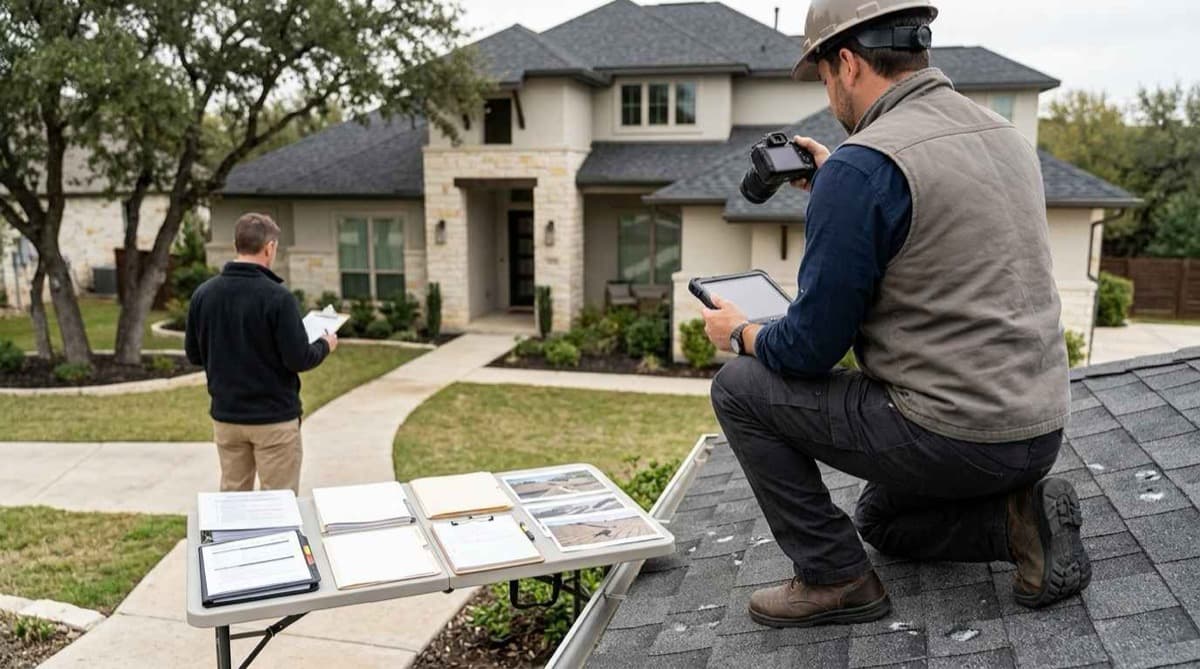
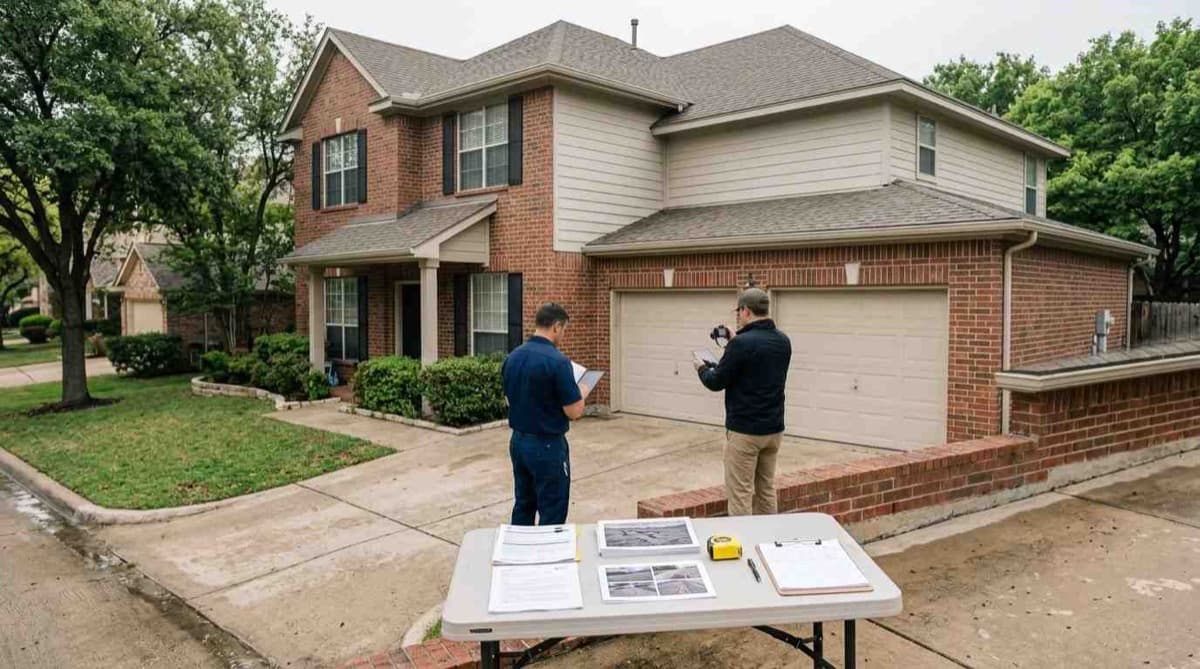
When an adjuster arrives at your property, they follow a structured inspection process but that structure has limits. They are trained to identify visible, documented damage that falls within your policy’s covered perils. What they are not required to do is find everything.
The adjuster produces a scope of loss report, which becomes the basis for your settlement offer. That report drives the dollar amount. If something is missing from the report, it is missing from your check.
What They Look For (and What They Skip)
Adjusters typically inspect for hail impact marks, wind uplift, missing shingles, and granule loss. These are the obvious, photographable items that translate cleanly into line items on a claim report.
What gets skipped more often than homeowners realize: flashing damage, damaged drip edge, compromised underlayment, and interior water intrusion that hasn’t yet caused visible staining. These items require more time and closer inspection to find.
Gutters are another common omission. Hail that damages shingles almost always dents aluminum gutters but gutters require a separate line item, and adjusters don’t always include them without being asked.
The Difference Between ACV and RCV Settlements
Your policy type determines how much you actually receive, and this is one of the most important things adjusters rarely explain upfront.
Actual Cash Value (ACV) pays you the depreciated value of your roof meaning the insurance company subtracts for age and wear before writing your check. A 15-year-old roof on a 20-year shingle gets heavily depreciated. You receive far less than what a replacement actually costs.
Replacement Cost Value (RCV) pays the full cost to replace your roof with like materials at current prices. With an RCV policy, you typically receive an initial ACV payment, then a second payment called recoverable depreciation once the work is completed and documented.
Many homeowners don’t know which policy they have until after the adjuster leaves. Ask before the inspection starts.
The Most Common Ways Claims Get Underpaid
Underpayment is not always intentional but it is common. The adjuster’s job is to document what they find and price it using standardized software. The problem is that the software, the inspection time, and the adjuster’s workload all create conditions where legitimate damage gets missed or underpriced.
Understanding where the gaps appear gives you the ability to catch them.
Depreciation Tactics That Shrink Your Payout
Depreciation is the single biggest reason homeowners receive less than they expect. According to the Insurance Information Institute, the age and condition of your roof directly affect how much depreciation is applied and on an older roof, that number can be substantial.
With an ACV policy, that depreciation is non-recoverable. You absorb the difference between what the insurance company pays and what a contractor actually charges. On a full replacement, that gap can run into the thousands.
Even with an RCV policy, the initial payment reflects ACV. The recoverable depreciation only releases after you complete the work and submit documentation. Many homeowners don’t know to request that second payment and some insurers don’t remind them.
Scope Omissions: Damage That Gets Left Off the Report
The scope of loss is only as complete as the adjuster’s inspection. Items that require closer examination or that fall outside the adjuster’s primary focus get left off the report regularly.
Common omissions include:
- Decking damage soft spots or broken boards beneath the shingles
- Underlayment the waterproof layer under shingles that takes impact damage
- Ice and water shield required in certain roof zones and often omitted from replacement scopes
- Drip edge metal edging that protects fascia and is frequently excluded
- Fascia and soffit wind and water damage here is often categorized separately or missed
- Gutters and downspouts hail damage to gutters is almost always present after a significant storm
A roofing contractor who performs their own inspection will catch these items. That independent scope becomes your negotiating document.
What Adjusters Won’t Volunteer But You Can Ask
Adjusters are not required to educate you about your policy rights. They answer what you ask, document what they find, and submit their report. The information gap between what they know and what they share is where homeowners lose money.
These are the things worth asking directly.
Your Right to a Supplemental Claim
A supplemental claim is an additional claim filed after the original settlement when new or previously undocumented damage is discovered. This happens more often than most homeowners know especially when a contractor begins work and finds damage that wasn’t visible during the adjuster’s inspection.
You have the right to file a supplemental claim. The insurance company is required to review it. Contractors who work with insurance claims regularly know how to document supplemental items and submit them properly.
The key is catching the additional damage before the work is completed and before you sign any final release documents. Once you sign a release, your ability to file a supplement may be limited.
How a Public Adjuster or Roofing Contractor Can Help
A public adjuster works on your behalf not the insurance company’s. They review your policy, inspect your roof independently, and negotiate your settlement for a percentage of the payout. In cases where a claim has been significantly underpaid, a public adjuster can recover the difference.
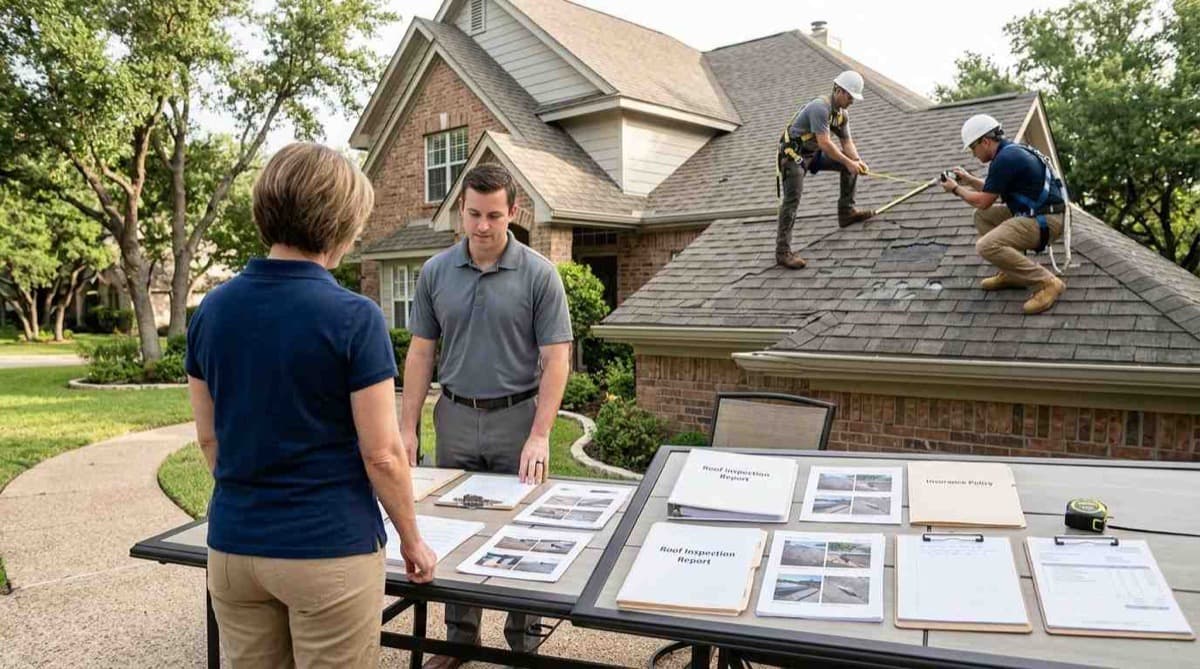
A licensed roofing contractor serves a similar function in a more targeted way. We inspect your roof, document every item of damage, and produce an independent scope that you can compare directly against the insurance company’s report. When the numbers don’t match, that documentation is what gets the claim reopened.
At Tarrytown Roofing, we work alongside homeowners through the claims process not just after it. Getting us involved before you accept any offer is one of the most effective things you can do for your settlement.
How to Protect Your Claim Before the Adjuster Arrives
The work you do before the adjuster shows up shapes the outcome of your claim. Adjusters work from what they observe during a single visit. Your documentation fills the gaps they miss and creates a record that supports your position throughout the process.
This is not about being adversarial. It is about being prepared.
Document Everything First
Before the adjuster arrives, photograph every area of visible damage roof surface, gutters, fascia, soffits, and any interior water damage. Use date-stamped photos and take them from multiple angles.
Write down the date the damage occurred, the weather event that caused it, and any immediate steps you took to prevent further damage. If neighbors experienced similar damage, note that too it establishes the storm event as the cause.
Keep every receipt for emergency repairs or temporary tarping. The Texas Department of Insurance confirms that reasonable emergency mitigation costs are typically covered under homeowner policies, but you need documentation to recover them.
Get a Contractor Inspection Before You Accept Any Offer
The single most effective step you can take is having a licensed roofing contractor inspect your roof before you accept the insurance company’s settlement offer. A contractor’s inspection produces an independent scope of damage a line-by-line breakdown of what needs to be repaired or replaced and what it costs at current market rates.
That scope gives you a direct comparison to the adjuster’s report. When the numbers differ and they often do you have documented grounds to request a re-inspection or file a supplemental claim.
Accepting the first offer without an independent inspection is the most common and most costly mistake homeowners make. We offer roof damage inspections for homeowners navigating the claims process in Austin and the surrounding area.
When to Push Back on a Roof Insurance Settlement
Accepting a settlement offer is not mandatory. You have the right to dispute the amount, request a re-inspection, and in some cases invoke the appraisal clause in your policy a formal dispute process that brings in a neutral third party to determine the correct settlement value.
Pushing back is not confrontational. It is a standard part of the claims process that insurance companies expect and are prepared for.
Signs Your Claim Was Undervalued
The clearest sign of an undervalued claim is a gap between the insurance company’s settlement amount and the estimate from a licensed roofing contractor. When a contractor’s scope of damage is significantly higher than the adjuster’s report, that discrepancy is worth investigating.
Other signs include:
- The settlement covers only partial replacement when full replacement is warranted
- Line items for gutters, drip edge, or underlayment are missing entirely
- The depreciation applied seems disproportionate to the actual age and condition of your roof
- The adjuster spent less than 30 minutes on the inspection
If any of these apply, contact your contractor and your insurance company before signing anything. Request a written explanation of how the settlement amount was calculated and ask specifically about any items that appear to be missing from the scope.
Conclusion
Roof insurance claims are not designed to be simple, and adjusters are not required to walk you through every option available to you. The homeowners who get fair settlements are the ones who understand the process, document their damage thoroughly, and get an independent contractor inspection before accepting any offer.
In Austin, storm damage claims move fast and so do the deadlines that affect your ability to file supplements or disputes. Acting early and with the right information makes a measurable difference in what you recover.
At Tarrytown Roofing, we help homeowners navigate the claims process from inspection through settlement. Reach out to us before you accept an offer we are here to make sure your roof and your claim are handled right.
Frequently Asked Questions
Can I dispute a roof insurance claim settlement?
Yes. You have the right to dispute a settlement offer by requesting a re-inspection, submitting a supplemental claim with additional documentation, or invoking the appraisal clause in your policy. A licensed roofing contractor’s independent estimate is the strongest tool you have in that process.
What is the difference between ACV and RCV in roofing?
ACV, or Actual Cash Value, pays the depreciated value of your roof based on its age and condition. RCV, or Replacement Cost Value, pays the full cost to replace your roof with comparable materials. RCV policies typically pay in two installments the initial ACV payment and a second payment once the work is completed.
How long does a roof insurance claim take in Texas?
Under Texas law, insurance companies are required to acknowledge a claim within 15 days of filing and accept or deny it within 15 business days of receiving all required documentation. The full process from filing to final payment typically runs four to eight weeks depending on the complexity of the damage and the insurer’s workload.
Does filing a roof claim raise my homeowner’s insurance?
Filing a claim can affect your premium at renewal, though the impact depends on your insurer, your claims history, and the nature of the damage. Weather-related claims like hail or wind are generally treated differently than claims resulting from neglect. Talking to your agent before filing gives you a clearer picture of the potential impact.
What should I do if the adjuster misses damage on my roof?
Contact your insurance company and request a re-inspection. Have a licensed roofing contractor document the missed damage with photos and a written scope before the re-inspection takes place. That documentation supports your request and gives the adjuster a specific list of items to review.
Do I need a roofing contractor before filing a claim?
You are not required to have a contractor inspection before filing, but getting one before you accept any settlement offer is strongly recommended. A contractor’s independent scope gives you a benchmark to compare against the adjuster’s report and protects you from accepting a payout that doesn’t cover the actual cost of repairs.