What Not to Say to a Roof Insurance Adjuster
The words you say to a roof insurance adjuster can cost you thousands of dollars or save them. Most homeowners walk into that adjuster meeting completely unprepared, saying things that quietly undermine their own claim. I’ve seen it happen more times than I can count.
The stakes during a roof insurance claim are real and immediate. One wrong statement can reduce your settlement, delay your payout, or hand the adjuster a reason to deny coverage entirely.
In this guide, I cover exactly what not to say, what to say instead, how the claims process works in Austin, and how to protect every dollar your policy owes you.
Why Your Words Matter More Than You Think During a Roof Insurance Claim
Most homeowners assume the adjuster is there to help them. That’s a natural assumption and it’s also the first mistake.
The adjuster works for the insurance company. Their job is to assess the claim accurately, but their employer’s interest is in paying out as little as the policy allows. Every statement you make gets noted, interpreted, and potentially used to shape the final settlement.
How Adjusters Evaluate Your Claim
An adjuster’s visit is a formal evaluation, not a casual conversation. They’re documenting the scope of damage on your roof, cross-referencing it against your policy language, and building a written record of everything including what you say.
They note the cause of loss, the condition of the roof, any signs of prior damage or deferred maintenance, and the statements you volunteer. That record follows your claim all the way through the settlement process.
The Difference Between Helpful and Harmful Statements
Helpful statements are factual and observable. “There are missing shingles on the back slope” is helpful. “I think the wind might have caused it, but the roof was already getting old” is harmful it introduces speculation, admits pre-existing condition, and gives the adjuster two reasons to reduce your payout.
The line between helpful and harmful is thinner than most people expect. And once a statement is in the adjuster’s notes, you can’t take it back.
The Biggest Things Homeowners Should Never Say to a Roof Insurance Adjuster
These aren’t hypothetical mistakes. These are the actual statements that get claims reduced, delayed, or denied and I hear versions of them constantly from homeowners in Austin who didn’t know better.
“I Think the Damage Might Be From…”
Speculating about the cause of loss is one of the most damaging things you can do. The moment you say “I think it might be from the hail last spring, or maybe it was the wind last fall,” you’ve introduced doubt about the cause and doubt benefits the insurance company, not you.
Your policy covers specific storm damage events. The adjuster’s job is to confirm or deny coverage based on documented evidence. Let the physical evidence speak. Your speculation only muddies the water.
“The Damage Isn’t That Bad”
I understand the instinct. Homeowners sometimes downplay damage because they don’t want to seem like they’re exaggerating, or they genuinely don’t know how serious the damage is. But minimizing the damage out loud gives the adjuster permission to agree with you.
Roof damage is almost always more extensive than it looks from the ground. A professional inspection reveals granule loss, underlayment compromise, flashing failures, and structural issues that aren’t visible to the untrained eye. Never characterize the severity of damage before a full inspection is complete.
“I Already Got It Fixed”
This one is a claim-killer. If you repaired the roof before the adjuster visited and documented the damage, you’ve eliminated the evidence your claim depends on. The adjuster has no way to verify the original scope of loss, and the insurance company has every reason to deny or drastically reduce the claim.
Emergency repairs are sometimes necessary and that’s fine. But document everything obsessively before any work begins. Photographs, contractor notes, and a written damage assessment are essential. Never make permanent repairs before the adjuster has seen the damage.
“My Neighbor Got X Amount for Their Roof”
Every roof claim is different. Your neighbor’s policy, coverage limits, roof age, material type, and damage scope are all different from yours. Bringing up what someone else received accomplishes nothing useful and it can make you look uninformed, which weakens your credibility in the conversation.
The adjuster isn’t going to match your neighbor’s settlement. They’re going to assess your specific policy and your specific damage. Stay focused on your claim.
“I’ll Take Whatever You Offer”
This is the statement that costs homeowners the most money. Insurance companies are not required to open with their best offer. A first settlement offer is often a starting point, not a final number and accepting it immediately closes the door on a supplemental claim or negotiation.
You have the right to review the scope of loss document, compare it against a contractor’s estimate, and dispute line items you believe are underpaid. Saying “I’ll take whatever you offer” signals that you won’t push back and many adjusters will take that at face value.
Admitting Fault or Pre-Existing Neglect
Statements like “I know I should have replaced it sooner” or “we’ve been putting off some repairs” are policy exclusion triggers. Insurance covers sudden, storm-related damage not deferred maintenance or normal wear and tear.
Admitting that the roof was already in poor condition before the storm gives the adjuster grounds to attribute the damage to neglect rather than the covered event. Keep your maintenance history out of the conversation entirely.
What You Should Say Instead Protecting Your Claim With the Right Language
Knowing what not to say is half the battle. The other half is knowing how to communicate in a way that protects your claim without being evasive or uncooperative.
Stick to Observable Facts Only
Describe only what you can see and confirm. “There are cracked and missing shingles on the north-facing slope.” “The gutters have significant granule accumulation.” “There is visible damage to the ridge cap.” These are factual, observable statements that support your claim without introducing speculation or admission.
When the adjuster asks questions you’re unsure about, it’s completely acceptable to say “I’m not certain I’d like to have my contractor review that before I respond.” That’s not evasion. That’s protecting your right to an accurate assessment.
Let Your Roofing Contractor Do the Talking
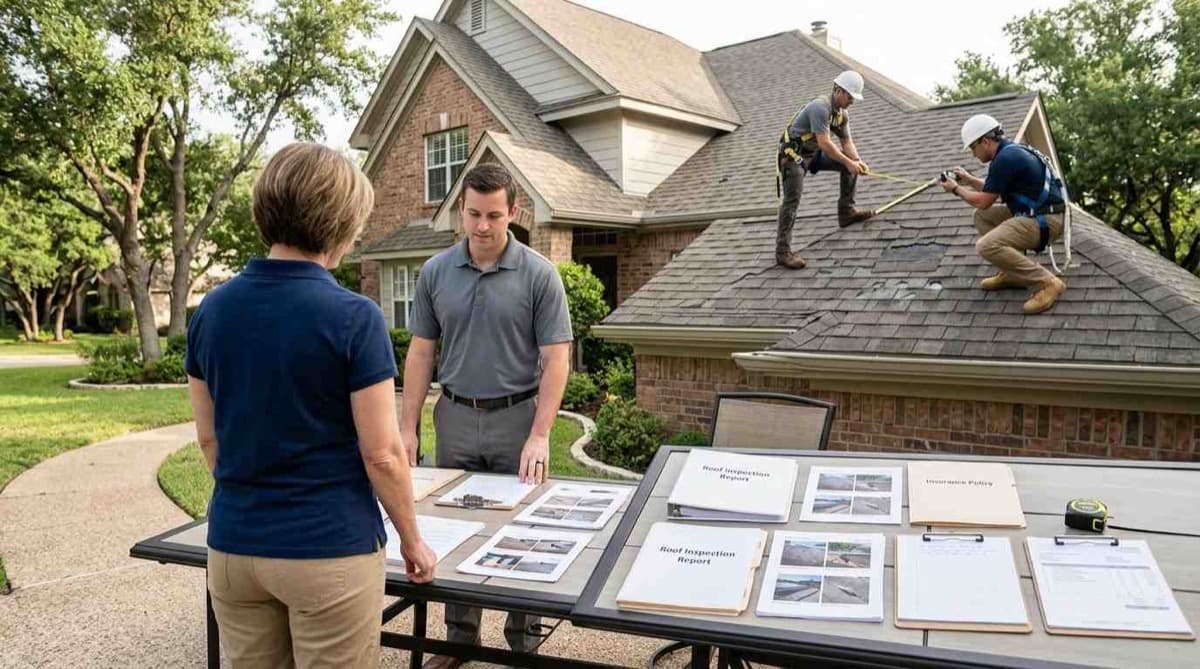
The most effective thing you can do before the adjuster arrives is schedule a professional roof inspection with a contractor who has experience working with insurance claims. A qualified contractor can attend the adjuster meeting, walk the roof alongside the adjuster, and advocate for a complete and accurate scope of damage.
We do this regularly for homeowners in Austin. Having a contractor present changes the dynamic of the adjuster visit entirely the conversation shifts from a homeowner trying to describe damage they don’t fully understand to a professional-to-professional assessment of documented findings.
How the Roof Insurance Claims Process Actually Works in Austin, TX
Austin’s weather creates a steady stream of roof insurance claims. Hail storms, high winds, and severe thunderstorms are a regular part of life here and the claims process that follows them has a specific rhythm that homeowners benefit from understanding.
Filing the Claim and Scheduling the Adjuster Visit
The process starts with filing a claim through your insurance company as soon as you identify storm damage. Most policies require prompt reporting waiting weeks or months creates complications. Once the claim is filed, the insurance company assigns an adjuster and schedules an inspection.
Before that inspection happens, get a contractor on your roof. A pre-adjuster inspection gives you an independent damage assessment, documentation you control, and a professional who can be present during the adjuster’s visit. In Austin’s competitive post-storm environment, scheduling a contractor quickly matters demand spikes fast after major weather events.
What Happens After the Adjuster Leaves
After the visit, the adjuster produces a scope of loss document that itemizes the damage they identified and the dollar amounts assigned to each repair. This document is the basis for your settlement offer.
Review it carefully or better yet, have your contractor review it. Adjusters sometimes miss line items, undervalue materials, or apply depreciation in ways that don’t reflect current Austin roofing costs. A supplemental claim can be filed if the scope of loss is incomplete. That process is normal, and a good contractor handles it routinely.
Red Flags That Can Get Your Roof Claim Denied or Underpaid
A denied or underpaid claim rarely comes out of nowhere. There are specific patterns that create problems and most of them are avoidable.
Lack of Documentation Before and After the Storm
Documentation is the foundation of a successful claim. Homeowners who have photos of their roof before a storm even casual photos taken during a gutter cleaning or inspection have a baseline that proves the damage is new. After the storm, photograph everything immediately: the roof surface, gutters, downspouts, siding, and any interior water intrusion.
The adjuster’s documentation is the insurance company’s record. Your documentation is yours. Both matter, and yours protects you if there’s a dispute.
Waiting Too Long to File
Texas insurance policies include time limits for filing storm damage claims. According to the Texas Department of Insurance, homeowners should report damage promptly and understand their policy’s specific deadlines. Waiting too long even when the delay feels reasonable gives the insurance company grounds to question whether the damage is actually storm-related or the result of ongoing deterioration.
In Austin, where storm seasons can produce multiple damaging events in a single year, it’s easy to lose track of which storm caused which damage. File promptly, document the specific weather event, and keep records of local storm reports that corroborate your timeline.
Should You Hire a Public Adjuster or Roofing Contractor to Help?
After a significant roof claim, many homeowners wonder whether they need professional help navigating the process. The short answer is yes but the type of help depends on your situation.
What a Public Adjuster Does
A public adjuster is a licensed professional who represents the policyholder not the insurance company during the claims process. They review your policy, assess the damage independently, and negotiate the settlement on your behalf. The National Association of Public Insurance Adjusters notes that public adjusters typically work on a contingency fee, taking a percentage of the final settlement.
Public adjusters make the most sense for large, complex claims where the initial settlement offer is significantly below what the damage warrants. For straightforward residential roof claims, a qualified roofing contractor often provides the same advocacy at no additional cost to the homeowner.
How a Roofing Contractor Supports Your Claim
A roofing contractor with insurance claim experience does more than estimate the repair cost. They document the damage in detail, produce a scope of work that matches insurance industry line-item standards, attend the adjuster meeting, and file supplemental claims when the initial scope is incomplete.
We work alongside adjusters on behalf of Austin homeowners regularly. Our role is to make sure the scope of loss reflects the actual damage nothing inflated, nothing missed. That kind of professional representation is one of the most valuable things a homeowner can have during a claim.
Actual Cash Value vs. Replacement Cost Value What Your Policy Actually Covers
Understanding your policy type is critical before the adjuster ever arrives. The difference between ACV and RCV coverage can mean tens of thousands of dollars on a full roof replacement.
How Depreciation Affects Your Payout
An Actual Cash Value (ACV) policy pays the depreciated value of your roof at the time of the loss. A 15-year-old roof that costs $20,000 to replace might receive an ACV payout of $8,000 because the insurance company factors in the age and remaining useful life of the materials.
A Replacement Cost Value (RCV) policy pays the full cost to replace the roof with like materials, regardless of age. The initial payment is still reduced by depreciation, but once the work is completed, you can file for the recoverable depreciation the withheld amount and receive the balance.
Knowing which policy you have before the adjuster visit shapes every conversation you have about the claim. Pull out your declarations page and confirm your coverage type today.
Frequently Asked Questions
Can I negotiate with a roof insurance adjuster?
Yes. The first settlement offer is not always the final one. Review the scope of loss document carefully, compare it against a contractor’s estimate, and file a supplemental claim for any line items that are missing or undervalued. Negotiation is a normal part of the process.
What happens if my roof claim is denied?
A denial is not the end of the road. Review the denial letter for the specific reason, gather additional documentation, and file a formal appeal. Texas law gives policyholders the right to dispute claim decisions, and a contractor or public adjuster can support that process.
How long does a roof insurance claim take in Texas?
Most residential roof claims in Texas resolve within 30 to 60 days of filing, though complex claims or disputes can take longer. The Texas Department of Insurance requires insurers to acknowledge claims within 15 days and accept or deny them within 15 business days of receiving all required documentation.
Should I get a contractor estimate before the adjuster visits?
Yes always. A pre-adjuster inspection gives you an independent damage assessment, documentation you control, and a professional who can be present during the adjuster’s visit. It puts you in a much stronger position from the start.
Does filing a roof insurance claim raise my rates?
It depends on your insurer, your policy, and your claims history. A single weather-related claim typically has less impact than a liability or at-fault claim. Contact your insurance agent directly to understand how a claim affects your specific policy before filing.
What is a supplemental roof insurance claim?
A supplemental claim is filed when the original scope of loss misses damage items or undervalues the cost of repairs. It’s a standard part of the claims process not an accusation and a qualified contractor handles the documentation and submission.
Can my insurance company deny my claim because my roof is old?
Age alone is not grounds for denial, but it does affect payout under an ACV policy. If your roof has exceeded its expected lifespan, the insurance company may apply significant depreciation or argue that the damage is wear and tear rather than storm-related. An RCV policy provides stronger protection in this scenario.
What should I bring to the adjuster meeting?
Bring your policy declarations page, any pre-storm photos of the roof, post-storm damage photos, and any contractor inspection reports you’ve already received. Having your roofing contractor present is the single most valuable thing you can do.
Conclusion
The roof insurance claims process rewards homeowners who are prepared, documented, and careful with their words. What you say to an adjuster shapes the record that determines your settlement and the mistakes that cost homeowners the most money are almost always avoidable.
Austin’s storm season makes roof claims a reality for thousands of homeowners every year. Understanding the process, knowing your policy, and having professional support on your side makes a measurable difference in the outcome.
At Tarrytown Roofing, we help Austin homeowners navigate roof insurance claims from the first inspection through final settlement. Reach out to us before your adjuster visit we’ll make sure your claim reflects the full scope of what your roof actually needs.