
Insurance
How Roof Insurance Claims Work in Texas After Hail or Storm Damage
Published 2026-07-17T00:00:00+00:00
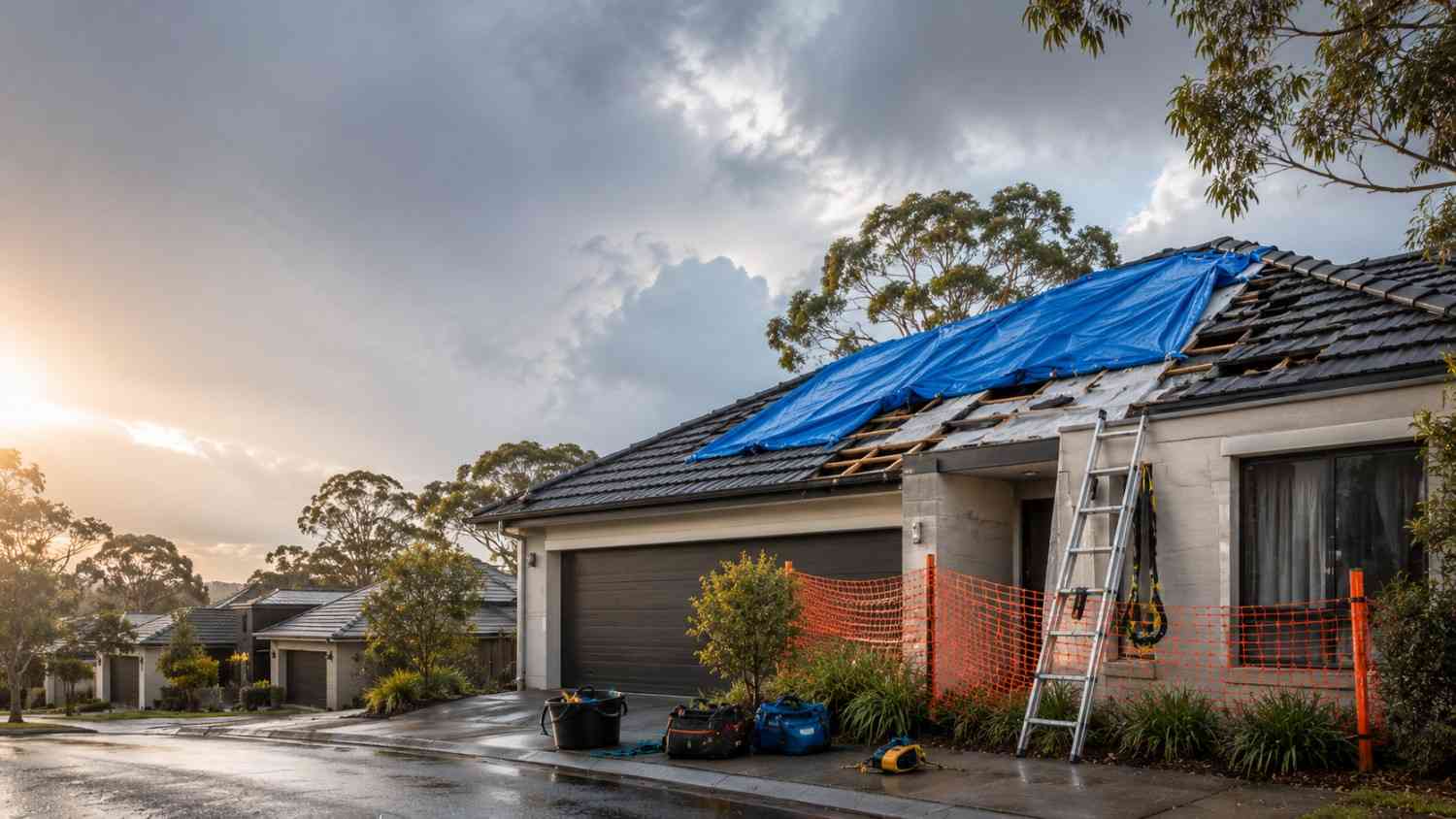
A Texas hail or storm claim typically follows the same seven steps: document damage, notify your insurer within days of the storm, meet the adjuster on the roof with a licensed contractor, receive a scope of loss, sign scope revisions, complete the work with a certified installer, and submit final invoices for depreciation recovery.
A Texas hail or storm claim typically follows seven steps: document damage, notify the insurer within days of the storm, meet the adjuster on the roof with a licensed contractor, receive a scope of loss, negotiate scope revisions if line items are missing, complete the work with a certified installer, and submit final invoices for depreciation recovery. Most Austin homeowners with a covered hail claim see out-of-pocket costs equal to their deductible, typically 1% to 2% of dwelling value, regardless of the roof's replacement price.
How long do you have to file a hail-damage roof claim in Texas?
Under Texas Insurance Code, most policies require notice of loss "promptly" after the event; carriers typically accept claims filed within 1 year of the storm date, and some policies extend to 2 years. Filing quickly, within 30 to 60 days, makes it easier to prove causation, because adjusters can match the damage pattern to a specific named storm using the National Weather Service hail map (SPC storm reports).
What should I do before I even call my insurer?
The single highest-leverage move is booking a licensed roofing contractor for a documented inspection first. A written contractor report, with granule-loss samples, mat-vs-substrate impact classification, and annotated photos, either confirms the damage merits a claim (avoiding a filed-and-denied entry on your CLUE report) or lets you skip filing entirely. Tarrytown Roofing does this inspection at no cost, and if damage is confirmed we join the adjuster on the roof to walk through every impact.
Will my premiums go up if I file a hail claim in Texas?
For a single weather-related loss, most carriers do not surcharge premiums directly. However, the CLUE (Comprehensive Loss Underwriting Exchange) report tracks every filed claim for 7 years, and multiple filings within 3 to 5 years can raise base premiums 5% to 15% at renewal, or cause non-renewal in high-risk zones. A single hail claim after a Category 3+ hailstorm rarely triggers a rate change; two claims in 3 years often does.
What does the adjuster actually look for on the roof?
Insurance adjusters use two standard tests: the "test square" and the "impact count." A test square is a chalk-outlined 10-foot by 10-foot area on the roof; the adjuster counts qualifying hail impacts within it. Most carriers require 8 to 10 impacts per test square across multiple slopes to approve a full roof replacement. Fewer than that, and they may approve only partial repair. The adjuster also documents collateral damage, dents on soft metals (gutters, downspouts, gas caps, HVAC fins), broken window screens, and damaged siding, because those data points corroborate the hail size and duration.
What is a "supplement" and why does my contractor keep mentioning it?
Adjusters write an initial scope of loss based on what they observe, but they often miss items required by Texas building code or manufacturer warranty. Common missed items: ice and water shield at valleys, drip edge replacement, decking replacement for delaminated OSB, and starter strips. A supplement is a revised estimate submitted after the adjuster meeting that adds those missing line items with supporting photos and code citations. Most Tarrytown claims include one supplement; some larger claims include two or three.
How does the deductible math work on an Actual Cash Value vs Replacement Cost Value policy?
An RCV (Replacement Cost Value) policy, the most common in Texas, pays two checks. The first is the ACV (Actual Cash Value) check, which equals the total scope minus depreciation and minus your deductible. After the work is complete, the insurer releases the depreciation portion as a second check. Example: $20,000 scope minus $2,000 deductible minus $3,500 depreciation = $14,500 ACV first check; depreciation of $3,500 released after final invoices. Total insurer payout: $18,000. Your out of pocket: $2,000.
Can I get a new roof paid for without meeting the deductible?
Almost never legitimately in Texas, House Bill 1029 (2019) made "deductible waiving" a criminal offense, and reputable contractors will not absorb your deductible, discount it, or write invoices for a higher amount than the actual work. Beware of any storm-chaser contractor who promises to "cover your deductible", they are either committing insurance fraud (a Class B misdemeanor in Texas) or planning to underdeliver on the work.
What are the most common reasons hail claims get denied in Austin?
The five most common denials we see in Central Texas: (1) damage attributed to "normal wear and tear" rather than the storm, countered with contractor documentation and NWS storm data; (2) damage claimed on multiple slopes but only present on one, countered by matching impact patterns to hail direction; (3) inadequate hail size (under 1 inch), often a legitimate denial; (4) prior undocumented damage, resolved with baseline inspection photos; (5) roof age beyond policy limits, typically a hard denial.
What is an "assignment of benefits" and why should I not sign one?
An AOB (Assignment of Benefits) transfers your right to receive the insurance payout directly to the contractor. AOB agreements are common in door-to-door storm-chaser contracts and are heavily abused: contractors inflate scopes, bill the insurer directly, and leave homeowners with unfinished work and no recourse. Texas has cracked down on abusive AOB practices in recent years, but the risk is still real. Tarrytown Roofing never asks for an AOB, the homeowner receives the checks and controls the funds.
How does Tarrytown Roofing handle the claim on my behalf?
We inspect the roof at no cost and provide a written damage report. If damage is claim-worthy, we help you file with your insurer, then join the adjuster on the roof for the inspection. We write the scope alongside the adjuster, submit any needed supplements with code citations, and complete the work to the approved scope. When the job is done, we help you package the final invoices and depreciation-recovery documents to release the second check. Our claim-experienced project managers have handled hundreds of Central Texas claims, we know what each major carrier's adjusters look for, and what they will and will not approve.
What documentation should I keep for the claim file?
Keep everything digital: (1) NWS storm report or news coverage confirming the date and severity of the storm; (2) contractor's initial inspection report with photos; (3) the adjuster's scope of loss (Xactimate PDF); (4) any supplement estimates you submit; (5) final invoices from the contractor; (6) proof of payment for the deductible; (7) manufacturer warranty documents once the new roof is installed. A single Dropbox or Google Drive folder makes it easy to release depreciation later.
When should I not file a hail claim in Texas?
Skip filing if: your deductible is close to or higher than the likely scope of loss (common for repair-only situations); the damage is superficial and confined to soft metals only, with no shingle impact; you have already filed one claim in the last 24 months and your roof is under 5 years old (a second claim signals risk to underwriters); or your roof is 20+ years old and your policy contains an age-limit exclusion. Tarrytown Roofing will tell you honestly if a claim is or is not worth filing, we would rather do the paid repair than send you into a denied-claim spiral.
What happens after the roof is replaced?
Once installation is complete, we hand over a project close-out packet: manufacturer material warranty documents, our workmanship warranty, the Directorii $250,000 project guarantee registration, before/after photos, and a digital copy of the manufacturer certificate. We then submit the final invoices to your insurer to trigger the depreciation-recovery check. Most Texas insurers release depreciation within 30 to 45 days of receiving final invoices.
Ready to have your roof inspected after a storm?
Tarrytown Roofing offers free storm-damage inspections across Greater Austin and Central Texas, no pressure, no obligation. Call (512) 777-1219 or book online. If you have already filed a claim and want a second opinion on the adjuster's scope, we can review the Xactimate PDF and identify missed items before you sign off.
Related
Insurance
Why You Shouldn't Let a Roofer Mark Your Roof Before the Adjuster Arrives
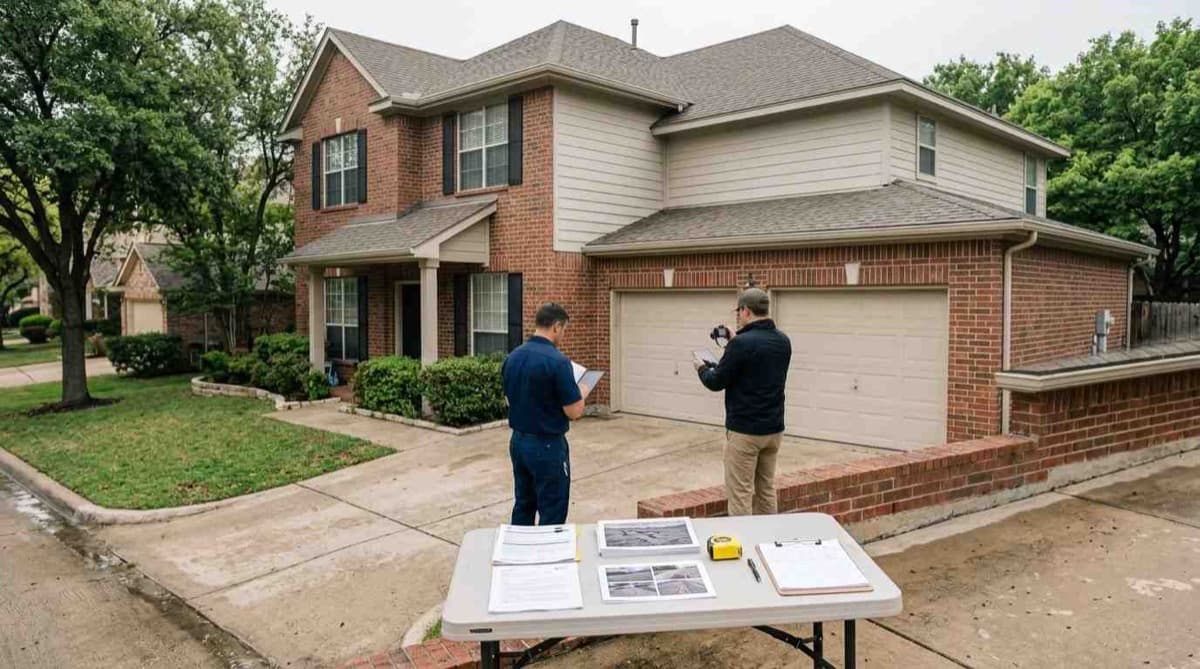
Letting a roofer mark your roof before the adjuster arrives can get your claim denied. Learn the right order of events and what to watch for.
Insurance
What Not to Say to a Roof Insurance Adjuster
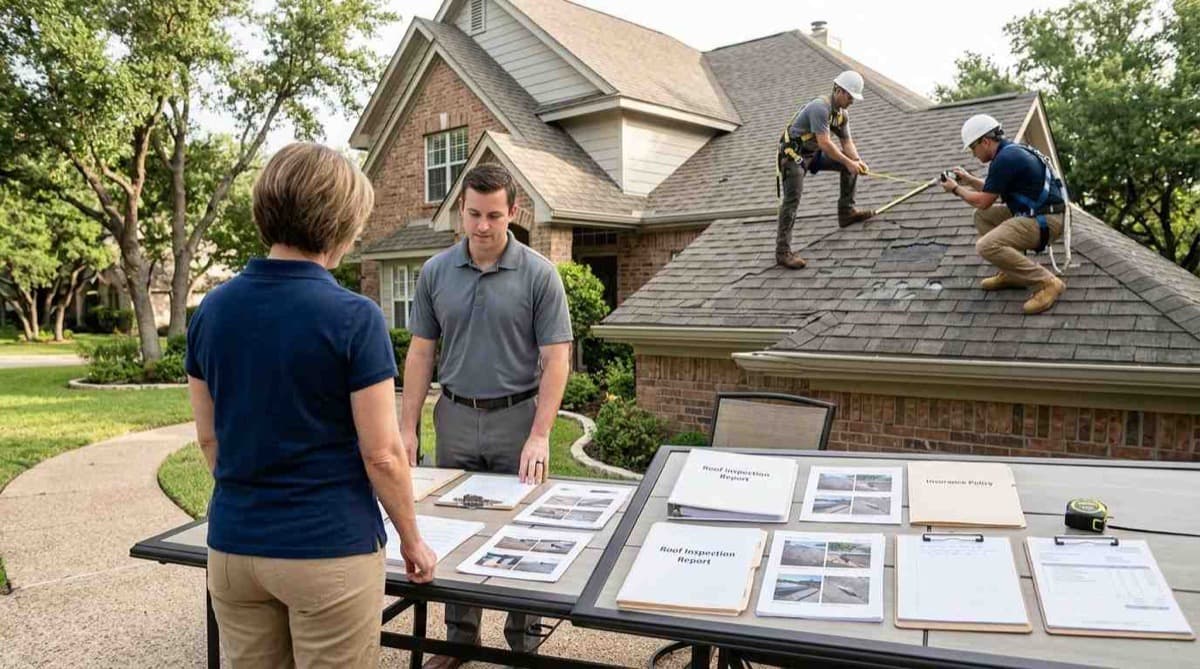
Protect your roof insurance claim. Learn exactly what not to say to a roof insurance adjuster in Austin, TX and what to say instead to get the settlement you deserve.
Insurance
What Insurance Adjusters Won't Tell You About Roof Claims
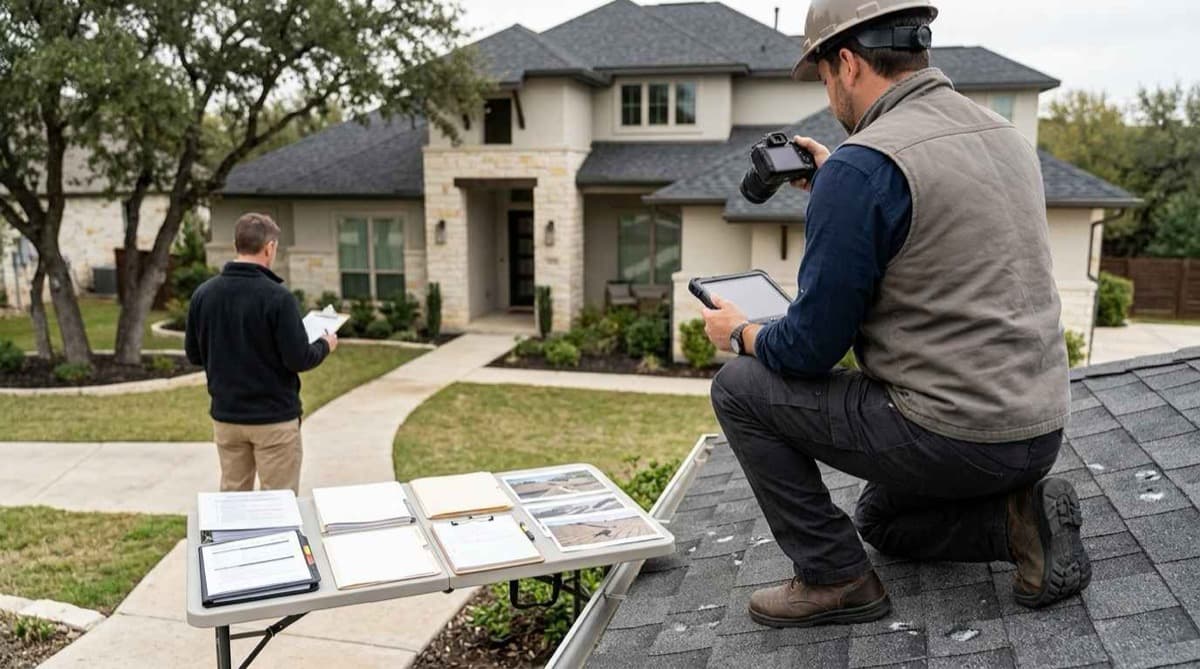
Insurance adjusters don't always share everything about your roof claim. Learn what they miss, how underpayments happen, and how to protect your payout in Austin, TX.
Ready for the next step?
Free inspection, real answers, no pressure.