
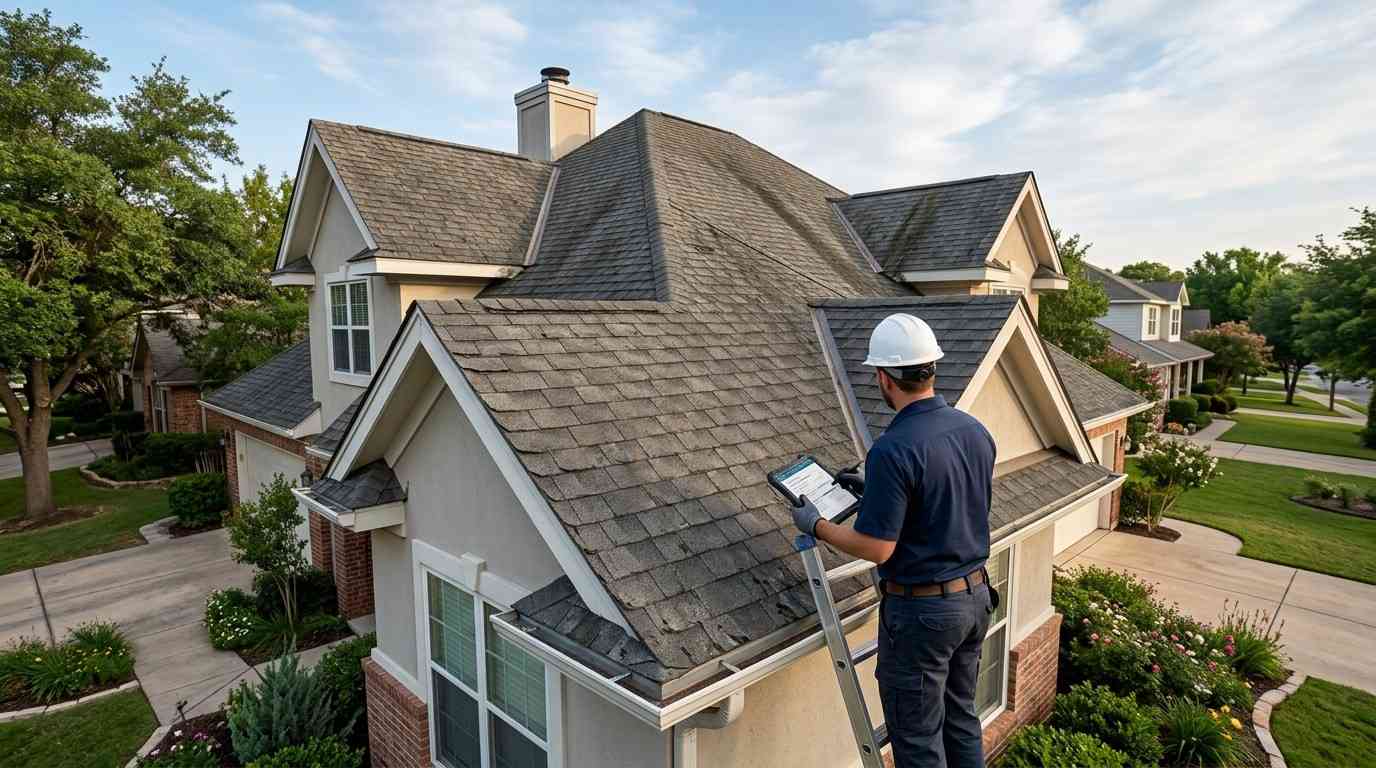
 A 20-year-old roof is not automatically too old but it is absolutely old enough to take seriously. Whether it needs replacing depends on the material it’s made from, the condition it’s in right now, and how hard Austin’s climate has worked against it over those two decades.
Age is a starting point, not a verdict. The real answer comes from what the roof looks like today and what it’s been through.
Here’s what I cover: material lifespans, the warning signs that matter, how Austin’s weather accelerates aging, how to decide between repair and replacement, and what insurance means for a roof at this age.
What Roofing Materials Are Actually Rated to Last
Not every roof ages the same way. The material installed 20 years ago determines whether you’re looking at a roof in its prime, one approaching the end, or one that’s already past it.
Material lifespan is the first number to know before drawing any conclusions about a 20-year-old roof.
Asphalt Shingles (15–30 Years)
Asphalt shingles are the most common roofing material in Austin, and their rated lifespan runs from 15 to 30 years depending on the product grade. A 20-year-old asphalt roof sits squarely in the middle of that range which means it could have years left, or it could be running out of time.
The honest answer is that condition matters more than the calendar here. A well-maintained asphalt roof in a shaded, low-storm area can push past 25 years. One that’s taken repeated hail hits and never had a proper inspection may be done at 18.
Architectural vs. 3-Tab Shingles
The type of asphalt shingle installed makes a real difference. 3-tab shingles are the thinner, older-style product typically rated for 15 to 20 years. Architectural (dimensional) shingles are thicker, heavier, and rated for 25 to 30 years.
A 20-year-old 3-tab roof is at or past its expected lifespan. A 20-year-old architectural shingle roof still has runway but only if it’s been maintained and hasn’t absorbed serious storm damage.
Metal, Tile, and Wood Shake Lifespans
Metal roofing is rated for 40 to 70 years. Clay and concrete tile runs 50 years or more. Wood shake typically lasts 20 to 30 years with proper maintenance. If your home has a metal or tile roof that’s 20 years old, age alone is not a concern condition and installation quality are what matter at that point.
What 20 Years of Wear Actually Looks Like
Age shows up in specific, identifiable ways. Knowing what to look for is the difference between catching a problem early and discovering it through a ceiling stain.
Visible Warning Signs on the Roof Surface
The clearest signals show up on the roof surface itself. Curling or cupping shingles mean the material is losing its structural integrity. Missing shingles even one or two expose the underlayment to water infiltration. Granule loss is another major indicator: when asphalt shingles shed their protective granule coating, UV degradation accelerates fast.
Dark streaking from algae growth, sagging sections along the ridge or field of the roof, and visible daylight through the decking are all signs that replacement is likely the right call. Any one of these on a 20-year-old roof warrants a professional evaluation immediately.
Interior Warning Signs (Attic + Ceilings)
The attic tells the story the roof surface sometimes hides. Water stains on the sheathing, daylight visible through the roof boards, and soft or spongy decking all point to moisture intrusion that’s been happening long enough to cause structural damage.
Inside the living space, ceiling stains, peeling paint near the roofline, and mold growth in upper rooms are downstream symptoms of the same problem. By the time these appear, the roof has been failing for a while.
How Austin’s Climate Accelerates Roof Aging
Austin’s weather is genuinely hard on roofing materials. A roof here ages faster than the same product installed in a milder climate, and that’s not an exaggeration it’s physics.
Heat, UV Exposure, and Thermal Cycling
Austin averages over 300 sunny days per year, and summer temperatures regularly push attic spaces past 150°F. That sustained heat and UV exposure breaks down asphalt binders, dries out wood components, and causes the thermal expansion and contraction cycle that loosens fasteners and cracks sealants over time.
A roof that’s been through 20 Austin summers has experienced significantly more thermal stress than the same roof in a cooler climate. That stress compounds and it’s one reason why Austin roofs often show their age earlier than their rated lifespans suggest.
Hail, Wind, and Storm Damage Accumulation
Central Texas sits in a hail corridor, and Austin sees multiple significant hail events most years. Each storm adds cumulative damage bruised shingles, cracked granule surfaces, and compromised flashing that may not be visible from the ground but shortens the roof’s remaining life.
Wind damage works the same way. Lifted shingles, broken seals, and displaced flashing from repeated high-wind events add up over two decades. A professional roof inspection after storm damage is the only reliable way to assess what 20 years of Austin weather has actually done.
Repair vs. Replacement How to Decide at 20 Years
This is the question most homeowners are really asking when they want to know if a 20-year-old roof is too old. The answer depends on the scope of the damage and the remaining useful life of the system.
The 50% Rule Explained
The industry standard most roofing contractors use is the 50% rule: when the cost of repairs reaches 50% or more of the cost of a full replacement, replacement is the smarter financial decision. Pouring money into a roof that’s near the end of its life delays the inevitable and often costs more in the long run.
On a 20-year-old asphalt roof, that threshold gets reached faster than most homeowners expect. Repairs address symptoms replacement addresses the system.
When a Repair Buys Real Time vs. Delays the Inevitable
A repair makes sense when the damage is genuinely isolated a few missing shingles after a single storm, a flashing failure at a chimney, a small section of lifted material. In those cases, a targeted repair on an otherwise sound roof extends its life meaningfully.
Replacement makes sense when the damage is widespread, when the material is at or past its rated lifespan, or when multiple repairs have already been done in recent years. At 20 years, a thorough roof replacement consultation gives you the full picture before committing to either path.
What a Professional Roof Inspection Reveals
A homeowner walking the yard and looking up sees maybe 20% of what a trained inspector sees. The other 80% is in the details and those details decide whether a repair or replacement is the right call.
What Inspectors Check That Homeowners Miss
A professional inspection covers the full roofing system: shingle condition across every plane, flashing integrity at all penetrations and transitions, ridge cap condition, soffit and fascia health, gutter attachment and drainage, and the attic’s ventilation and moisture status.
Inspectors also check for improper prior repairs patches that were done incorrectly, mismatched materials, or flashing that was never sealed properly. On a 20-year-old roof, those hidden issues are common. Getting a professional inspection before making any repair-or-replace decision is the right sequence, not an optional step.
Insurance and a 20-Year-Old Roof in Texas
Insurance coverage on an aging roof in Texas is a real concern, and it’s one that catches homeowners off guard at renewal time.
How Age Affects Coverage and Claims
Texas insurers increasingly scrutinize roofs over 15 to 20 years old. Some carriers will only offer actual cash value (ACV) coverage on older roofs rather than replacement cost value (RCV) meaning a claim payout reflects depreciation, not the full cost to replace. Others require a roof inspection before renewing a policy on a home with an aging roof.
A 20-year-old roof that hasn’t been inspected recently is a liability at renewal time. Knowing the roof’s condition before the insurer asks is a much stronger position to be in.
What to Do Before Your Policy Renews
Get a professional inspection documented before your policy renews. A written inspection report showing the roof’s current condition gives you leverage either to demonstrate the roof is sound or to use storm damage findings to support a legitimate insurance claim before the policy changes.
In Texas, hail and wind damage claims on roofs are common and often valid. A documented inspection is the foundation of any successful claim process.
Frequently Asked Questions
How do I know if my 20-year-old roof needs replacing?
The clearest signs are curling or missing shingles, significant granule loss, interior water stains, and sagging sections. A professional inspection gives you a definitive answer visual checks from the ground miss most of what matters.
Can a 20-year-old roof pass a home inspection?
Yes, it can if it’s in good condition and has been maintained. Home inspectors evaluate current condition, not age alone. A well-maintained architectural shingle roof at 20 years can pass without issue.
How long can I go without replacing a 20-year-old roof?
That depends entirely on the material and its current condition. A 20-year-old architectural shingle roof in good shape may have 5 to 10 years left. A 20-year-old 3-tab shingle roof is at or past its rated lifespan and needs evaluation now.
Does homeowners insurance cover a 20-year-old roof in Texas?
Coverage depends on your carrier and policy type. Many Texas insurers shift older roofs to actual cash value coverage, which pays out less than replacement cost. Reviewing your policy and getting a current inspection before renewal is the right move.
What is the average cost to replace a roof in Austin, TX?
A full roof replacement in Austin typically runs between $8,000 and $20,000 or more depending on roof size, pitch, material choice, and the complexity of the job. Architectural shingles on a standard single-story home generally fall in the $10,000 to $14,000 range.
Conclusion
A 20-year-old roof is not automatically a failed roof but it is a roof that deserves a serious, professional look. Material type, condition, and Austin’s demanding climate all shape what the next right step actually is.
The repair-or-replace decision at this age is too consequential to make without complete information. An inspection gives you that information before a small problem becomes a large one.
We’re here to help Austin homeowners make that call with confidence. Contact Tarrytown Roofing for a professional roof inspection and get a clear, honest assessment of exactly where your roof stands.