Comparison
TPO vs PVC Commercial Roofing: Which Is Right for Austin?
Published 2026-07-17T00:00:00+00:00
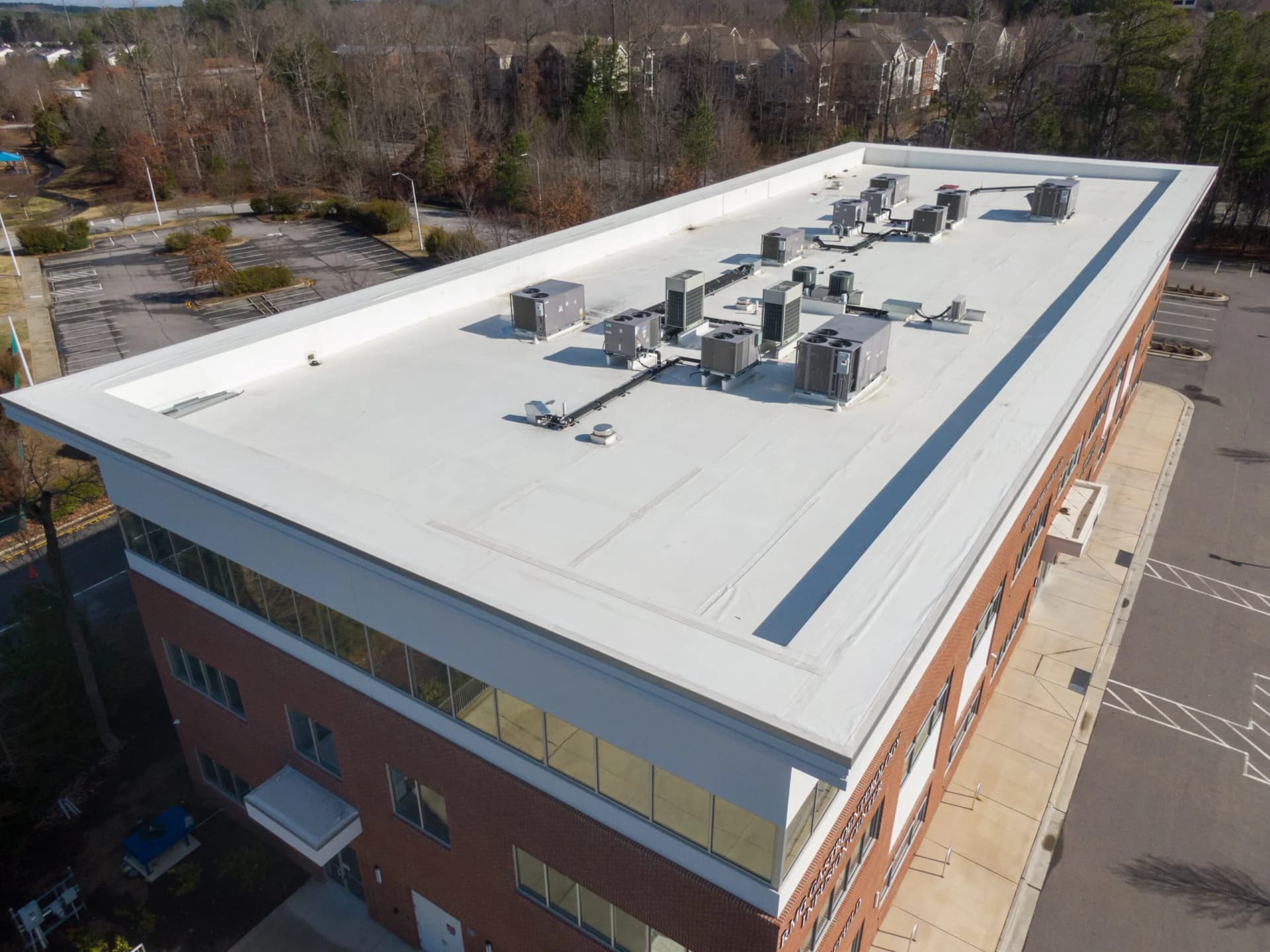
TPO commercial roofing costs $8-$14 per square foot installed and lasts 20-30 years in Central Texas heat; PVC costs $12-$18 per square foot and lasts 30-40 years. TPO wins on upfront cost and reflective energy performance; PVC wins on chemical resistance and long-term durability. Most Austin commercial buildings default to 60-mil TPO for the balance of cost, performance, and lifespan.
TPO (thermoplastic polyolefin) commercial roofing costs $8 to $14 per square foot installed and lasts 20-30 years in Central Texas heat; PVC (polyvinyl chloride) costs $12 to $18 per square foot and lasts 30-40 years. TPO wins on upfront cost and reflective energy performance; PVC wins on chemical resistance and long-term durability. Most Austin commercial buildings default to 60-mil TPO for the balance of cost, performance, and lifespan.
What are TPO and PVC roofing systems?
Both are single-ply thermoplastic membranes used on low-slope commercial buildings. TPO is a polyolefin polymer; PVC is polyvinyl chloride. Both install as heat-welded membranes that fuse at seams into a monolithic roof surface. The membrane chemistry is what drives their different performance characteristics on cost, lifespan, chemical resistance, and heat performance.
Here is the direct comparison for typical Austin commercial applications:
| Metric | TPO | PVC | | --- | --- | --- | | Cost per sq ft installed | $8-$14 | $12-$18 | | Typical thickness options | 45-mil, 60-mil, 80-mil | 40-mil, 50-mil, 60-mil, 80-mil | | Expected life (Central Texas) | 20-30 years | 30-40 years | | Solar reflectance (white) | 0.70-0.85 | 0.70-0.85 | | Chemical resistance | Good | Excellent | | Heat-weld quality margin | Narrow | Wide | | Manufacturer track record | ~20 years | ~40 years | | Warranty options | 15-25 years | 20-30 years | | Recyclable | Yes | Yes (in some jurisdictions) |
Which is cheaper installed?
TPO. On a typical 10,000 sq ft commercial roof, expect: 60-mil TPO $80,000-$120,000; 60-mil PVC $120,000-$160,000. The delta is roughly 30-50%, real money on any meaningful commercial project. If upfront cost is the primary constraint, TPO wins.
Which lasts longer?
PVC, in most Central Texas conditions. PVC has 40+ years of field data in Central Texas commercial applications; TPO has ~20 years. PVC's chemistry is more UV-stable and chemically inert, so it degrades slower under the Austin sun. Expect 30-40 years from a properly installed 60-mil PVC roof versus 20-30 years from equivalent TPO.
Which handles chemical exposure better?
PVC. PVC is essentially inert against most industrial chemicals, greases, oils, and cleaning agents. TPO is chemically resistant but not immune, restaurant grease vents, industrial chemical exposure, or airborne contaminants can degrade TPO faster than PVC. For food service, industrial, or medical buildings with rooftop chemical exposure, PVC is worth the premium.
Which is better for cool-roof performance?
Roughly equal. Both TPO and PVC in white membrane color deliver solar reflectance of 0.70 to 0.85, cutting Austin summer cooling load 10-25% on typical commercial buildings. Both qualify for ENERGY STAR ratings and LEED credits. On this metric, the choice doesn't matter, pick either.
Which is easier to install correctly?
PVC. PVC has a wider heat-welding temperature window than TPO, the weld tolerance is more forgiving of installer variability. TPO's narrower window means installation quality matters more; a mediocre TPO installer will produce a roof that fails at seams within 8-12 years, while the same installer's PVC roof might make it to 20+ years. This is why installer certification matters more on TPO than on PVC.
How do I evaluate an installer for either system?
Look for manufacturer certification with the specific membrane brand (Carlisle, GAF EverGuard, Versico, Firestone, IB Roof Systems). Ask how many similar buildings they've installed in the last 3 years. Look for photos of completed heat-welded seams in the portfolio, good work looks tight and uniform. Verify insurance carrying $2M+ commercial general liability. Tarrytown Roofing is Malarkey Certified Pro and works with all major single-ply manufacturers.
Which is better for reroofs vs new construction?
Both work equally well for reroofs when installed over sound existing membrane with proper insulation layers. For new construction, either system works, the choice is driven by lifecycle cost, chemical exposure, and building-owner preferences on upfront capital vs long-term value.
What about wind uplift?
Both systems achieve high wind uplift ratings when installed with mechanical fastening and proper edge detailing. 60-mil membranes with 12-inch on-center fastener pattern achieve 150+ mph uplift. For Austin's typical wind exposure (110-130 mph), any properly-installed 60-mil single-ply meets code with margin.
What's the right choice for most Austin commercial buildings?
60-mil TPO. It delivers acceptable 20-30 year lifespan at 30-50% lower cost than PVC, matches PVC on solar reflectance, and handles the typical office/retail/hospitality building environment without chemical concerns. For high-value commercial buildings owned 30+ years, or buildings with rooftop chemical exposure, upgrade to PVC. For value-tier commercial buildings or short-term hold periods, 60-mil TPO is the clear pick.
Ready to compare TPO and PVC for your specific Austin commercial building?
Tarrytown Roofing offers free commercial roof assessments, we walk the roof, measure the membrane and insulation, review the existing warranty documentation, and provide side-by-side quotes for both systems within 5 business days. Call (512) 777-1219 or book online.
Related
Comparison
Shingle vs Metal vs Tile Roofing: Which Is Best for Central Texas?
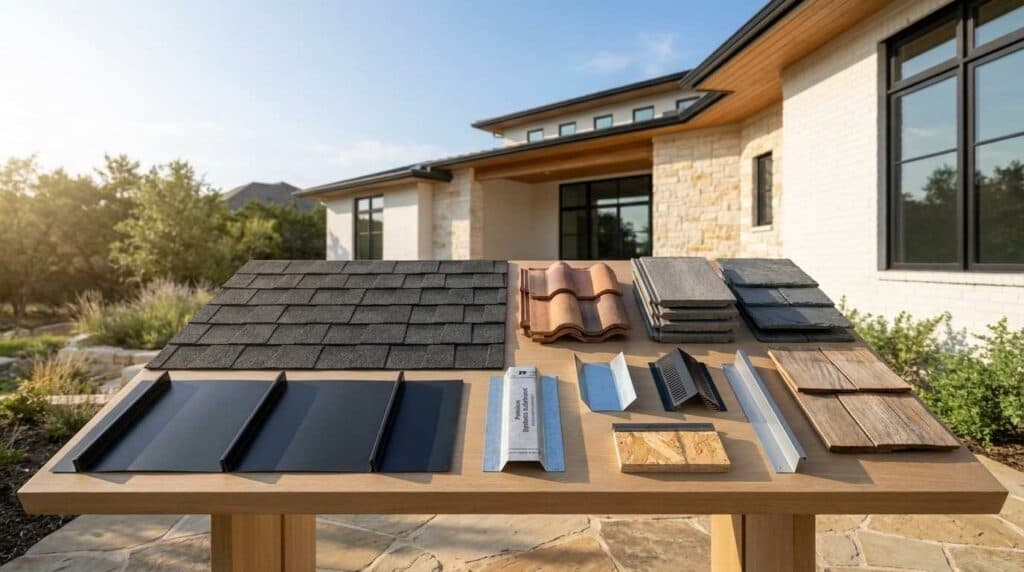
Asphalt shingle costs $8,000 to $15,000 installed and lasts 15 to 25 years in Central Texas; standing-seam metal runs $18,000 to $45,000 and lasts 40 to 60 years; clay and concrete tile costs $25,000 to $60,000+ and lasts 50+ years. Metal has the best hail resistance and highest energy savings; shingle has the lowest upfront cost; tile has the longest lifespan and highest resale.
Comparison
Are Class 4 Impact-Resistant Shingles Worth It in Austin?
Class 4 impact-resistant shingles cost 15-25% more than standard architectural shingles but typically qualify for a 5-15% homeowner's insurance premium reduction in Texas, most Austin homeowners recover the extra cost within 3-6 years while getting a roof rated for 2-inch hail impact.
Ready for the next step?
Free inspection, real answers, no pressure.