What Color Roof Fades the Least?

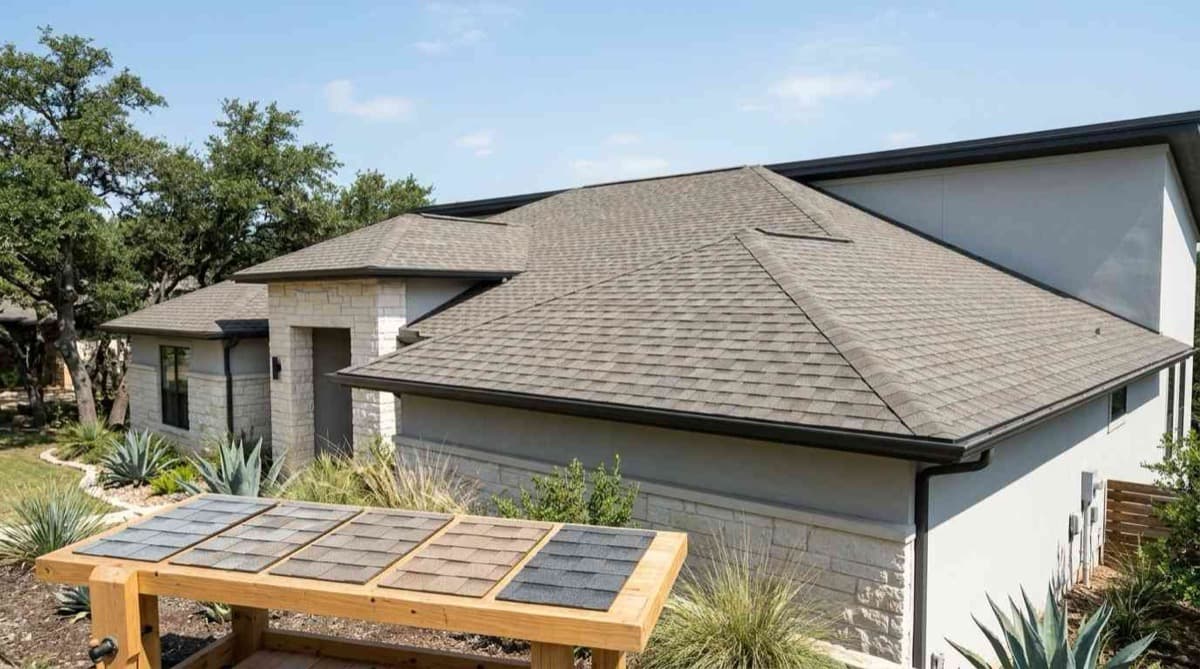
Premium asphalt shingle color samples in earth tones and cool gray displayed beside a modern Austin home, illustrating the roofing colors that resist fading best in high-UV climates.Earth tones, cool grays, and medium-range neutrals fade the least  and the right roofing material makes just as big a difference as the color itself. I’ve seen plenty of roofs in Austin that looked sharp on installation day and washed out within five years, not because of poor luck, but because of the wrong color and material combination for this climate.

Roof color fade is a real cost. A faded roof signals age, reduces curb appeal, and can quietly chip away at your home’s resale value before you ever notice it happening.

This guide covers why roofs fade, which colors hold up longest, how materials and technology affect color retention, and what Austin homeowners specifically need to know.

Why Roof Color Fades in the First Place

Roof color doesn’t fade randomly. There are specific forces working against it every single day, and understanding them makes it easier to choose a color that actually holds.

The two biggest culprits are UV radiation and thermal stress. Both are relentless in a climate like Austin’s, and both attack roof color through different mechanisms.

UV Radiation and Heat Absorption

UV rays break down the chemical bonds in pigments over time. This is the same process that fades outdoor furniture, car paint, and fabric  and your roof takes a far more direct hit than any of those surfaces.

Dark colors absorb more heat, which accelerates the breakdown. A dark charcoal or black roof in full Texas sun can reach surface temperatures well above 150°F on a summer afternoon, and that thermal cycling  heating up and cooling down repeatedly  stresses the pigment structure with every passing day.

Lighter colors reflect more of that solar energy. Less absorption means less heat stress, which means slower pigment degradation.

Material Composition and Pigment Stability

Not all roof pigments are created equal. Standard organic pigments break down faster under UV exposure than inorganic pigments, which is why inorganic pigment technology has become a standard feature in premium roofing products.

The granules on asphalt shingles, the coatings on metal panels, and the natural mineral composition of tile all play a role in how well a roof holds its color. A cheap shingle with low-grade granules will fade noticeably faster than a premium product using ceramic-coated granules, even in the exact same color.

The Colors That Fade the Least

Color choice is one of the most controllable fade factors. Some colors are simply more stable under prolonged UV and heat exposure than others.

Earth Tones and Neutral Shades

Browns, tans, beiges, and warm grays are consistently the most fade-resistant color family for residential roofing. These colors sit in the mid-range of the light-to-dark spectrum, which means they don’t absorb heat as aggressively as dark colors and don’t show UV bleaching as visibly as very light colors.

They also tend to use more stable inorganic pigments in their formulation. A weathered wood brown or a warm desert tan on a quality asphalt shingle will look remarkably close to its original color a decade after installation.

This is one reason earth tones dominate residential roofing in sun-heavy markets across the South and Southwest.

Cool Grays and Slate Tones

Cool grays and blue-grays are another strong performer. These colors reflect a meaningful portion of solar radiation while using pigment formulations that resist UV bleaching well.

Slate-toned shingles in particular have benefited from advances in cool roof pigment technology, which allows darker-appearing colors to reflect infrared radiation even when they look relatively dark to the eye. The visual color stays more stable because the material isn’t absorbing as much energy in the first place.

Why Dark Colors Fade Faster

Dark charcoals, deep blacks, and rich forest greens absorb the most solar energy. That heat accelerates pigment breakdown, and the contrast between a fresh dark shingle and a faded one is far more visible than the same fade on a neutral tone.

This doesn’t mean dark roofs are a bad choice  they can look stunning and some premium products manage fade well even in dark tones. But the fade risk is real, and it’s higher in high-UV climates like Austin than in cooler, cloudier regions.

Roofing Materials and Their Fade Resistance

Color choice matters, but the material carrying that color matters just as much. Different roofing materials have very different relationships with long-term color retention.

Asphalt Shingles  Granule Protection

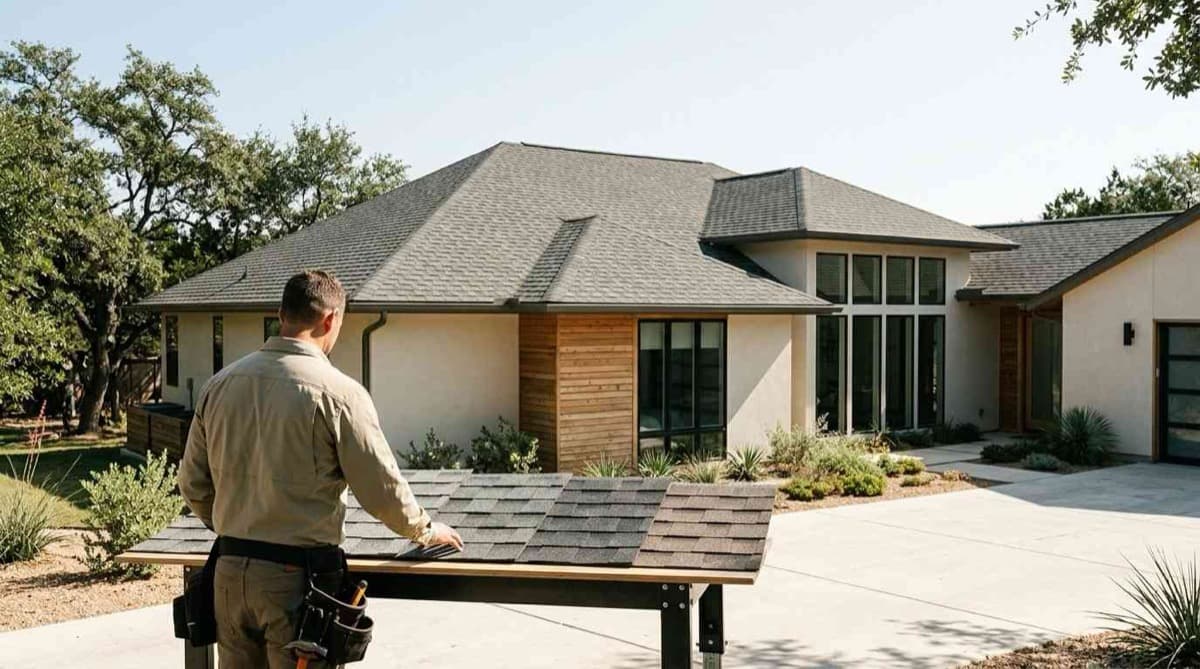
Asphalt shingles protect their color through the granule layer embedded in the surface. Those granules act as a UV shield for the asphalt beneath. When granules are high quality  ceramic-coated, tightly bonded, and densely applied  they do an excellent job of preserving color for 15 to 20 years or more.

When granules are thin or low-grade, UV penetrates more easily, the asphalt oxidizes, and the color shifts toward a bleached, chalky appearance. Premium shingle lines from manufacturers like GAF, Owens Corning, and CertainTeed invest heavily in granule quality specifically because color retention is one of the top homeowner concerns.

Metal Roofing  Fade-Resistant Coatings

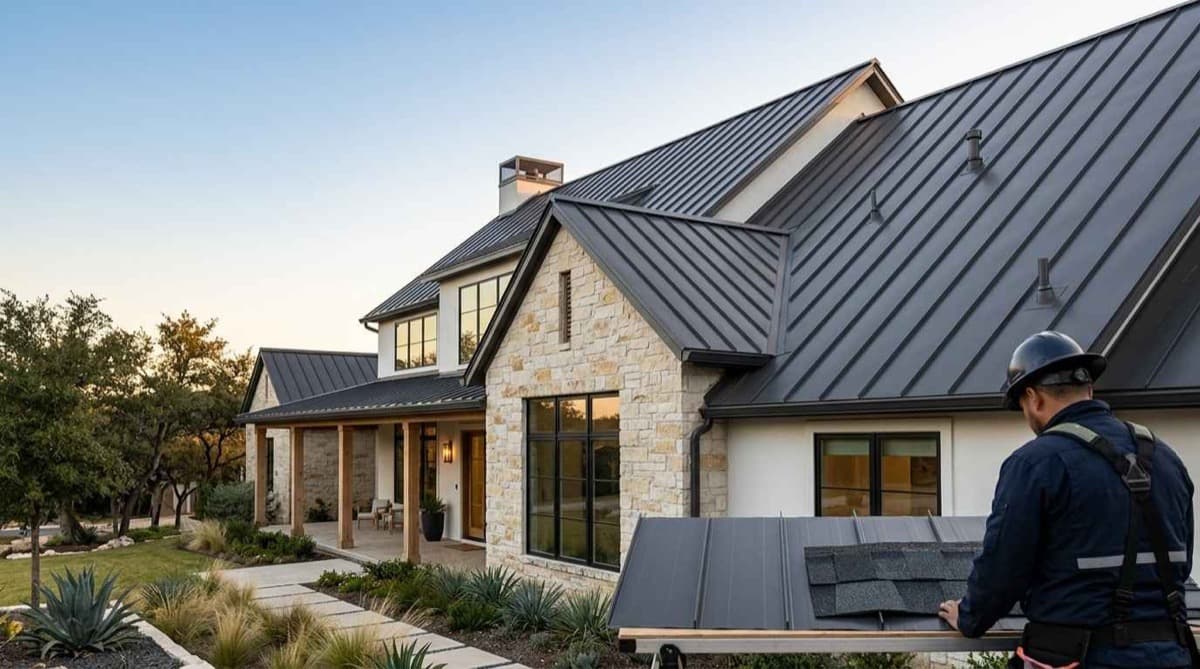
Metal roofing holds color exceptionally well when it carries a quality factory-applied coating. Kynar 500 and Hylar 5000 PVDF coatings are the industry standard for fade resistance on metal panels, and they’re backed by some of the strongest color-retention warranties in the roofing industry  often 30 to 40 years for significant color change.

Metal also doesn’t have granules to lose or asphalt to oxidize. The color lives in the coating, and a quality PVDF coating is remarkably resistant to UV degradation.

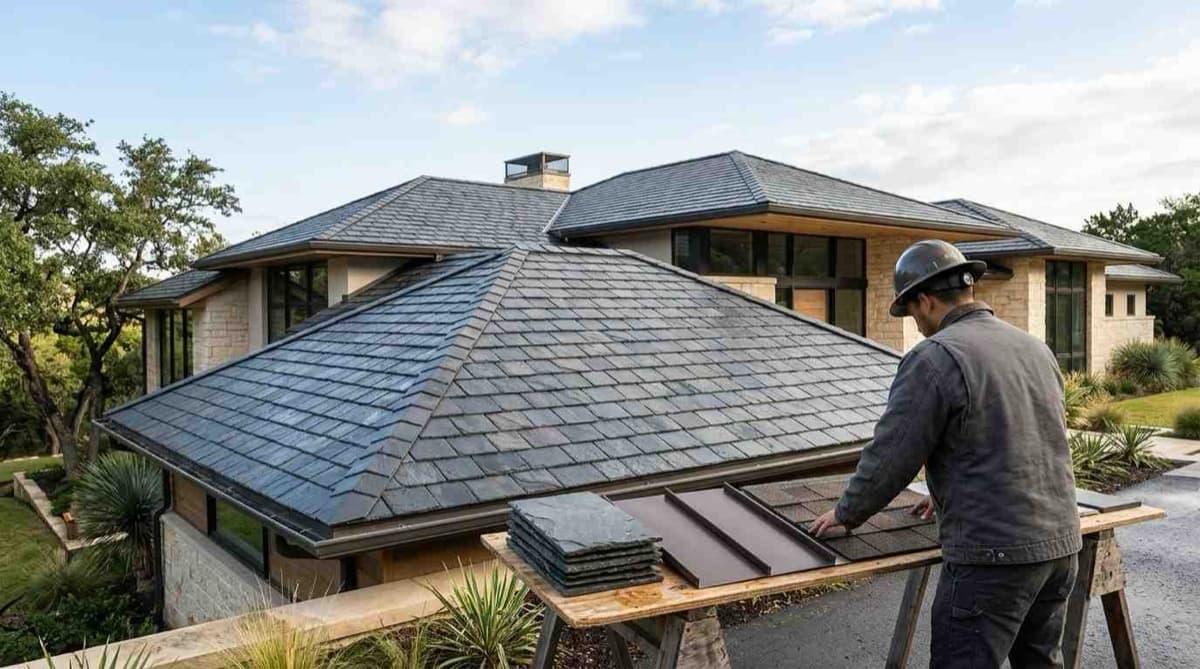
Tile and Slate  Natural Color Stability

Concrete tile and clay tile get their color from mineral pigments baked into the material itself. There’s no surface coating to peel or granules to shed. The color is part of the tile’s structure.

This gives tile and slate some of the best long-term color stability of any roofing material. A clay tile roof in a warm earth tone can look essentially the same after 30 years as it did on day one  which is one reason tile dominates in high-sun markets across the Southwest and Mediterranean climates.

How Roofing Technology Fights Color Fade

The roofing industry has made significant advances in fade resistance over the past two decades. Homeowners today have access to products that perform dramatically better than what was available even ten years ago.

IR-Reflective Pigments and Cool Roof Technology

Infrared-reflective pigments are one of the most important developments in modern roofing. These pigments allow a shingle or coating to reflect the infrared portion of sunlight  the part that generates the most heat  even when the color appears dark to the human eye.

The result is a roof that stays cooler, experiences less thermal stress, and holds its color longer. The Cool Roof Rating Council maintains a rated products directory where homeowners can verify the solar reflectance and thermal emittance ratings of specific products before purchasing.

This technology is especially valuable in Austin, where summer sun intensity is extreme and roof surface temperatures without IR-reflective materials can reach damaging levels.

Manufacturer Warranties and Color Retention Ratings

Most premium roofing manufacturers now offer explicit color retention warranties. These typically cover “significant” color change  often defined as a Delta E value of 5 or more on a standardized color measurement scale  for periods ranging from 10 years on entry-level products to lifetime coverage on premium lines.

Reading the warranty language carefully matters. A warranty that covers “manufacturing defects” is not the same as one that covers color retention specifically. When comparing products, ask your contractor to show you the color retention warranty terms side by side.

Austin, TX Climate Considerations for Roof Color

Austin’s climate creates specific challenges for roof color longevity that homeowners in cooler or cloudier markets don’t face at the same intensity.

Heat, Sun Intensity, and Long-Term Color Performance

Austin averages over 220 sunny days per year, and summer temperatures regularly push into the upper 90s and beyond. That combination of high UV index and sustained heat makes Austin one of the more demanding environments for roofing materials in the country.

For Austin homeowners, the practical guidance is straightforward. Prioritize IR-reflective products, lean toward earth tones or cool grays over very dark colors, and choose a material with a documented color retention warranty. Metal roofing with a PVDF coating and premium asphalt shingles with ceramic-coated granules both perform well here.

The energy benefit is real too. A roof that reflects more solar energy keeps attic temperatures lower, which reduces cooling load during Austin’s long summers. That’s a performance benefit that compounds over the life of the roof.

Choosing the Right Roof Color for Long-Term Value

Fade resistance is one factor in color selection, but it doesn’t exist in isolation. Most homeowners are balancing aesthetics, neighborhood context, HOA requirements, and long-term value all at once.

Balancing Aesthetics, HOA Rules, and Fade Resistance

Many Austin neighborhoods and HOA communities have approved color palettes for roofing. The good news is that most approved palettes already skew toward earth tones and neutral grays  the same colors that happen to perform best for fade resistance.

If you’re working within HOA constraints, ask your contractor to pull the specific approved color options from the manufacturer’s current line and compare their color retention ratings directly. In most cases, the most aesthetically popular options and the most fade-resistant options overlap significantly.

The goal is a roof that looks as good in year fifteen as it did in year one. Choosing the right color and the right material together is how you get there.

Conclusion

Earth tones, cool grays, and neutral shades consistently outperform darker and more saturated colors for long-term fade resistance  and pairing those colors with the right material makes the difference between a roof that holds its look and one that doesn’t.

In Austin’s high-UV, high-heat climate, IR-reflective pigments and quality coatings aren’t optional extras. They’re the baseline for a roof that performs well over time.

At Tarrytown Roofing, we help Austin homeowners choose the right color and material combination for their specific home, climate, and budget. Reach out to us and let’s talk through your options.

Frequently Asked Questions

What roof color lasts the longest without fading?

Earth tones and cool grays last the longest without visible fading. These mid-range colors use stable inorganic pigments and reflect enough solar energy to reduce the heat stress that accelerates color breakdown.

Do lighter or darker roof colors fade faster?

Dark colors fade faster because they absorb more heat, which accelerates pigment breakdown. Very light colors can show UV bleaching more visibly over time. Mid-range neutrals tend to hold their appearance the longest.

How long does roof color typically last?

On a quality asphalt shingle with ceramic-coated granules, color holds well for 15 to 20 years. Metal roofing with a PVDF coating can retain color for 30 to 40 years. Tile and slate often maintain color for the life of the roof.

Does roof color affect home temperature in Austin?

Yes, significantly. Lighter and IR-reflective roof colors reflect more solar energy, keeping attic temperatures lower. In Austin’s climate, the right roof color and material combination can meaningfully reduce summer cooling costs.

What roofing material holds color the best?

Metal roofing with a Kynar 500 or Hylar 5000 PVDF coating holds color the best, followed by clay and concrete tile. Premium asphalt shingles with ceramic-coated granules also perform well when properly installed and maintained.

Can a faded roof be restored without replacement?

In some cases, yes. Roof coatings can refresh the appearance of metal roofs and extend their life. Asphalt shingles with significant granule loss or UV damage typically need replacement rather than restoration, since the color loss reflects deeper material degradation.

WHY WAIT! GET A FREE ESTIMATE & CONSULTATION