What Shingle Color Lasts the Longest?

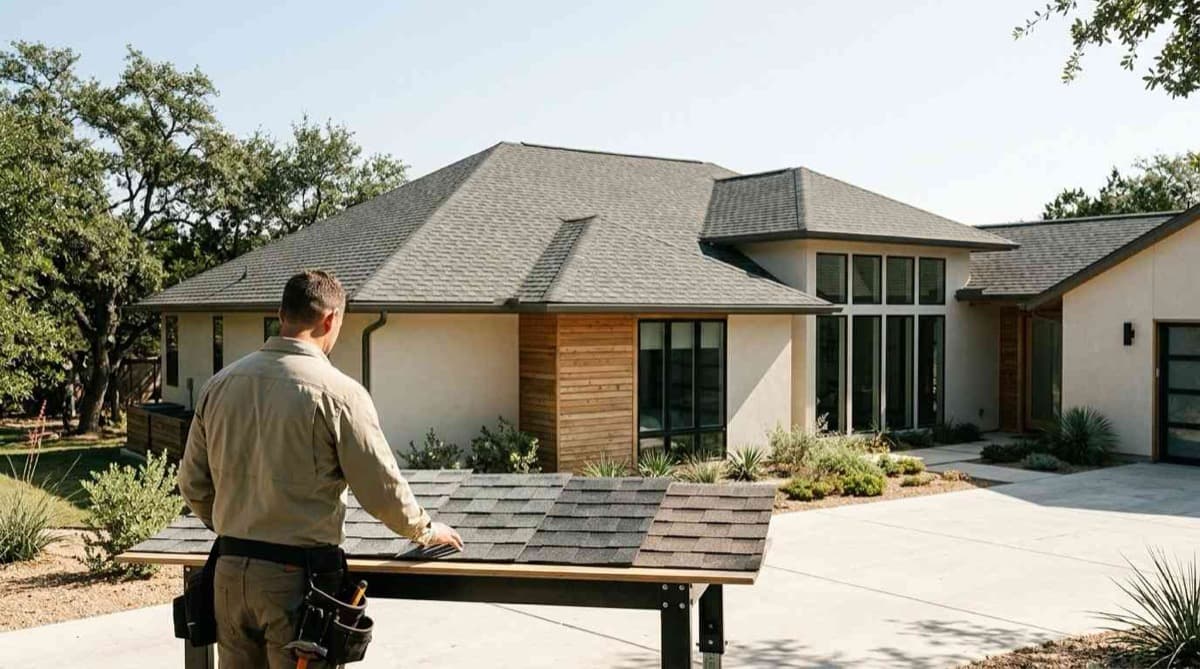
Weathered gray architectural asphalt shingles displayed beside a modern Austin home, illustrating durable shingle colors that maintain their appearance and resist fading over time.Light and medium-toned shingles generally last the longest in hot climates like Austin, TX  because they absorb less heat, reduce thermal stress, and slow the UV degradation that breaks down asphalt over time.

Color is one piece of the puzzle, but it’s a piece most homeowners overlook entirely when budgeting for a new roof.

In this guide, I’ll walk through how shingle color affects longevity, which tones perform best in Texas heat, and what factors matter even more than color when you’re trying to get the most years out of your roof.

Does Shingle Color Actually Affect Longevity?

Yes  shingle color does affect how long your roof lasts, though not in the way most people expect. It’s not about aesthetics. It’s about physics.

Dark colors absorb more solar radiation. Light colors reflect it. That difference in heat absorption creates a chain reaction that either accelerates or slows the aging of your shingles.

Heat Absorption and UV Degradation

Dark shingles can reach surface temperatures of 150°F or higher on a hot Texas afternoon. That sustained heat causes the asphalt binder inside the shingle to oxidize faster, which makes the shingle brittle, dry, and prone to cracking.

UV radiation compounds the problem. According to the U.S. Department of Energy’s Building Technologies Office, roofing materials with lower solar reflectance absorb significantly more heat energy, which accelerates material degradation over time. Granule loss  the shedding of the protective mineral surface on asphalt shingles  happens faster on darker surfaces exposed to intense UV.

The result is a shorter effective lifespan, even if the shingle carries the same warranty as a lighter-colored product.

How Color Relates to Material Breakdown

Asphalt shingles expand and contract with temperature swings. This is called thermal cycling, and it’s one of the primary mechanical stressors on a roof.

Dark shingles experience more extreme thermal cycling because they heat up faster and cool down faster than lighter ones. Over years of daily expansion and contraction, the shingle substrate weakens, seals fail, and edges begin to curl.

Lighter shingles run cooler, cycle less aggressively, and hold their structural integrity longer  especially in climates with intense sun exposure.

Which Shingle Colors Last the Longest?

In hot, high-UV climates, lighter and medium-toned shingles consistently outperform dark ones in terms of lifespan. The science behind this is straightforward: less heat absorbed means less thermal stress, less oxidation, and slower granule loss.

That said, climate matters enormously. The “best” color for longevity in Austin is not the same as the best color in Minnesota.

Light and Medium Tones in Hot Climates

In hot climates, light gray, tan, beige, and medium brown shingles  tend to last the longest. These tones reflect a meaningful portion of solar energy rather than absorbing it, which keeps the shingle surface cooler throughout the day.

The ENERGY STAR program certifies roofing products that meet minimum solar reflectance and thermal emittance thresholds. Shingles earning this designation  which skew heavily toward lighter colors  are independently verified to reduce heat gain and, by extension, reduce the thermal stress that shortens shingle life.

Choosing a lighter-toned shingle in Austin isn’t just an aesthetic decision. It’s a durability decision.

Darker Colors in Cooler Climates

In cooler climates with harsh winters, the calculus flips. Dark shingles absorb heat from winter sun, which helps melt snow and ice faster and reduces the risk of ice dam formation along the eaves.

Freeze-thaw cycling  water freezing and expanding inside shingle layers  is a major cause of premature failure in cold climates. Dark shingles that stay warmer through winter sun absorption experience less of this damage. In those regions, a darker shingle may genuinely outlast a lighter one.

Austin doesn’t have that problem. Texas heat is the dominant stressor here, which is why lighter tones win on longevity in this market.

What Matters More Than Color for Shingle Lifespan

Color influences lifespan, but it doesn’t control it. The three factors below have a bigger impact on how long your roof actually lasts than the color you choose.

Shingle Material and Quality Grade

The material and grade of your shingle is the single biggest longevity driver. A high-quality architectural (dimensional) shingle in a dark color will outlast a low-grade 3-tab shingle in the lightest possible tone.

Architectural shingles  are thicker, heavier, and built with multiple asphalt layers that resist wind, impact, and UV far better than standard 3-tab products. Class 4 impact-resistant shingles  rated for hail resistance  add another layer of durability that matters significantly in Texas storm country.

Spending more on material grade pays off in years of additional service life. Color is a secondary consideration once you’ve locked in the right material.

Ventilation and Attic Conditions

Poor attic ventilation is one of the most common causes of premature shingle failure  and most homeowners never know it’s happening until the damage is done.

When hot air gets trapped in an under-ventilated attic, it superheats the roof deck from below. That heat bakes the shingles from the underside while the sun bakes them from above. The National Roofing Contractors Association consistently identifies inadequate ventilation as a leading contributor to shortened shingle lifespan across all climate zones.

Proper ridge and soffit ventilation keeps attic temperatures in check, protects the roof deck, and extends the life of whatever shingles are installed above it.

Installation Quality and Workmanship

Even the best shingle fails early if it’s installed wrong. Improper nail placement, missing or incorrectly applied underlayment, poor flashing around penetrations, and inadequate sealing at valleys and edges all create failure points that no color choice can compensate for.

This is why choosing a qualified, experienced roofing contractor matters as much as choosing the right shingle. The material is only as good as the installation behind it.

Shingle Color and Climate in Austin, TX

Austin sits in a high-UV, high-heat climate zone with long summers, intense direct sun, and relatively mild winters. That combination makes heat management the primary roofing concern  and it makes color selection more consequential here than in many other parts of the country.

Best Color Choices for Texas Heat

For Austin homeowners, I consistently recommend light gray, tan, light brown, and weathered wood tones. These colors strike the right balance between solar reflectance and curb appeal  they keep the roof cooler, reduce thermal cycling stress, and still look sharp on most Central Texas home styles.

Avoid very dark charcoal or black shingles if longevity is your primary concern. They absorb the most heat, experience the most thermal stress, and will show granule loss and aging faster in Austin’s climate than lighter alternatives.

One practical note: always check HOA guidelines before finalizing a color. Many Austin-area neighborhoods have approved color palettes, and your manufacturer’s warranty may also have conditions tied to proper installation and ventilation that are worth reviewing before you commit.

How to Choose a Shingle Color That Lasts

Start with climate. In Austin, that means prioritizing solar reflectance over aesthetics  though the two don’t have to conflict. Plenty of light and medium tones look excellent on Central Texas homes.

Next, look at material grade. Lock in the right shingle type  architectural, impact-resistant, or premium  before you spend time on color. A great color on a mediocre shingle is still a mediocre roof.

Then confirm your ventilation situation. If your attic runs hot, no color choice fully compensates for the heat damage happening from below. Address ventilation first.

Finally, work with a contractor who knows Austin’s climate and can walk you through manufacturer options, warranty terms, and color samples in the context of your specific home and roof pitch. Color looks different on a steep slope than on a low-pitch roof, and a good contractor accounts for that.

Conclusion

Shingle color does affect longevity  especially in a high-heat market like Austin, TX. Lighter and medium tones reflect more solar energy, reduce thermal stress, and slow the UV degradation that shortens asphalt shingle life.

But color is one variable in a larger equation. Material grade, attic ventilation, and installation quality all have a bigger impact on how long your roof lasts than the color you choose.

At Tarrytown Roofing, we help Austin homeowners make roofing decisions that hold up for decades  not just look good on day one. Reach out to our team for a free roof assessment and honest guidance on the right shingle for your home, your climate, and your budget.

Frequently Asked Questions

Does a darker shingle color shorten roof life?

In hot climates like Austin, yes  darker shingles absorb more heat, which accelerates UV degradation and thermal cycling. Over time, that added stress shortens the effective lifespan of the shingle compared to lighter alternatives.

What color shingles are best for hot climates?

Light gray, tan, beige, and medium brown shingles perform best in hot climates. They reflect more solar energy, run cooler, and experience less thermal stress than dark shingles  all of which extends their service life.

Do light-colored shingles last longer than dark ones?

In high-heat, high-UV climates, yes. Light shingles absorb less heat, cycle less aggressively through expansion and contraction, and resist UV degradation better than dark shingles under intense sun exposure.

What shingle color is most popular in Texas?

Tan, light gray, and weathered wood tones are among the most popular shingle colors in Texas. They complement the region’s architectural styles and perform well in the state’s hot, sunny climate.

Does shingle color affect energy efficiency?

Yes. Lighter shingles reflect more solar radiation, which reduces heat transfer into the attic and lowers cooling loads. ENERGY STAR-certified roofing products  which are predominantly lighter in color  are independently verified to reduce roof surface temperatures and improve home energy performance.

How long do asphalt shingles last in Austin, TX?

Most architectural asphalt shingles last 20 to 30 years in Austin under normal conditions. Proper ventilation, quality installation, and choosing a lighter color that reduces thermal stress all push that number toward the higher end of the range.

WHY WAIT! GET A FREE ESTIMATE & CONSULTATION