What Color Roof Increases Home Value?
Charcoal gray, weathered wood, and cool neutral tones are the roof colors most proven to increase home value and in Austin’s competitive resale market, the right choice can make a measurable difference.
Roof color shapes how buyers see your home before they ever step inside. It signals maintenance, quality, and taste in a single glance.
This article covers the top value-adding roof colors, the ones that hurt resale, how Austin’s climate factors in, and how material and color work together to protect your investment.
Why Roof Color Affects Home Value More Than You Think
Most homeowners focus on square footage, kitchen upgrades, and landscaping when they think about resale value. The roof rarely makes the list. That’s a mistake.
Roof color is one of the first things a buyer sees from the street. It sets the tone for the entire exterior, and buyers form opinions about a home’s condition and appeal within seconds of pulling up.
According to Remodeling Magazine’s Cost vs. Value Report, a new roof consistently ranks among the top exterior improvements for return on investment. Color is a direct extension of that investment the wrong choice can undercut the value a new roof adds.
The Connection Between Curb Appeal and Appraisal Value
Appraisers use comparable sales to set value, but curb appeal influences the baseline perception that shapes every number in the process. A home that looks well-maintained and visually cohesive from the street commands stronger comps.
Buyers factor exterior aesthetics into their offers, too. A roof color that clashes with the siding, looks dated, or reads as high-maintenance creates hesitation and hesitation costs money at the negotiating table.
The practical takeaway: roof color is not a cosmetic afterthought. It is a resale variable with real dollar consequences.
The Best Roof Colors for Increasing Home Value
The colors that consistently perform best in resale markets share one trait they appeal to the widest possible pool of buyers. Neutral, timeless, and architecturally flexible tones win every time.
Charcoal Gray and Dark Slate The Top Performers
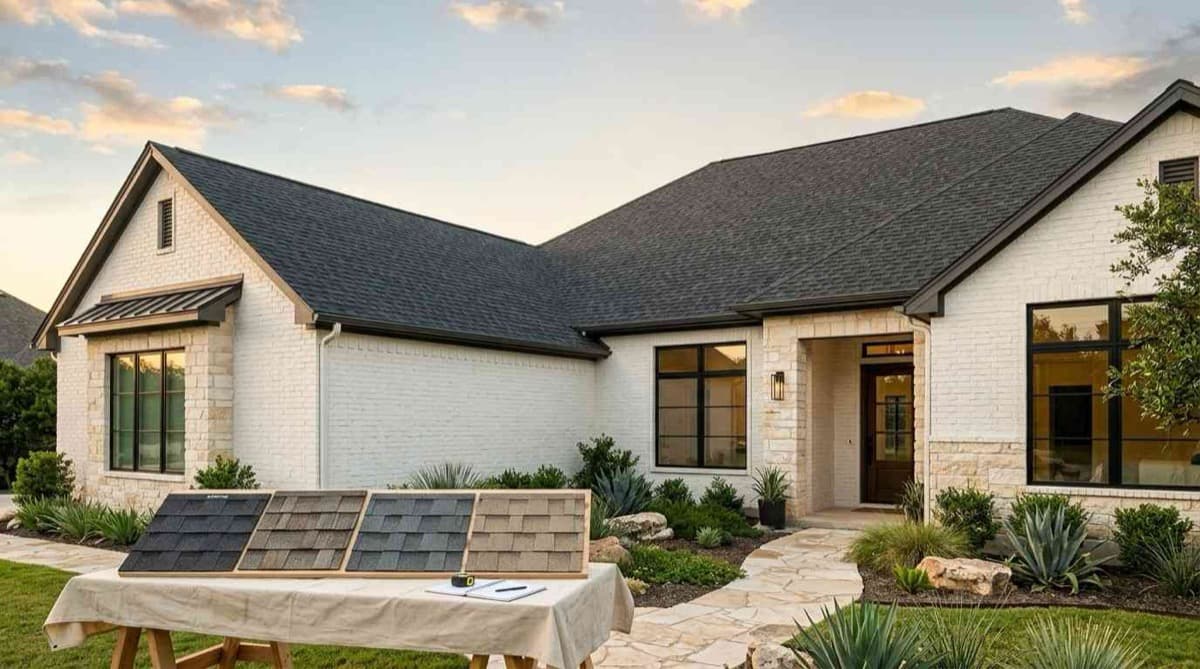
Charcoal gray is the single most recommended roof color for resale value, and the data backs it up. Zillow’s 2023 Paint Color Analysis found that neutral exterior color choices including dark gray roofing consistently correlated with higher sale prices compared to bold or unconventional choices.
Dark slate tones work for the same reason. They pair with virtually every siding color white, gray, beige, brick red, and navy without competing for visual attention. Architectural shingles in charcoal or slate also photograph well, which matters enormously in a market where buyers start their search online.
These colors read as premium, low-maintenance, and timeless. That combination is exactly what resale-focused homeowners need.
Weathered Wood and Brown Tones Warm and Versatile
Weathered wood shingles and warm brown tones are the second-strongest category for resale value, particularly in Texas markets. They complement brick exteriors, stucco finishes, and natural wood siding in ways that cooler tones sometimes cannot.
In Austin neighborhoods with craftsman bungalows, ranch-style homes, and Hill Country-influenced architecture, warm brown roofing feels native to the environment. It does not fight the landscape it belongs to it.
Buyers in these markets respond to that cohesion. A roof that looks like it was chosen intentionally for the home, rather than installed as a default, signals care and quality.
Cool Neutrals Beige, Tan, and Light Gray
Beige, tan, and light gray roof tones occupy a strong middle ground. They reflect more solar heat than dark colors a meaningful advantage in Austin’s climate and they pair cleanly with the stucco and light-colored brick that dominates Central Texas neighborhoods.
These tones also carry a perception of energy efficiency that resonates with today’s buyers. A lighter roof signals lower cooling costs, and in a city where summer temperatures regularly exceed 100°F, that matters to anyone running the numbers on a home purchase.
Roof Colors That Can Hurt Your Home’s Value
Not every color choice is a neutral or positive one. Some roof colors actively shrink your buyer pool and create friction at the point of sale.
Bold colors deep reds, bright blues, greens, and anything that reads as a strong personal statement are the primary offenders. They appeal to a narrow slice of buyers and alienate the majority. A buyer who loves the floor plan but dislikes the roof color now has a mental renovation cost attached to the purchase before they even make an offer.
Trendy colors carry a different risk. What looks current today can look dated in five to seven years, which is exactly when many homeowners are ready to sell. Roof replacement is expensive, and buyers know it a roof that already looks like it needs updating is a negotiating liability.
HOA restrictions add another layer of risk in Austin. Many established neighborhoods and newer master-planned communities have approved color palettes for roofing. Installing a non-compliant color creates a compliance problem that surfaces during the title process and can delay or derail a sale entirely.
The safest rule: if the color requires explanation or justification, it is probably not the right choice for a home you plan to sell.
How to Choose the Right Roof Color for Your Austin Home
Choosing a roof color for your Austin home starts with three reference points your siding, your neighborhood, and your climate. Get all three right and the decision becomes straightforward.
Start with your siding color and material. Your roof and siding are the two largest visual surfaces on your home’s exterior. They need to work together, not compete. Charcoal gray works with almost everything. Weathered wood works best with warm-toned brick and earth-toned stucco. Cool neutrals work well with light siding and modern architectural styles.
Next, look at your street. Drive through your neighborhood and note what the best-looking homes are doing with their roofs. Cohesion with the surrounding streetscape is a real value signal a home that fits its environment reads as more desirable than one that stands out for the wrong reasons.
Finally, check your HOA guidelines before you commit to anything. Austin’s HOA landscape is active, and approved color lists are common in neighborhoods across Travis County.
Austin Climate Considerations Heat, Sun, and Energy Efficiency
Austin’s climate makes roof color a practical decision, not just an aesthetic one. The city averages more than 300 sunny days per year, and summer heat regularly pushes into triple digits. A roof that absorbs heat rather than reflecting it drives up cooling costs and puts additional stress on HVAC systems.
Lighter roof colors tan, beige, light gray, and weathered wood reflect more solar radiation than dark charcoal or slate tones. The U.S. Department of Energy notes that cool roofing materials and lighter colors can reduce roof surface temperatures by up to 50°F compared to darker alternatives, which translates directly into lower energy bills.
For Austin homeowners, this creates a genuine trade-off. Charcoal gray maximizes resale appeal but absorbs more heat. A lighter neutral tone may slightly narrow buyer appeal while delivering real energy savings during ownership. The right answer depends on how long you plan to stay and what matters more resale optimization or operational cost reduction.
Roof Material and Color Work Together
Color does not exist in isolation. The material carrying that color determines how it looks, how long it lasts, and how much value it actually delivers.
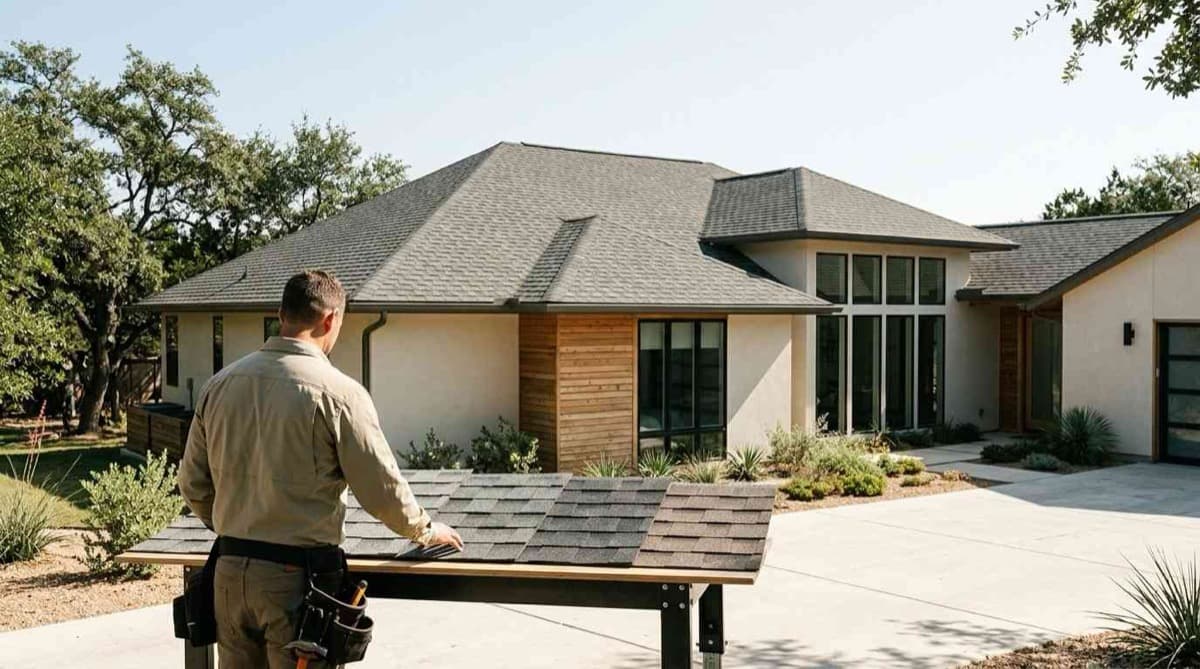
Architectural asphalt shingles are the most common roofing material in Austin, and they offer the widest range of color options. High-quality architectural shingles in charcoal gray or weathered wood have dimensional texture that adds visual depth they look more expensive than standard three-tab shingles even at the same color. That perception of quality matters to buyers.
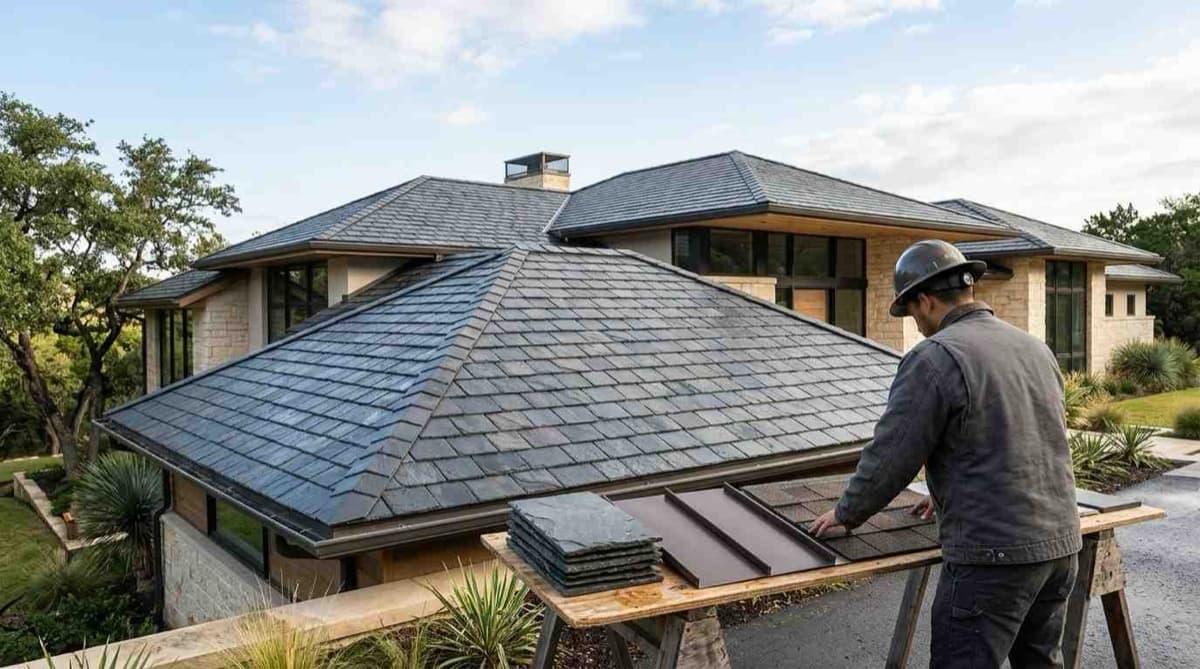
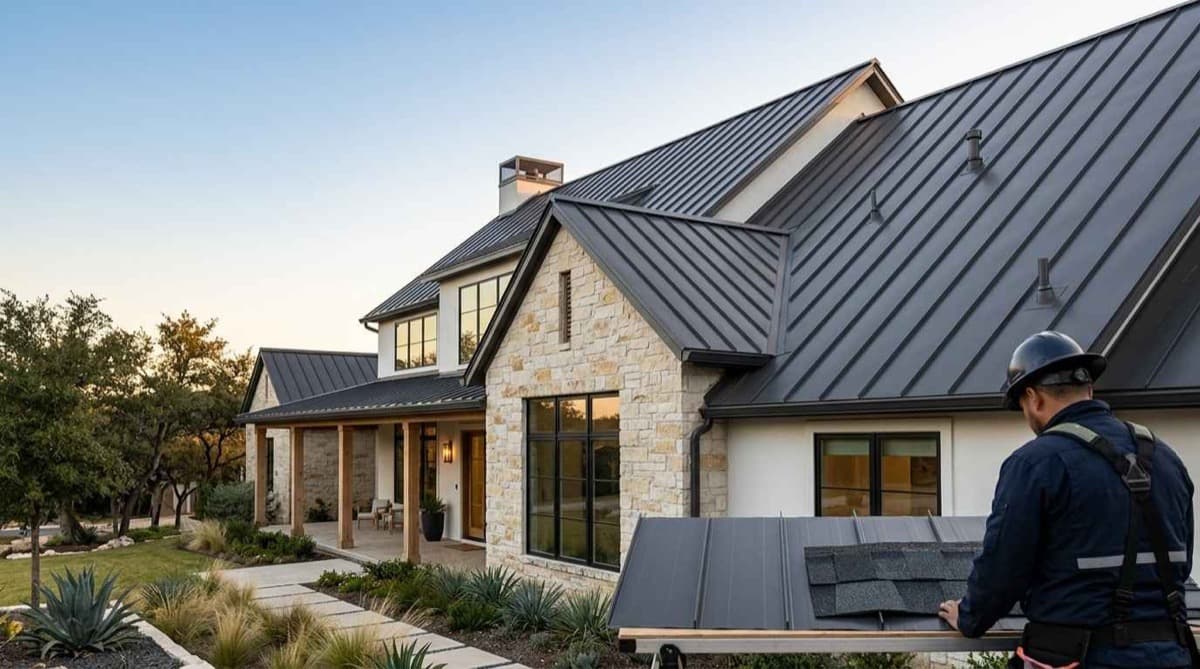
Metal roofing has grown significantly in Central Texas, and its color options for residential roofing have expanded to match. Standing seam metal in charcoal, slate gray, or weathered bronze delivers exceptional longevity alongside strong curb appeal. The combination of durability and aesthetics makes it a compelling resale argument.
Tile roofing common in Austin’s Spanish and Mediterranean-influenced homes operates in its own color ecosystem. Terracotta, clay, and blended earth tones are the standard, and deviating from those expectations in those architectural styles can actually hurt value rather than help it.
The principle across all materials: choose a color that works with the material’s texture, finish, and expected lifespan. A color that fades unevenly or looks cheap at close range undermines the investment regardless of how well it photographs.
Conclusion
Roof color, material, and regional fit work together to determine how much value a new roof actually adds to your home. Charcoal gray and weathered wood lead the field for resale, but the right answer for your specific home depends on your siding, your neighborhood, and how long Austin summers factor into your ownership plans.
This is a long-term investment decision, and the color you choose today will shape buyer perception for years. Getting it right the first time is always less expensive than correcting it later.
At Tarrytown Roofing, we help Austin homeowners make confident roofing decisions from color selection to full replacement. Reach out to us and let’s find the right roof for your home and your goals.
Frequently Asked Questions
What is the most popular roof color for resale value?
Charcoal gray is consistently the top-performing roof color for resale value across most U.S. markets, including Austin. It pairs with virtually every exterior color scheme and reads as timeless, premium, and low-maintenance to the widest range of buyers.
Does a dark roof make a house hotter?
Yes, dark roofs absorb more solar heat than lighter ones. In Austin’s climate, a charcoal or dark slate roof can increase attic temperatures and put more demand on your cooling system during summer months compared to a lighter tan or beige alternative.
What roof color is best for a brick house?
Weathered wood and warm brown tones work best with brick exteriors, particularly red and earth-toned brick common in Austin neighborhoods. Charcoal gray is also a strong option for brick homes with cooler or more neutral brick tones.
How much does a new roof increase home value?
According to Remodeling Magazine’s Cost vs. Value data, a new asphalt shingle roof returns roughly 60–70% of its cost at resale on average. The actual return depends on the local market, material quality, and how well the color and style complement the home’s exterior.
What roof colors are most popular in Texas?
Charcoal gray, weathered wood, and tan or beige tones dominate Texas roofing markets. These colors complement the brick, stucco, and earth-toned exteriors common across Central Texas and hold up visually in the intense sun exposure Austin homes face year-round.
Should I match my roof color to my siding?
Your roof and siding do not need to match, but they need to complement each other. The goal is visual cohesion a roof that works with your siding color and material rather than competing with it. Charcoal gray and weathered wood are the most flexible options for achieving that balance across a wide range of siding types.