What Color Roof Makes a House Look Bigger?

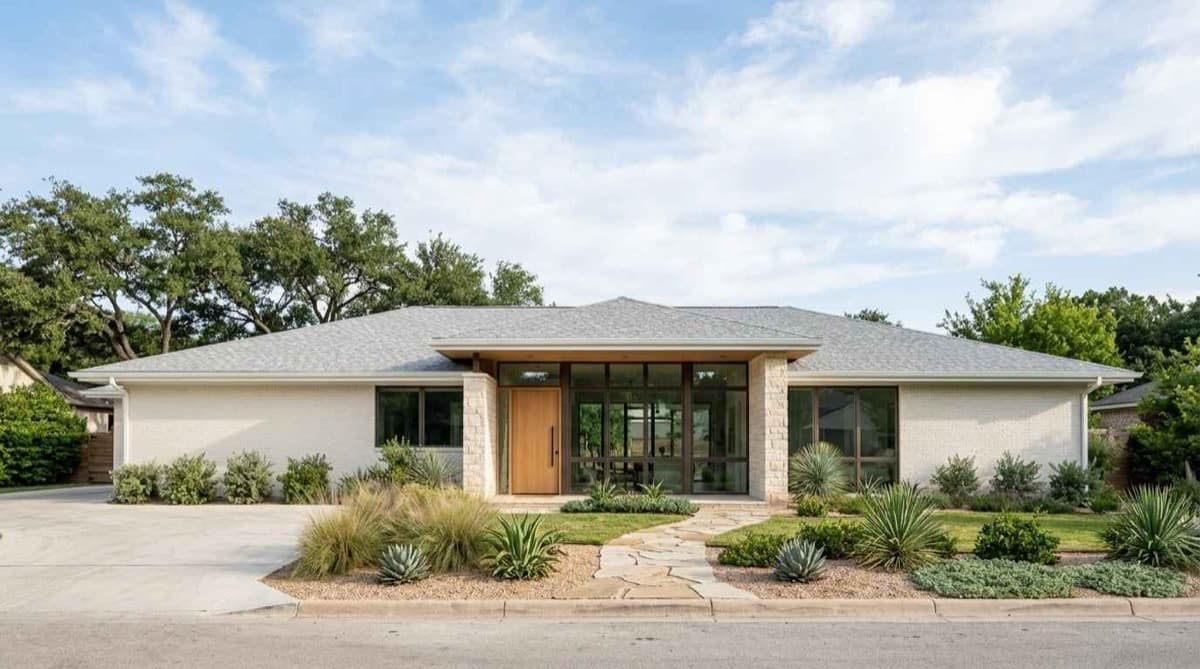
Modern Austin home with a light gray roof and matching light exterior, illustrating how light-colored roofing creates the illusion of a larger, more spacious home.Light-colored roofs  particularly light gray, soft beige, and off-white  make a house look bigger by reducing visual contrast and allowing the roofline to recede rather than dominate. The effect is real, and it comes down to basic visual perception principles that apply to every home exterior.

Roof color is one of the most overlooked decisions in a roofing project. It shapes how large, balanced, and proportional your home looks from the street.

In this guide, I’ll walk through the colors that expand visual scale, the ones that shrink it, and the practical factors every Austin homeowner needs to weigh before making a final call.

Why Roof Color Affects How Big Your House Looks

The human eye reads contrast as separation. When your roof is dramatically darker or lighter than your walls, the eye treats the roof as a distinct, heavy element sitting on top of the house. That separation makes the structure look more segmented and, in most cases, smaller.

When the roof color blends more smoothly with the walls, the eye reads the whole exterior as one continuous form. That unified read makes the house appear taller, wider, and more expansive than it actually is.

This is not a design theory. It is how visual perception works, and it is the same principle used in architecture, interior design, and urban planning.

Light vs. Dark  The Core Visual Principle

Light colors reflect more light and visually expand surfaces. Dark colors absorb light and visually compress them. On a roof, that difference is amplified because the roof is the largest single visible plane of the house from street level.

A dark charcoal or black roof draws the eye upward and creates a strong visual cap. The house reads as two parts  a body and a lid. A light gray or soft beige roof lets the eye travel across the whole structure without stopping, which reads as more square footage even when the actual footprint is identical.

How Contrast With Your Walls Changes Everything

The relationship between your roof color and your wall color matters as much as the roof color itself. High contrast  think dark brown roof on a white house  creates a bold, defined look that emphasizes the roofline as a separate element.

Low contrast  a light gray roof on a light gray or cream house  blurs the boundary between wall and roof. That blurred boundary is exactly what creates the perception of greater size. The house stops looking like stacked components and starts reading as one large, cohesive mass.

The Best Roof Colors to Make a House Look Bigger

The colors that consistently perform best for visual scale share two traits: they are light in value, and they are low in saturation. Bright, vivid colors draw attention to the roof itself, which works against the goal of making the house feel expansive.

Light Gray  The Most Versatile Choice

Light gray is the single most effective roof color for maximizing perceived home size across the widest range of home styles and siding colors. It reads as neutral without disappearing, it pairs with virtually every exterior palette, and it keeps the roofline from becoming a visual anchor that pulls the eye away from the full structure.

In Austin, light gray works particularly well on limestone and stucco exteriors, which are common throughout the area. The cool tone of the gray complements the warm undertones in natural stone without creating the kind of contrast that segments the house visually.

Soft Beige and Tan Tones

Beige and tan roofing shingles are the warm-toned equivalent of light gray. They work best on homes with warm-toned siding  cream, sand, terracotta, or warm white  where a cool gray would create an unintended contrast.

The key with beige is staying in the lighter range of the spectrum. A medium tan still reads as relatively light, but a deep caramel or dark brown crosses into the territory where the roof starts to visually compress the house rather than expand it.

White and Off-White Roofing

White and off-white roofs create the maximum light-reflection effect and the most dramatic expansion of perceived scale. They work best on homes where the siding is also light, because the near-match between roof and wall creates the strongest unified-form read.

The practical tradeoff is maintenance visibility. White roofing shows dirt, algae, and weathering more readily than gray or beige. In Austin’s climate, that means more frequent cleaning or the use of algae-resistant shingle products to keep the roof looking the way it was intended.

Colors That Make a House Look Smaller (Avoid These)

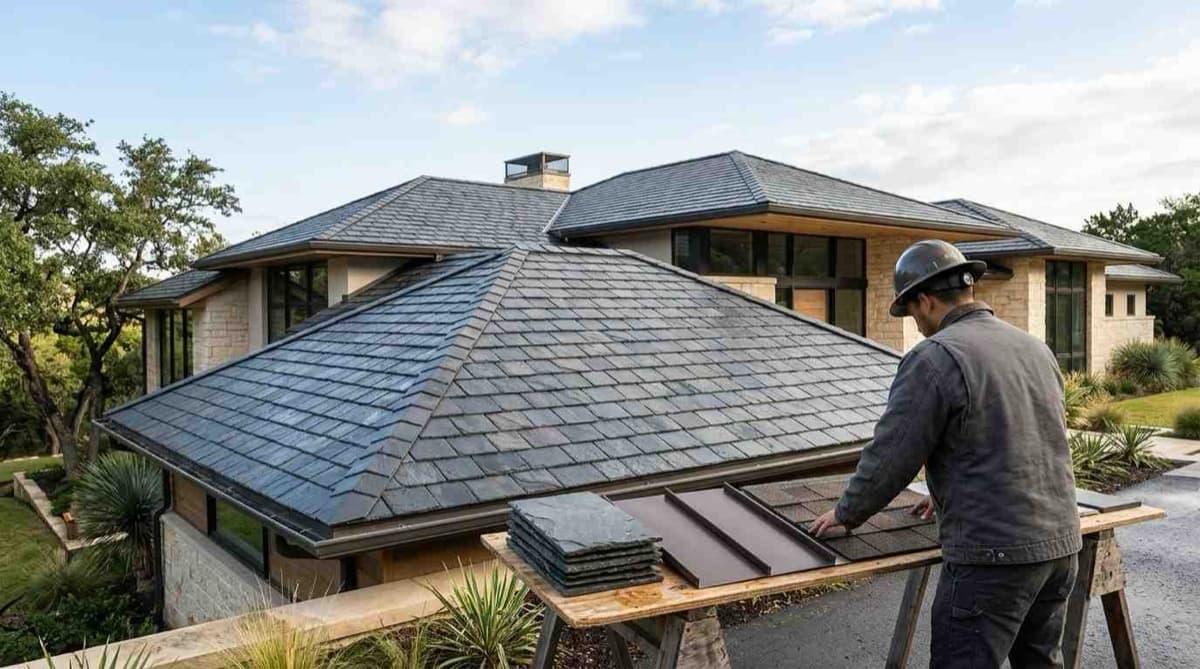
Dark roofing colors  deep charcoal, black, dark brown, and dark green  are the primary culprits when a roof makes a house look smaller. They are not bad choices in every context, but they work against visual scale in specific situations.

When Dark Roofs Work Against You

Dark roofs shrink perceived size most aggressively on small homes, on homes with low-pitched rooflines, and on homes where the siding is already a medium or dark tone. In those combinations, the dark roof creates a heavy visual cap that compresses the entire structure downward.

On a large home with high-pitched rooflines and light siding, a dark roof can actually look intentional and proportional  the scale of the house absorbs the weight of the color. But on a 1,200-square-foot ranch with a 4:12 pitch, a dark charcoal roof makes the house look like it is being pushed into the ground.

Saturated colors  deep red, forest green, navy  carry the same compression risk as dark neutrals. They draw the eye to the roof as a focal point, which is the opposite of what you want when the goal is making the house look bigger.

How Roof Color Interacts With Your Home’s Other Features

Roof color does not exist in isolation. It is one element in a system that includes siding, trim, fascia, soffits, windows, doors, and even the landscaping around the foundation. Getting the roof color right means understanding how it reads within that full system.

Siding Color and Roof Color Coordination

The most important relationship is between the roof and the siding. As a general rule, the roof should be within two to three shades of the siding value  not necessarily the same color, but close enough in lightness and darkness that the eye does not read them as competing elements.

Monochromatic schemes  where the roof and siding are different shades of the same color family  are the most reliable approach for maximizing perceived size. A light gray roof on a medium gray house, or a soft beige roof on a cream house, creates the kind of tonal continuity that makes the whole exterior read as one large, unified form.

Trim, Fascia, and Soffit Considerations

Trim, fascia, and soffits are the connective tissue between the roof and the walls. When these elements are painted to match or closely coordinate with the roof color, they reinforce the unified-form effect. When they contrast sharply with both the roof and the walls, they create additional visual breaks that further segment the house.

White trim on a light gray roof and light gray siding is a classic combination that works because the trim is lighter than both the roof and the walls, which draws the eye to the edges of the structure and makes it read as crisply defined rather than compressed.

Landscaping and Lot Size Context

A house on a heavily landscaped lot reads differently than the same house on an open lot. Dense trees and shrubs frame the house and naturally reduce how much of the exterior is visible at once, which means the roof color has less visual real estate to work with.

On open lots  which are common in many Austin neighborhoods  the roof is fully exposed and its color has maximum impact on perceived scale. This is where the light-color principle pays off most clearly.

Practical Factors That Limit Your Color Choice

Visual scale is the goal, but it is not the only variable. Several practical constraints shape what roof colors are actually available to you as an Austin homeowner.

HOA Rules and Neighborhood Standards in Austin, TX

Many Austin neighborhoods  particularly in established areas like Tarrytown, Westlake, and the Domain corridor  have HOA guidelines or deed restrictions that limit approved roofing colors. These rules exist to maintain neighborhood aesthetic consistency, and they are enforced at the point of permit or inspection.

Before committing to a color, pull your HOA documents or check with your neighborhood association. The approved color list is often narrower than what the manufacturer offers, and choosing outside it creates compliance problems that delay your project and add cost.

Roofing Material and Available Color Ranges

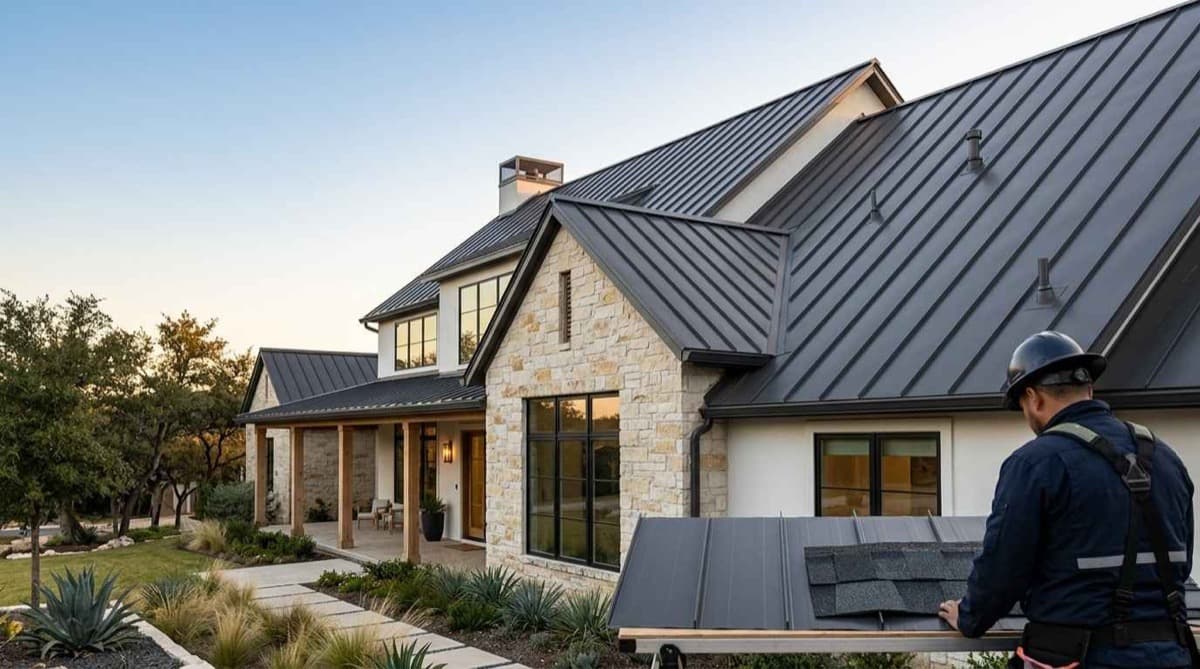
Not every roofing material comes in every color. Asphalt shingles offer the widest color range and are the most common choice in Austin. Metal roofing has a strong color selection but at a higher price point. Tile roofing  popular in Spanish and Mediterranean-style homes  is more limited in its light-color options because the natural clay tones tend toward warm earth tones rather than cool grays.

The roofing material you choose shapes your color options before you ever open a color swatch. Working with a contractor early in the process means you see the actual available options for your material choice, not just the full theoretical palette.

Energy Efficiency and Texas Heat

In Austin’s climate, roof color has a direct impact on attic temperature and cooling costs. Light-colored roofs reflect more solar radiation and keep attic temperatures lower, which reduces the load on your HVAC system during the long Texas summer.

The U.S. Department of Energy notes that cool roofs  which include light-colored and reflective roofing products  can reduce roof surface temperatures significantly compared to standard dark roofing. In a climate like Austin’s, where summer temperatures regularly exceed 100°F, that thermal difference translates directly into energy savings.

This means the colors that make your house look bigger also tend to be the colors that keep your house cooler. The visual and practical goals align, which makes the case for light-colored roofing even stronger for Austin homeowners.

How to Test a Roof Color Before You Commit

Choosing a roof color from a small swatch in a showroom is one of the most common mistakes homeowners make. Colors look different at scale, in natural light, and against the specific tones of your siding and trim.

Samples, Visualizer Tools, and Contractor Input

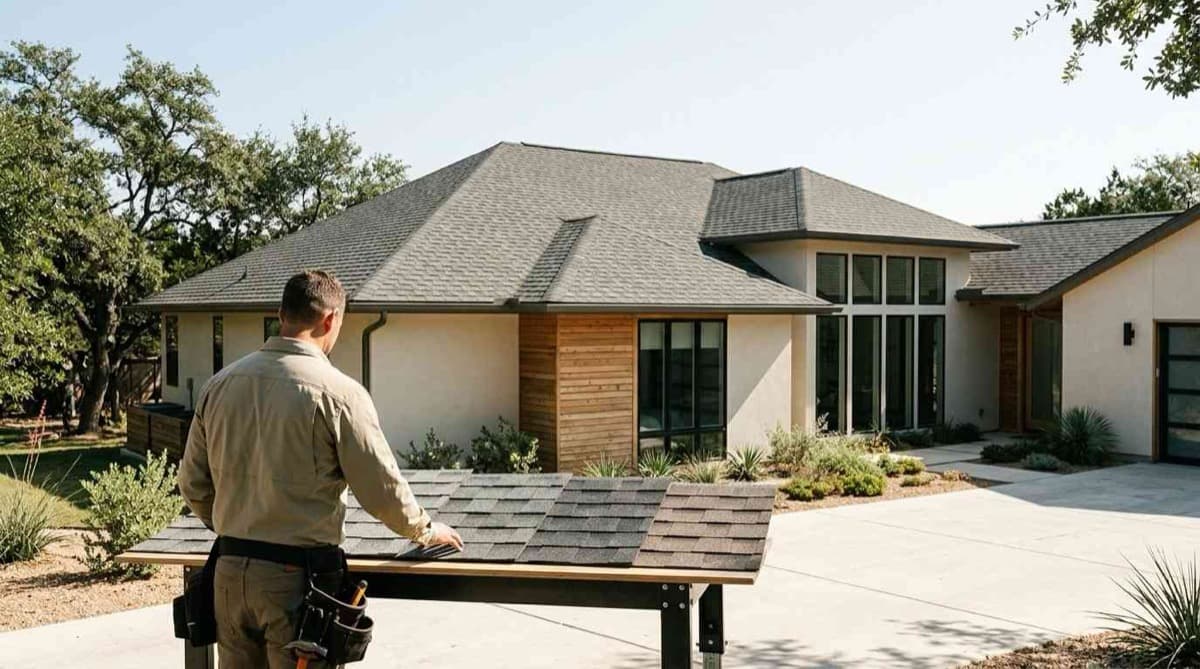
Most major shingle manufacturers offer digital visualizer tools that let you upload a photo of your home and apply different shingle colors to see how they read at full scale. These tools are not perfect, but they are far more reliable than making a decision from a two-inch sample card.

Physical samples are the next step. Request full shingle samples  not just color chips  and hold them against your siding in both morning and afternoon light. The color temperature shifts significantly throughout the day, and a gray that looks cool and clean at noon can read as almost blue in late afternoon shadow.

A roofing contractor with local experience is also a genuine resource here. We see hundreds of completed roofs across Austin every year, and we know which colors read well on which home styles, which combinations create unintended contrast, and which choices hold up visually after a few years of weathering. That kind of on-the-ground knowledge is hard to replicate with a digital tool alone.

Conclusion

Roof color is a real and measurable factor in how large your home looks from the street. Light gray, soft beige, and off-white consistently outperform darker options when the goal is visual scale, and the principle behind it  low contrast, unified form  applies to every home style and lot size.

The right color also needs to work within your material options, your HOA guidelines, and Austin’s climate demands. Those constraints narrow the field, but they rarely eliminate the light-color options that serve visual scale best.

At Tarrytown Roofing, we help Austin homeowners work through exactly these decisions  from color selection to material choice to final installation. Reach out to us when you’re ready to talk through your options.

Frequently Asked Questions

Does a lighter roof actually make a house look bigger?

Yes. Light-colored roofs reduce the visual contrast between the roof and the walls, which allows the eye to read the whole exterior as one unified form rather than separate stacked elements. That unified read consistently makes homes appear larger than they are.

What roof color makes a small house look larger?

Light gray is the most reliable choice for small homes. It is neutral enough to work with nearly any siding color, light enough to reduce visual compression, and widely available across asphalt shingle product lines. Soft beige is the best warm-toned alternative.

Should my roof be lighter or darker than my siding?

For maximum perceived size, keep the roof within two to three shades of your siding value. A roof that is slightly lighter than the siding tends to work best  it keeps the roofline from becoming a heavy visual cap while still providing enough definition to read as intentional.

What is the most popular roof color in Austin, TX?

Charcoal and weathered wood tones are among the most commonly installed colors in Austin, largely because they complement the warm limestone and stucco exteriors common in the area. Light gray and beige are gaining ground as homeowners become more aware of both the visual scale benefits and the energy efficiency advantages of lighter roofing.

Can roof color affect my home’s resale value?

Roof color contributes to overall curb appeal, which is one of the primary drivers of first impressions in a home sale. Neutral colors  light gray, beige, and weathered wood  tend to appeal to the broadest range of buyers and are less likely to be a point of objection during a showing or inspection.

Does roof color affect home temperature in Texas?

It does. Light-colored and reflective roofing products keep attic temperatures lower by reflecting solar radiation rather than absorbing it. In Austin’s climate, where summer heat is sustained and intense, that difference in attic temperature reduces cooling load and can lower energy bills meaningfully over the life of the roof.

WHY WAIT! GET A FREE ESTIMATE & CONSULTATION