Maintenance
Commercial Roof Maintenance Checklist for Austin Property Managers
Published 2026-07-17T00:00:00+00:00
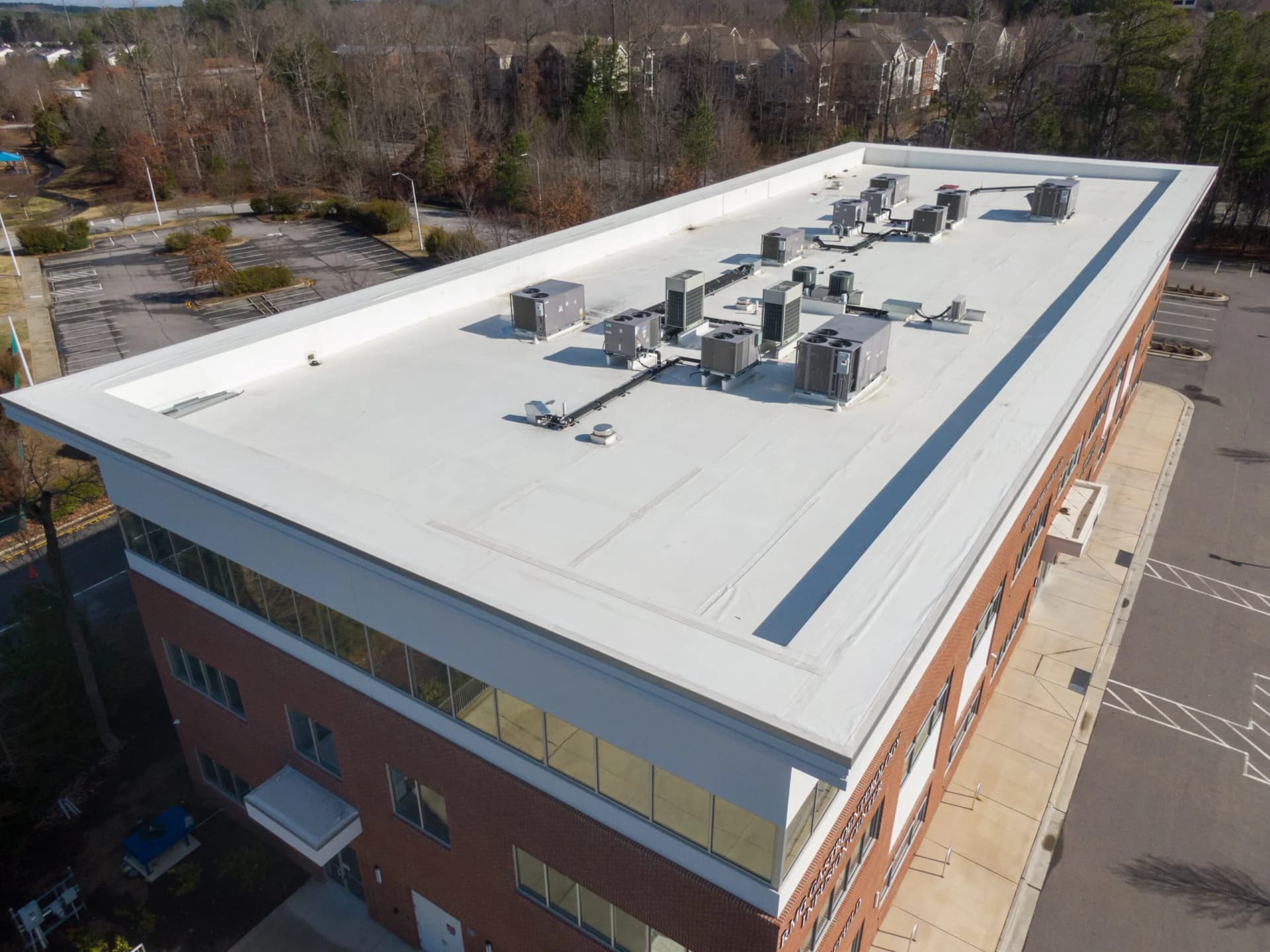
A commercial roof in Austin should get a professional inspection every 6 months (spring and fall), a rooftop debris clearing quarterly, drainage system verification twice a year, sealant inspection annually, and post-storm inspection after any hail or wind event. Proper maintenance extends typical commercial roof lifespan by 5-10 years and prevents 80% of preventable leaks.
A commercial roof in Austin should get a professional inspection every 6 months (spring and fall), a rooftop debris clearing quarterly, drainage system verification twice a year, sealant inspection annually, and post-storm inspection after any hail or wind event. Proper maintenance extends typical commercial roof lifespan by 5-10 years and prevents 80% of preventable leaks. Cost of a maintenance program is roughly 0.5-1% of building value annually, a fraction of the cost of a premature reroof.
Why do commercial roofs need maintenance more than residential?
Three reasons: (1) commercial roofs typically have flat or low-slope surfaces where water can pond if drainage fails; (2) rooftop equipment (HVAC, exhaust vents, satellite dishes) creates dozens of penetrations and traffic paths that stress the membrane; (3) commercial building revenue often depends on interior condition (tenant retention, product protection), a leak has direct economic cost beyond the roof itself.
What should the semi-annual professional inspection include?
A qualified commercial roofer's inspection covers: (1) membrane condition, checking for cracks, bubbles, delamination, or seam separation; (2) flashing at every penetration (HVAC curbs, vent stacks, drains, parapet walls); (3) drainage system function, verifying scuppers, drains, and gutters are clear and draining properly; (4) sealant condition at penetrations and terminations; (5) rooftop equipment condition, HVAC bases, exposed wiring, ductwork; (6) attic or insulation condition where accessible; (7) documentation of any changes since previous inspection.
How much does professional maintenance cost?
For a typical Austin commercial building, expect $500-$2,000 per year for a semi-annual maintenance program depending on roof size and complexity. On a $5M commercial building, that's 0.01-0.04% of building value, comparing favorably to the $50,000-$500,000 cost of premature reroof. Tarrytown Roofing offers customized maintenance plans for commercial properties across our service area.
What should the quarterly debris clearing include?
Every 90 days: remove leaves, branches, and windblown debris from the roof surface; clear scuppers and drains; check for damaged HVAC caps or vent stacks; visually inspect the membrane for any recent damage. This can be done by a facilities team or by our maintenance crew, but it should happen quarterly, not seasonally.
What should drainage system verification include?
Twice per year, verify: (1) all roof drains are clear and flowing (test with hose water during dry weather); (2) scuppers are free of debris; (3) internal downspouts are unobstructed; (4) gutter systems drain to appropriate storm systems; (5) drainage crickets and tapered insulation still directs water to drains (settlement or roof re-work can compromise slope over time). Blocked drainage is the #1 cause of preventable commercial roof failures in Central Texas.
What should annual sealant inspection cover?
Sealants around penetrations, expansion joints, and membrane terminations degrade under Austin UV, most need replacement every 5-10 years. Annual inspection: check sealant condition (should be pliable, not cracked); note any locations showing early degradation; plan replacement work for the next scheduled maintenance visit. Proactive sealant replacement is much cheaper than reactive leak repair.
What should post-storm inspection include?
After any hail event (1 inch stones or larger) or significant wind event (60+ mph gusts): inspect membrane surface for hail impact damage; check flashing for wind-uplift damage; verify HVAC caps, vent stacks, and rooftop equipment survived; look for any windblown debris that may have punctured the membrane; document damage with photos for insurance purposes if applicable. Post-storm inspection within 48 hours of the event is critical for insurance claim documentation.
How does maintenance extend commercial roof lifespan?
Two mechanisms: (1) catching small problems (loose flashing, minor sealant crack, single-penetration issue) before they become large problems (widespread membrane damage, structural water infiltration, mold contamination); (2) maintaining the drainage system so ponding water doesn't degrade the membrane prematurely. Buildings on regular maintenance programs typically extend roof lifespan 5-10 years beyond buildings without maintenance.
Which roof systems benefit most from maintenance?
All of them, but modified-bitumen and built-up roofing systems benefit the most because they have more failure points (multiple layers, more seams). Single-ply membranes (TPO, PVC, EPDM) still benefit meaningfully but have fewer failure modes. Metal commercial roofing benefits least, but still requires periodic sealant renewal at penetrations.
What should be in the maintenance record?
Every inspection generates a report: date and technician; membrane and flashing condition documentation (photos); drainage system verification; sealant condition; any minor repairs completed on the visit; recommendations for next inspection window; any equipment or membrane areas needing attention. Building owners keep these records for warranty compliance, insurance claim support, and sale-of-property documentation.
Do maintenance programs affect insurance coverage?
Yes, favorably. Documented maintenance programs help resolve future insurance claim disputes about pre-existing damage vs new damage. Some insurers offer premium reductions for buildings under professional maintenance programs. All insurers accept documented maintenance history as evidence of a well-maintained property, which supports full claim payouts.
How does Tarrytown Roofing handle commercial maintenance?
Custom programs scoped to each building, some property managers prefer full semi-annual inspection + quarterly debris + annual sealant coverage; others prefer basic annual inspection with on-call response. Every program includes photo-documented reports, direct communication with the property manager or building owner, priority scheduling for tenant-affecting repairs, and pricing that reflects the actual work scope rather than blanket boilerplate.
Ready to set up a commercial roof maintenance program?
Call Tarrytown Roofing at (512) 777-1219 or book a commercial assessment online, we walk your roof, review your existing maintenance history, and provide a custom program proposal within 5 business days.
Related
Maintenance
Roof maintenance: extending your roof's lifespan
The small, cheap moves that add years to a Texas roof.
Maintenance
Cedar shake roofing maintenance
Keeping a cedar shake roof in shape through Central Texas seasons.
Maintenance
The honest answer on roof lifespan
Material by material, with the climate adjustments Central Texas demands.
Ready for the next step?
Free inspection, real answers, no pressure.