How to Spot a Roofing Scammer
Roofing scammers are easy to miss until it’s too late and in Austin, TX, they show up fast after every major storm. I’ve seen homeowners hand over thousands of dollars to contractors who disappeared before the first shingle hit the roof. Knowing what to look for changes everything.
Storm season brings real damage and real urgency. That combination is exactly what fraudulent contractors count on to rush you into a bad decision.
This guide covers the warning signs, the tactics scammers use, how to verify any contractor before you hire, and what to do if something already feels wrong.
What Makes a Roofing Scammer Different From a Legitimate Contractor
A legitimate roofing contractor operates with a license, carries insurance, pulls permits, and gives you a written contract before any work begins. A roofing scammer skips all of that or fakes it.
The difference isn’t always obvious at first. Scammers often show up in branded trucks, wear uniforms, and talk confidently about your roof. What they don’t have is accountability. No local office, no verifiable license, no intention of standing behind the work.
The core distinction is this: a real contractor wants a long-term relationship with you and your neighborhood. A scammer wants your deposit and a quick exit.
The Storm Chaser Problem in Austin, TX
Storm chasers are out-of-state or transient contractors who follow severe weather events from city to city. After a major hailstorm or wind event hits Austin, they flood the area within days sometimes hours.
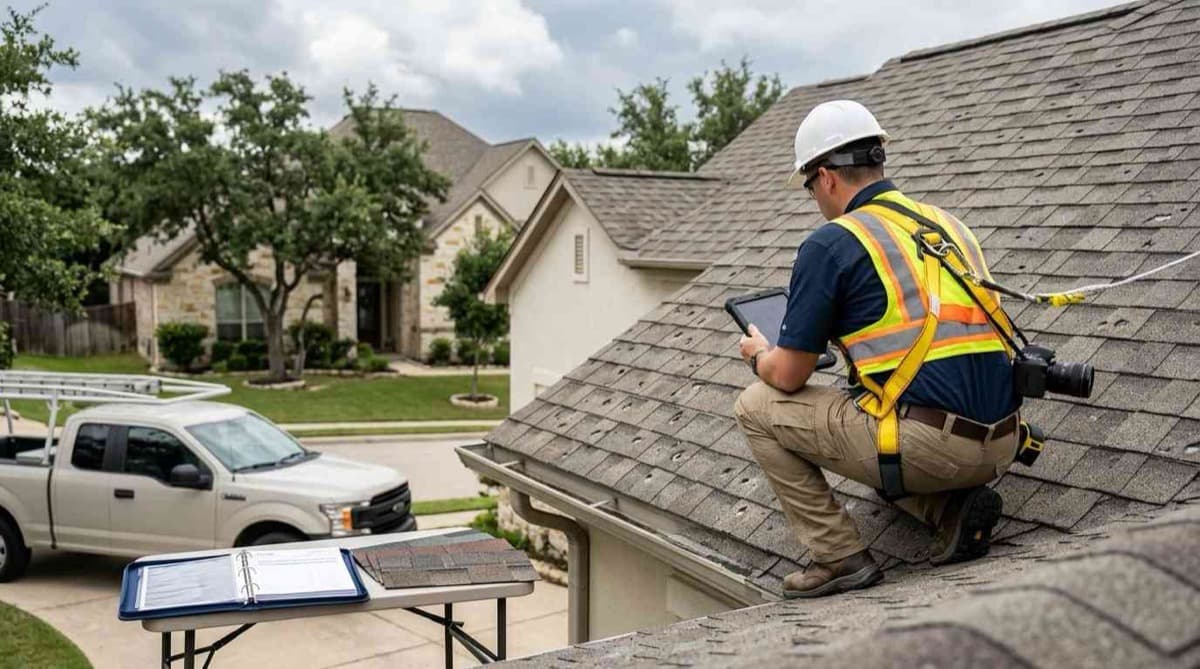
They knock on doors, offer free inspections, and create urgency around damage that may or may not be as serious as they claim. Once they collect a deposit or get you to sign an assignment of benefits, they either do substandard work or disappear entirely.
Austin’s storm frequency makes this a recurring problem. The Texas Department of Insurance has documented the pattern of post-storm contractor fraud across the state and actively warns homeowners to verify any contractor who approaches them unsolicited after a weather event.
Red Flags to Watch For Before You Sign Anything
Most roofing scams follow a predictable pattern. The warning signs are there you just need to know what you’re looking at.
I always tell homeowners: slow down before you sign. A legitimate contractor never needs your signature in the next ten minutes.
Here are the clearest red flags:
- Demands a large cash deposit upfront before any work is scheduled
- Cannot provide a physical local address or verifiable license number
- Offers a price that seems dramatically lower than every other estimate
- Refuses to put the full scope of work in writing
- Pushes you to let them handle your insurance claim directly
Pressure Tactics and Urgency Manipulation
Scammers manufacture urgency because urgency shuts down critical thinking. They tell you the damage is worse than it looks, that your roof won’t survive the next rain, or that their crew is only in the area for one more day.
None of that is true. It’s a sales tactic designed to get you to commit before you’ve had time to verify anything. A real roofing contractor gives you time to review the estimate, check their credentials, and ask questions.
Walk away from anyone who makes you feel like you have no time to think.
Vague or Missing Written Estimates
A legitimate roofing estimate is itemized. It lists materials by type and quantity, labor costs, project timeline, warranty terms, and payment schedule. Every line is specific.
A scammer’s estimate when they provide one at all is vague. It says something like “roof repair” with a single dollar amount and nothing else. That vagueness is intentional. It gives them room to cut corners, use inferior materials, or bill you for work that was never done.
Never accept a verbal quote as a substitute for a written, itemized contract.
How Roofing Scammers Operate After a Storm
Post-storm fraud follows a specific playbook. Understanding the sequence helps you recognize it before you’re already in the middle of it.
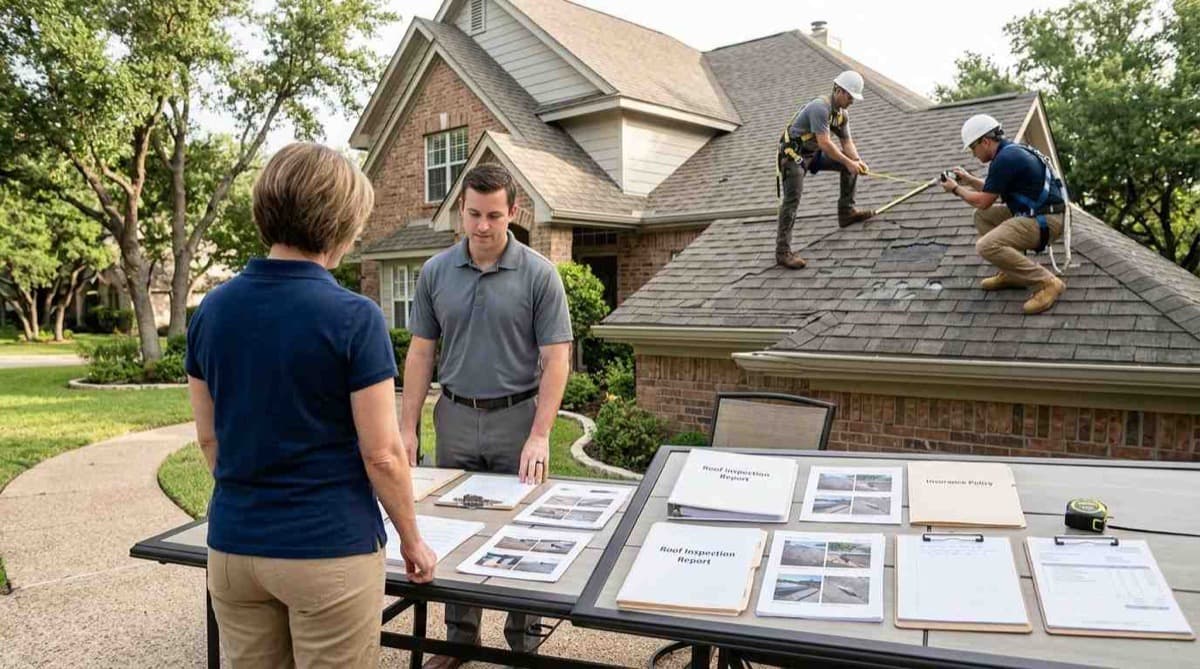
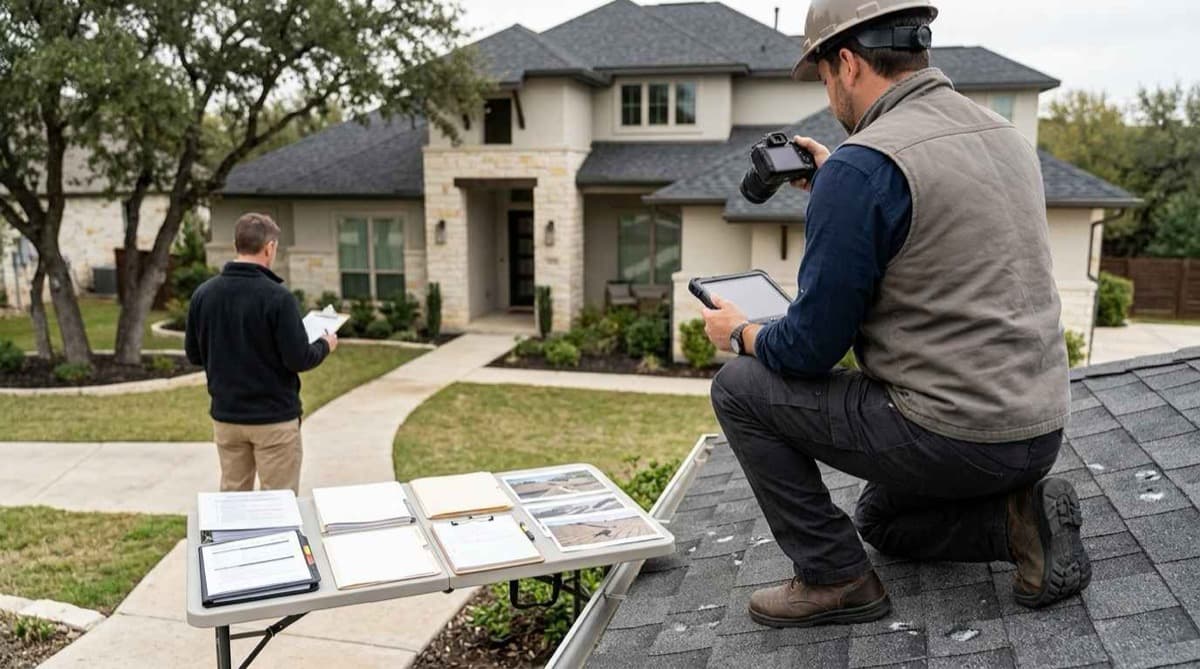
First, they identify neighborhoods with visible storm damage. Then they go door to door offering free inspections which are really just opportunities to get onto your roof and manufacture or exaggerate damage. From there, they push you toward filing an insurance claim, often with them managing the process.
That last part is where the real fraud happens.
The Insurance Claim Manipulation Scheme
Some scammers ask homeowners to sign an Assignment of Benefits (AOB) a document that transfers your insurance claim rights directly to the contractor. Once they have that, they deal with your insurance company without you, inflate the claim, collect the payout, and do minimal or no work.
The National Insurance Crime Bureau has identified AOB fraud as one of the fastest-growing forms of contractor fraud in storm-affected states. Texas homeowners are among the most frequently targeted.
Never sign an AOB without consulting your insurance company and an independent attorney first. Your insurer should always be your first call after storm damage not a contractor who showed up at your door.
How to Verify a Roofing Contractor Is Legitimate
Verification takes about fifteen minutes and protects you from losing thousands of dollars. There’s no reason to skip it.
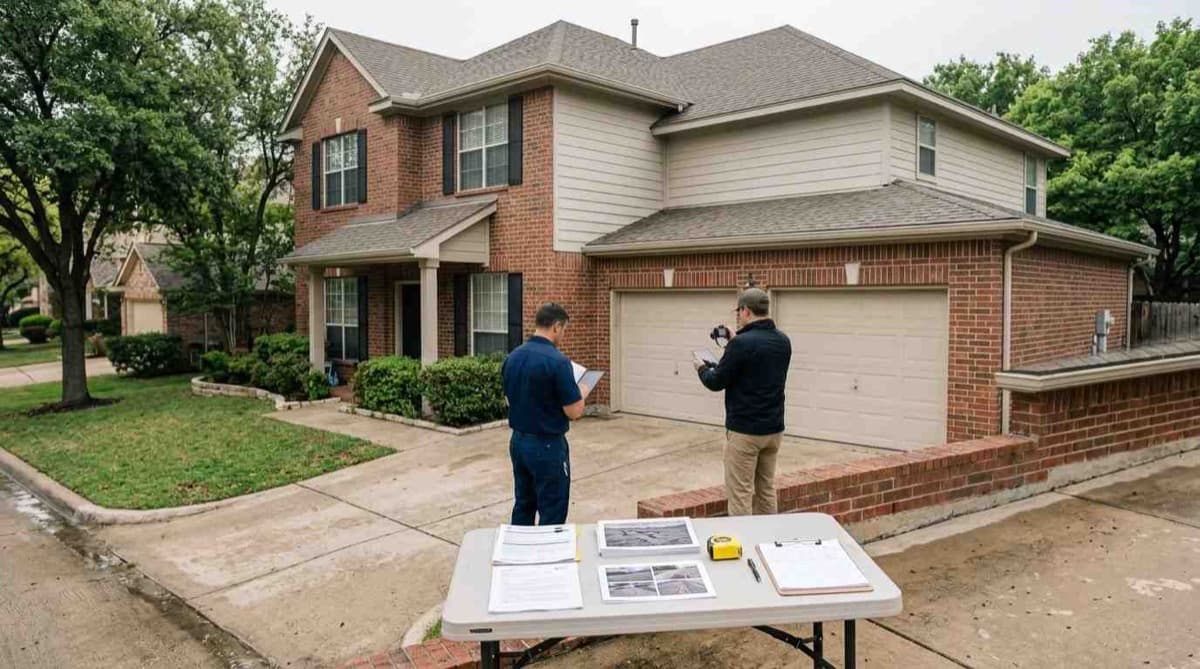
I recommend doing this before you agree to anything even a free inspection. The inspection itself is an entry point for pressure tactics, so know who you’re letting onto your roof.
What to Check Before You Hire Anyone
Start with the Texas Department of Licensing and Regulation. Texas does not require a statewide roofing license, but contractors must hold a general contractor license for certain work and must carry liability insurance and workers’ compensation coverage. Ask for their certificate of insurance and verify it directly with the insurer don’t just accept a document they hand you.
Check their standing with the Better Business Bureau for Austin-area roofing contractors. Look for a physical local address, not just a phone number. Search their company name alongside the word “complaint” or “scam” and see what comes up.
Ask for references from jobs completed in Austin within the last twelve months. A legitimate contractor has them and gives them willingly. A scammer stalls, deflects, or offers references that don’t check out.
Finally, confirm they will pull the required permits with the City of Austin Development Services Department. Any contractor who tells you permits aren’t necessary for your job is either wrong or hiding something.
What to Do If You Think You’ve Been Scammed
Act quickly. The longer you wait, the harder it becomes to recover your money or hold anyone accountable.
Start by documenting everything contracts, receipts, text messages, photos of the work or lack of it. Then file a complaint with the Texas Attorney General’s Consumer Protection Division. They handle contractor fraud cases and have the authority to investigate and pursue action.
You can also report the contractor to the Better Business Bureau and your homeowner’s insurance company. If you signed an AOB, contact your insurer immediately and explain the situation they have a process for handling fraudulent claims.
If the contractor took a significant deposit and vanished, contact local law enforcement and consult a consumer protection attorney. Small claims court is an option for amounts under $20,000 in Texas, and it’s more accessible than most homeowners realize.
Conclusion
Roofing scammers count on urgency, confusion, and the chaos that follows storm damage. The best protection is knowing their playbook before they knock on your door.
Verify every contractor before you sign anything. Slow down when someone tries to speed you up. And trust your instincts if something feels off, it usually is.
At Tarrytown Roofing, we work with Austin homeowners the right way: licensed, insured, transparent estimates, and no pressure. Reach out to us before you commit to anyone else.
Frequently Asked Questions
How do I know if a roofer is licensed in Texas?
Texas does not require a statewide roofing-specific license, but contractors must carry liability insurance and workers’ compensation. I always ask for a certificate of insurance and verify it directly with the issuing insurer before any work begins.
What is a storm chaser in roofing?
A storm chaser is a transient contractor who travels to areas hit by severe weather to solicit roofing jobs. They often do substandard work or collect deposits and disappear. They are not local, have no long-term accountability, and target homeowners in the immediate aftermath of storms.
Should I pay a roofing contractor upfront?
No. A legitimate contractor typically requires a deposit of no more than 10–30% to cover material costs, with the balance due upon completion. Anyone demanding full payment or a large cash deposit before work starts is a serious red flag.
What does a legitimate roofing estimate include?
A real estimate lists materials by type and quantity, labor costs, project timeline, payment schedule, and warranty terms. Every item is specific and in writing. Vague single-line estimates with no detail are a warning sign.
Can a roofing scammer be reported in Austin, TX?
Yes. File a complaint with the Texas Attorney General’s Consumer Protection Division, the Better Business Bureau, and your homeowner’s insurance company. If a deposit was taken and work was never done, local law enforcement and small claims court are also options.
What is the most common roofing scam after a hailstorm?
The most common scam is the Assignment of Benefits scheme, where a contractor gets you to sign over your insurance claim rights, inflates the claim, collects the payout, and does little or no actual work. Never sign an AOB without consulting your insurer and an attorney first.