
Guide
A simple guide to residential roof parts
Published 2026-06-06T00:00:00+00:00
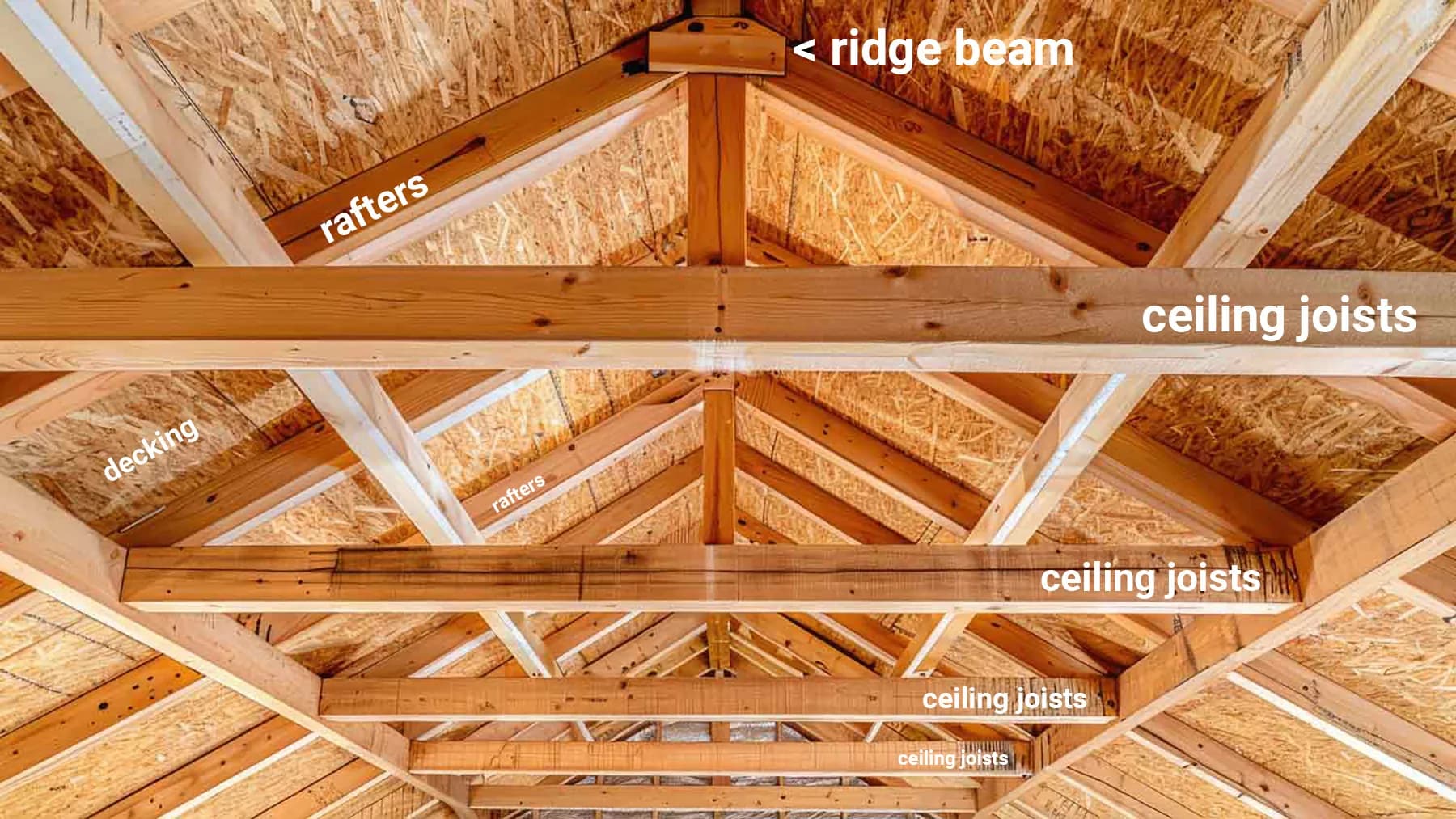
Every layer and component in plain English.
A roof's structural foundation consists of rafters or trusses, large wooden beams that provide strength and support. The ridge beam is where all the rafters meet at the top, similar to the top of a tent. Ceiling joists offer additional support while creating the framework for interior ceilings.
Protective layers begin with roof decking, typically made from plywood or OSB, which serves as the roof's foundation. Underlayment provides a critical waterproof barrier beneath the roofing material, whether shingles, metal sheets, or tiles, protecting homes even when outer materials sustain damage.
Water management systems are essential for preventing costly structural damage. Gutters catch water runoff and direct it into downspouts, which channel water away from the home's foundation. Flashing is a thin metal that goes around chimneys, vents and other places where water might sneak in under your roof material.
Finishing elements include the soffit (underside roof overhang), fascia (vertical boards at roof edges), eaves (roof sections extending beyond walls), and drip edges that direct water into gutters. A roof cricket, a triangular feature against chimneys, helps direct water flow and prevents damage from stagnation.
Related
Guide
What to Look for When Hiring a Roofer
Hiring a roofer in Austin, TX? Learn what to check before signing anything licensing, insurance, warranties, red flags, and more. Get it right the first time.
Guide
What Is the Best Time of Year to Replace a Roof?
Wondering when to replace your roof? Fall is the industry's top pick, but Austin's climate changes the math. Here's what every homeowner needs to know.
Guide
What Is the 25% Rule for Roofing?
The 25% rule for roofing determines when a repair triggers a full replacement. Learn how it works, how to calculate it, and what it means for Austin homeowners.
Ready for the next step?
Free inspection, real answers, no pressure.