What Is the 25% Rule for Roofing?

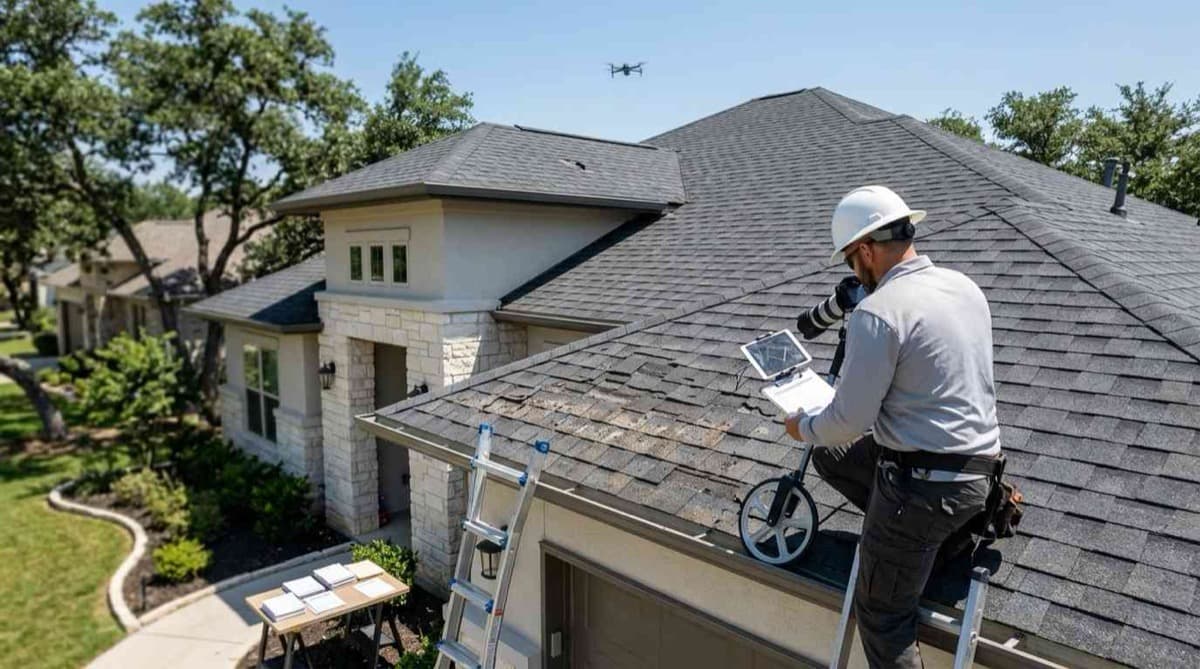
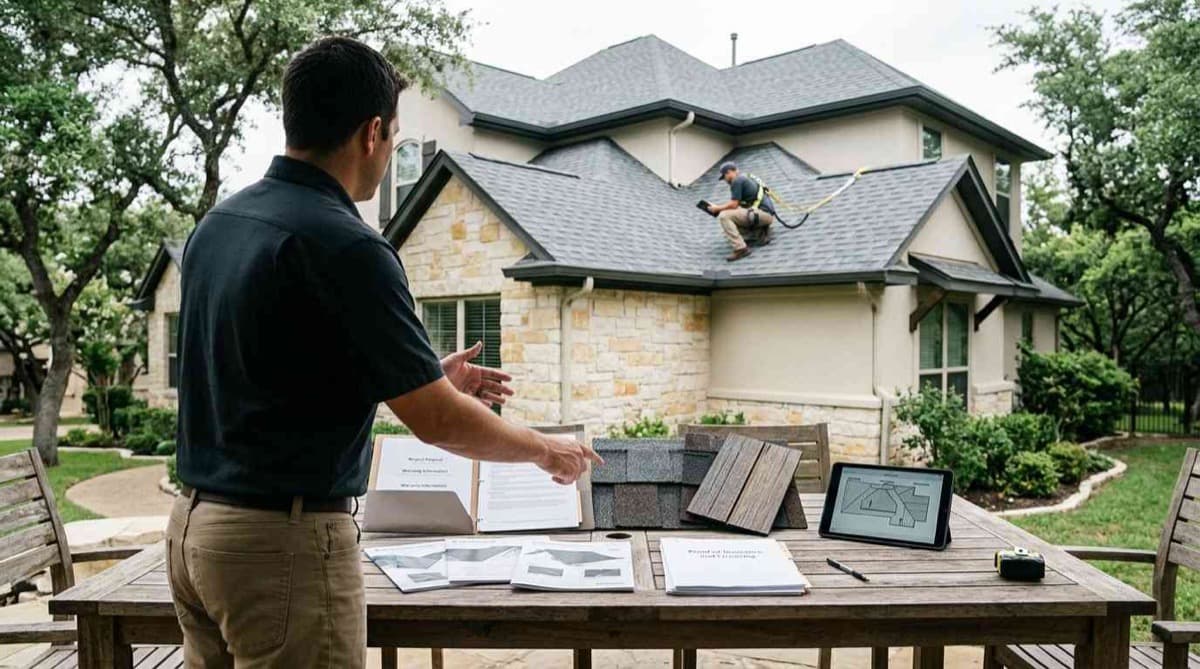
Professional roof inspection measuring storm-damaged roof sections on an Austin home, illustrating the 25% roofing rule used to determine when full roof replacement is required instead of repair.The 25% rule for roofing is a building code standard that determines when damaged or deteriorated roofing must be fully replaced rather than repaired  and it affects nearly every significant roofing decision a homeowner makes.

This rule shapes contractor estimates, insurance claims, and permit requirements in ways most homeowners never see coming. Knowing it before you call a contractor puts you in a much stronger position.

Here I’ll break down exactly what the rule means, how it’s calculated, when it triggers a full replacement, and what Austin homeowners specifically need to know about it.

Understanding the 25% Rule  What It Actually Means

The 25% rule is a threshold built into roofing and building codes. It states that when more than 25% of a roof’s total surface area is being repaired or replaced within a 12-month period, the entire roof must be brought up to current building code standards.

That last part is what catches most homeowners off guard. It’s not just about replacing more shingles. It’s about triggering a full code-compliance requirement on the whole structure.

In practical terms, this means a repair that crosses the 25% line stops being a repair and becomes a full replacement  with all the permitting, material, and labor costs that come with it.

Where the Rule Comes From

The 25% rule originates from the International Residential Code (IRC), which is the model building code adopted  with local amendments  by most U.S. states and municipalities. Section R908 of the IRC specifically governs reroofing and sets the 25% threshold for when full compliance upgrades are required.

Texas municipalities, including Austin, adopt and amend the IRC through local ordinances. The core 25% threshold carries through in most jurisdictions, though local amendments can affect how it’s enforced and what upgrades are required when the threshold is crossed.

How Roofing Contractors and Insurers Apply It

Contractors calculate the 25% threshold based on the total square footage of your roof. They measure the damaged area against the whole. When the damaged area hits or exceeds 25% of the total, the job scope changes  and so does the cost.

Insurance adjusters apply the same logic. When a storm damage claim involves repairs that would cross the 25% line, the adjuster and contractor both know a full replacement is on the table. That changes how the claim is written, what code upgrade coverage applies, and what your out-of-pocket exposure looks like.

How the 25% Rule Affects Your Repair vs. Replacement Decision

This is where the rule has the most direct impact on your wallet. A roof repair that stays under 25% of the total surface area is straightforward  patch the damage, match the materials as closely as possible, and move on.

Cross that line, and the entire calculation changes. You’re no longer just fixing what’s broken. You’re bringing the whole roof into compliance with current code.

When Repair Is Still the Right Call

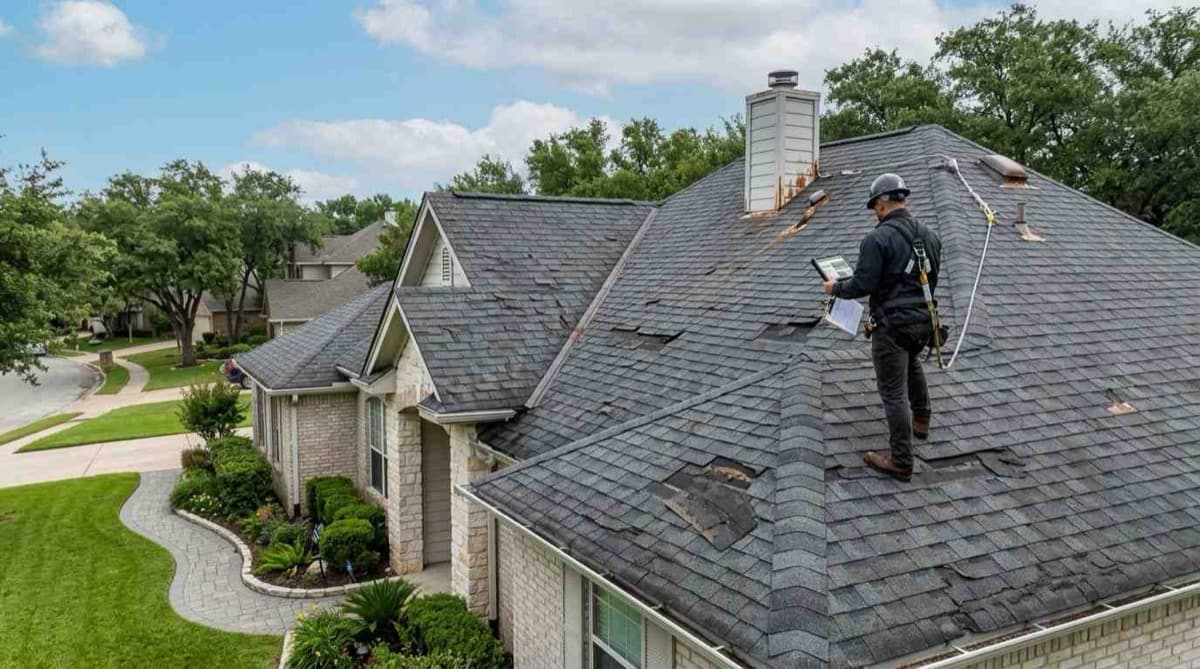
Repair makes sense when the damage is genuinely localized  a few damaged shingles after a hailstorm, a small section of flashing failure, or a minor leak traced to a single penetration point. If the affected area is well under 25% of your total roof surface, a targeted repair is cost-effective and code-compliant.

Roof age matters here too. A repair on a roof that’s 8 years into a 30-year lifespan is a smart investment. The same repair on a roof that’s 24 years old and showing widespread granule loss is a different conversation entirely.

When the 25% Threshold Triggers a Full Replacement

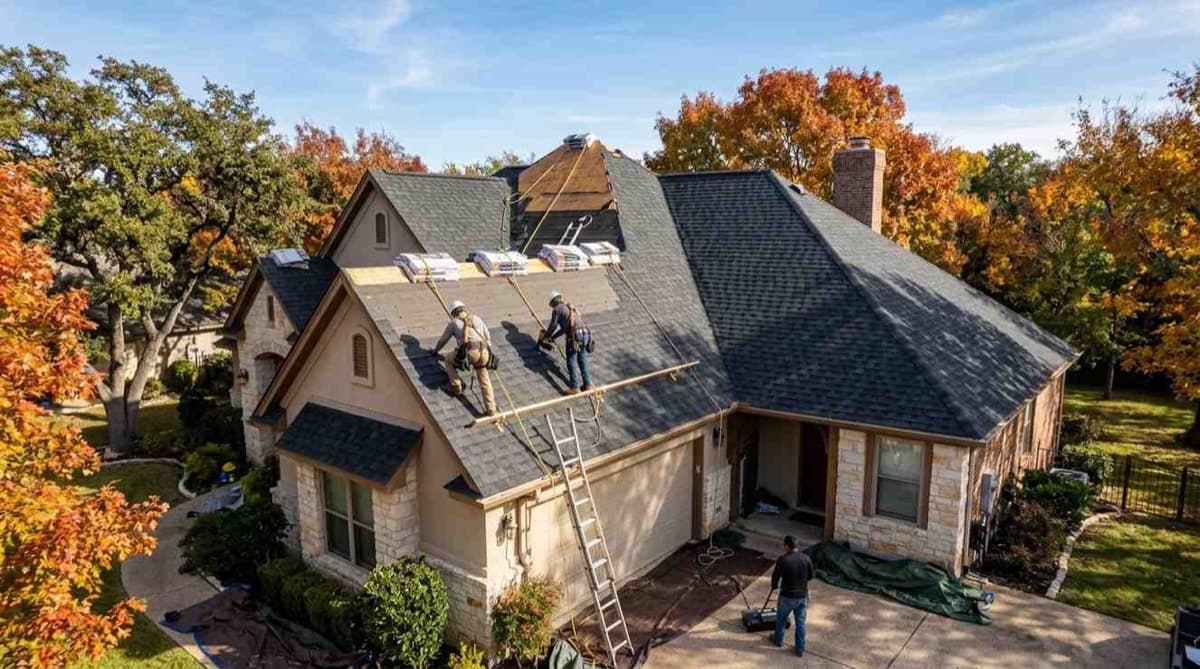
When damage covers more than 25% of the total roof area  or when cumulative repairs within a 12-month window push past that mark  a full replacement becomes the code-required path. This isn’t a contractor upsell. It’s a legal requirement tied to the permit process.

Full replacement at this point often makes financial sense anyway. Bringing a heavily damaged or aging roof up to current code through piecemeal repairs is rarely cheaper than a clean replacement, and it never delivers the same long-term protection.

The 25% Rule and Roofing Insurance Claims in Texas

In Texas, the 25% rule intersects directly with homeowner insurance claims  especially after hail or wind events. When an insurance adjuster determines that storm damage affects more than 25% of your roof, the claim typically shifts from a repair claim to a full replacement claim.

That distinction matters because Texas homeowners’ policies handle repair and replacement costs differently. Replacement cost value (RCV) policies cover the full cost of a new roof minus your deductible. Actual cash value (ACV) policies factor in depreciation, which can leave a significant gap between what the insurer pays and what the replacement actually costs.

The Texas Department of Insurance provides guidance on how homeowners can navigate the claims process and understand what their policy covers when a major roofing event occurs.

What Austin Homeowners Need to Know About Code Upgrades

When the 25% threshold is crossed in Austin, the replacement must comply with current Austin Energy Code and local amendments to the IRC. That can include requirements for upgraded underlayment, improved ventilation, or specific fire-rating standards depending on your neighborhood and roof type.

Many homeowners don’t realize their standard insurance policy may not automatically cover code upgrade costs. A code upgrade endorsement  sometimes called “ordinance or law” coverage  is a separate policy add-on that covers the additional expense of bringing a roof up to current code during a replacement. Without it, that cost falls on you.

How to Calculate the 25% Threshold on Your Roof

The math itself is straightforward. Roofing is measured in “squares”  one square equals 100 square feet of roof surface. A 2,000-square-foot roof contains 20 squares. The 25% threshold on that roof is 5 squares, or 500 square feet of surface area.

If the damaged area covers more than 5 squares on that roof, the 25% rule applies and a full replacement is required under code.

A Simple Way to Estimate Before Calling a Contractor

You don’t need to climb on your roof to get a rough sense of where you stand. Start with your home’s footprint  the square footage of the floor plan  and factor in your roof’s pitch. A steeper pitch means more actual roof surface than the footprint suggests.

A roof pitch multiplier chart can help you estimate total roof surface from your home’s footprint and pitch. From there, a visual assessment of the damaged area  even from the ground with binoculars  gives you a rough percentage before a contractor ever sets foot on your property.

That estimate won’t replace a professional inspection. But it gives you a baseline so you’re not walking into the conversation blind.

Why the 25% Rule Matters for Long-Term Roof Value

The 25% rule isn’t just a code technicality. It’s a signal about the long-term health and value of your roof. A roof that has reached the 25% damage threshold  whether from a single storm or years of accumulated wear  is telling you something important about its remaining lifespan.

Replacing a roof that has crossed that threshold isn’t just a code obligation. It’s an investment in your property’s structural integrity, energy efficiency, and resale value. Buyers and home inspectors notice roofs. A new, code-compliant roof is a tangible asset. A patched, aging one is a liability.

Understanding the 25% rule helps you make that decision with clear eyes  not under pressure from a storm, a contractor’s timeline, or an insurance adjuster’s estimate.

Conclusion

The 25% rule for roofing is one of the most consequential standards a homeowner can understand before a major roofing event. It determines when a repair becomes a replacement, when code upgrades kick in, and how insurance claims get structured.

In Austin, local code amendments and Texas insurance policy structures add layers that make this rule even more important to know in advance. The homeowners who navigate roofing projects most confidently are the ones who understood the rules before the damage happened.

At Tarrytown Roofing, we walk Austin homeowners through every step of this process  from inspection and damage assessment to insurance coordination and full replacement. Reach out to us and let’s take a look at your roof together.

Frequently Asked Questions

Does the 25% rule apply to all roofing materials?

The 25% rule applies to the roof surface area regardless of material type. Whether your roof is asphalt shingles, metal, tile, or modified bitumen, the threshold is calculated the same way  damaged area versus total roof area within a 12-month window.

Who enforces the 25% rule  my contractor or my insurer?

Both play a role. Your contractor is responsible for pulling the correct permits and ensuring the work meets code. Your insurance adjuster applies the rule when assessing whether a claim qualifies as a repair or a full replacement. The local building department is the final enforcement authority.

What happens if I ignore the 25% rule?

Work done without the required permits or code compliance creates serious problems. It can void your homeowner’s insurance coverage, create liability issues when you sell the home, and result in fines or required tear-out and redo from the local building department. It’s not a rule worth skirting.

Does the 25% rule apply differently in Austin, TX?

Austin adopts the IRC with local amendments through the Austin Energy Code. The core 25% threshold applies, but the specific code upgrade requirements triggered when you cross it  ventilation standards, underlayment specs, fire ratings  reflect Austin’s local amendments. A licensed Austin roofing contractor knows exactly what those requirements are.

Can I get a second opinion on whether I’ve hit the 25% threshold?

Absolutely. If a contractor or adjuster tells you the 25% threshold has been crossed, you have every right to request a detailed damage assessment showing the calculation. A second inspection from a licensed roofing contractor gives you an independent measurement to compare against.

Is the 25% rule the same as the 25% repair cost rule?

No  these are two different standards. The roofing 25% rule is based on surface area, not cost. A separate concept sometimes called the “repair cost rule” compares repair costs to replacement costs as a decision-making guide. The building code threshold is always area-based, not dollar-based.

WHY WAIT! GET A FREE ESTIMATE & CONSULTATION