
Guide
How Long Do Roofs Last in Central Texas? Lifespan by Material
Published 2026-07-17T00:00:00+00:00
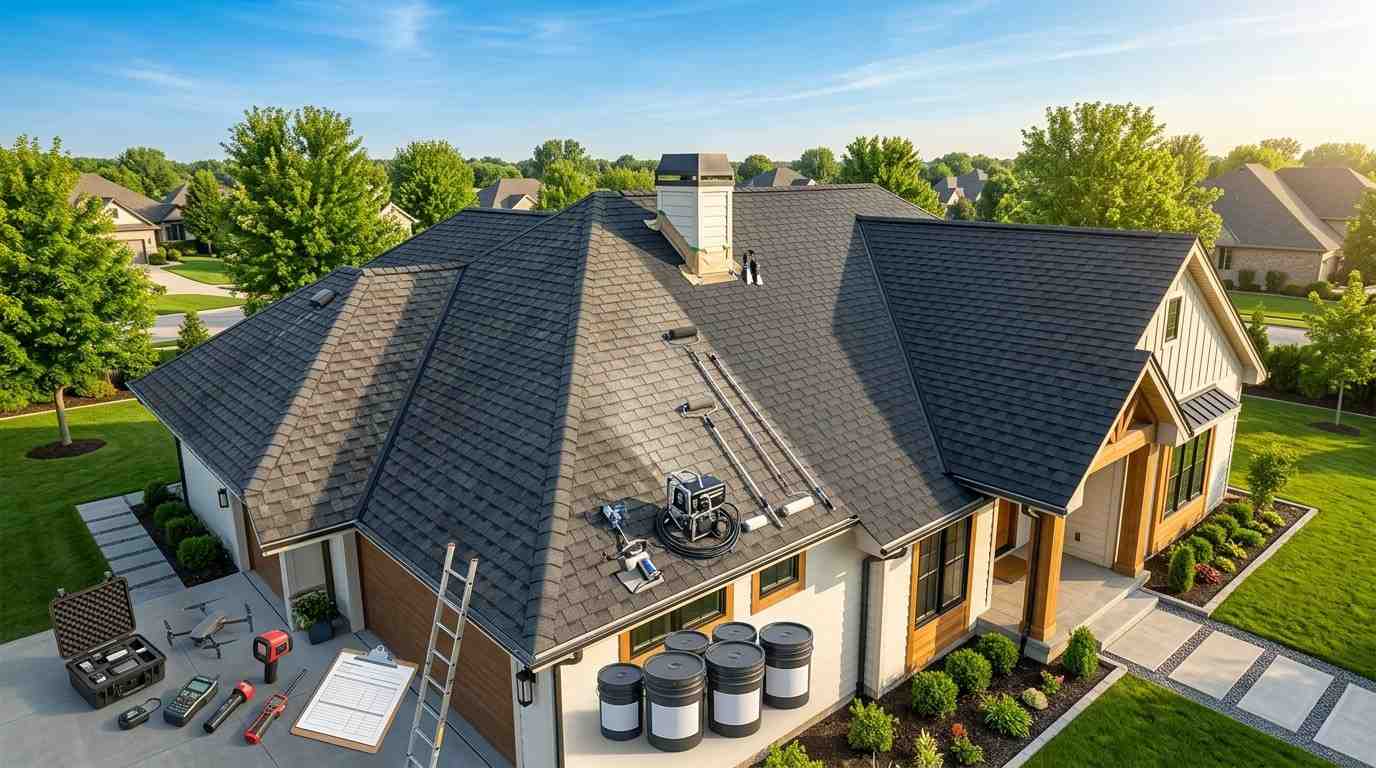
In Central Texas, architectural asphalt shingle lasts 20 to 25 years, impact-rated (Class 4) shingle lasts 22 to 28 years, standing-seam metal lasts 40 to 60 years, stone-coated steel lasts 40 to 50 years, concrete tile lasts 40 to 75 years, and clay tile lasts 50 to 100+ years. Hail exposure, poor attic ventilation, and dark colors shorten every material's expected life by 15 to 30 percent.
In Central Texas, architectural asphalt shingle lasts 20 to 25 years, impact-rated (Class 4) shingle 22 to 28 years, standing-seam metal 40 to 60 years, stone-coated steel 40 to 50 years, concrete tile 40 to 75 years, and clay tile 50 to 100+ years. Hail exposure, poor attic ventilation, and dark colors shorten every material's expected life by 15 to 30 percent, which is why manufacturer warranty labels always overstate real-world Texas lifespan.
How long does an asphalt shingle roof really last in Texas?
Manufacturer labels say 25, 30, even 50 years, but real-world Central Texas performance is shorter because our combination of high UV intensity, thermal cycling (100°F day / 60°F night), and periodic hail accelerates asphalt degradation. Realistic expectations: 3-tab shingle 15 to 18 years; standard architectural shingle 20 to 25 years; impact-rated architectural (Malarkey Vista, Owens Corning Duration Storm, GAF Timberline HDZ RS) 22 to 28 years.
Do metal roofs really last 40 years in Texas heat?
Yes, properly installed 24-gauge standing-seam metal reliably delivers 40 to 60 years of service in Central Texas. The bottleneck is fastener corrosion (mitigated by hidden-clip systems that don't penetrate the panel), sealant degradation at penetrations (renewable every 15 to 20 years), and cosmetic denting from hail (which doesn't compromise waterproofing). Metal roofs installed by Tarrytown Roofing in the mid-1990s are still on Central Texas homes with only routine maintenance.
Here is realistic real-world lifespan by material in Central Texas, along with the manufacturer-stated warranty life for comparison:
| Material | Manufacturer warranty | Real-world Central Texas | Difference | | --- | --- | --- | --- | | 3-tab asphalt shingle | 20-25 years | 15-18 years | 25-30% shorter | | Architectural asphalt shingle | 30-40 years | 20-25 years | 25-35% shorter | | Impact-rated Class 4 shingle | 30-50 years | 22-28 years | 30-45% shorter | | Stone-coated steel | 50 years | 40-50 years | 0-20% shorter | | 24-gauge standing-seam metal | 40-50 years | 40-60 years | matches or exceeds | | Concrete tile | 50 years | 40-75 years | matches or exceeds | | Clay barrel tile | 50-75 years | 50-100+ years | matches or exceeds | | Slate | 100+ years | 75-125 years | close to warranty |
How much does poor attic ventilation shorten roof lifespan?
Significantly, inadequate attic ventilation traps hot moist air below the deck, driving deck temperatures 20 to 40°F higher than a well-ventilated attic on a summer day. Asphalt shingle installed above an under-ventilated attic often reaches end-of-life 4 to 7 years earlier than the same shingle above a properly-ventilated attic. Ventilation upgrade is one of the cheapest ways to extend roof life, typically $500 to $1,500 for ridge vent, gable vent, and soffit vent balancing.
How much does hail exposure shorten shingle lifespan?
A single significant hail event (1.25 inch stones or larger) impacting a standard architectural shingle roof shortens the effective remaining life by 3 to 8 years, even if no immediate leak develops, because granule loss exposes the asphalt mat to UV degradation. Impact-rated Class 4 shingles are more resistant, but repeated events still shorten life. Metal and tile roofs are largely immune to lifespan shortening from hail (though tiles can crack on impact).
Does roof color affect lifespan in Texas?
Yes, dark colors (dark gray, black, dark brown) absorb 15 to 25% more solar heat than light colors and reach substrate temperatures 20 to 40°F higher on peak summer days. This thermal cycling shortens shingle life by 2 to 5 years compared to lighter colors on the same roof. On metal, color has less impact on lifespan but affects energy savings measurably, light "cool colors" earn ENERGY STAR ratings and can reduce cooling costs 8 to 15%.
How does slope affect lifespan?
Steeper slopes drain water faster and stay dry longer, extending shingle life by 2 to 4 years compared to low-slope roofs. Low-slope (under 3:12) asphalt shingle installations often reach end-of-life 3 to 5 years earlier than the same shingle on a 6:12 to 8:12 slope because standing water and slow drainage accelerate granule loss and mat degradation. Flat and low-slope roofs are typically better served by TPO, EPDM, PVC, or modified bitumen, not shingle.
How does the roof deck under the shingles affect lifespan?
A dry, structurally sound deck is a prerequisite for full material lifespan. Soft OSB decking (from prior moisture intrusion or inadequate ventilation), sagging rafters, and delaminated sheathing all cause the roof surface to flex under thermal cycling, accelerating shingle wear. Every Tarrytown Roofing replacement includes a full deck inspection with per-sheet replacement of soft or damaged material.
What is granule loss and when should I worry?
Asphalt shingles are covered in mineral granules that protect the asphalt from UV. As shingles age, granules loosen and wash into gutters, small amounts are normal. Concerning granule loss looks like: shingles showing bare asphalt patches; heavy accumulations in downspout discharge areas; or exposed shingle mat visible from the ground. Once granule loss is widespread, the remaining shingle life is typically 2 to 4 years, time to plan replacement.
What is the typical maintenance schedule that maximizes lifespan?
For asphalt shingle: annual visual inspection from ground level; professional inspection every 3 to 5 years; gutter cleaning twice per year; replace any lifted or missing shingle within 30 days. For metal: professional inspection every 5 to 10 years; sealant renewal at penetrations every 15 to 20 years; keep debris out of valleys. For tile: annual walk inspection to identify cracked or displaced tiles; underlayment replacement typically at 25 to 40 years (the tile itself lasts longer than the underlayment).
How can I know how much life my current roof has left?
A professional inspection can identify remaining life within a 2 to 3 year window, accurate enough to plan replacement 18 to 36 months in advance and avoid emergency situations. Tarrytown Roofing's inspection includes: visual walk of the roof surface with photo documentation; attic inspection for signs of prior moisture or ventilation issues; granule-loss quantification; flashing condition at penetrations; and a written remaining-life estimate. This is free across Greater Austin and Central Texas.
When should I schedule replacement to avoid emergency situations?
Plan replacement in the last 20% of expected material life, for a 25-year architectural shingle roof, that means starting the planning process around year 18 to 20 and completing the project by year 21 to 24. This lets you shop contractors on your schedule, secure financing without pressure, and avoid the 15% to 30% premium that emergency-response contractors sometimes charge during peak storm season.
Ready to know how much life your Central Texas roof has left?
Book a free inspection with Tarrytown Roofing, a senior estimator provides a written remaining-life estimate you can use to plan replacement on your schedule. Call (512) 777-1219 or schedule online.
Related
Guide
What to Look for When Hiring a Roofer
Hiring a roofer in Austin, TX? Learn what to check before signing anything licensing, insurance, warranties, red flags, and more. Get it right the first time.
Guide
What Is the Best Time of Year to Replace a Roof?
Wondering when to replace your roof? Fall is the industry's top pick, but Austin's climate changes the math. Here's what every homeowner needs to know.
Guide
What Is the 25% Rule for Roofing?
The 25% rule for roofing determines when a repair triggers a full replacement. Learn how it works, how to calculate it, and what it means for Austin homeowners.
Ready for the next step?
Free inspection, real answers, no pressure.