Guide
Roof Repair vs Replacement: How to Decide (2026 Framework)
Published 2026-07-17T00:00:00+00:00
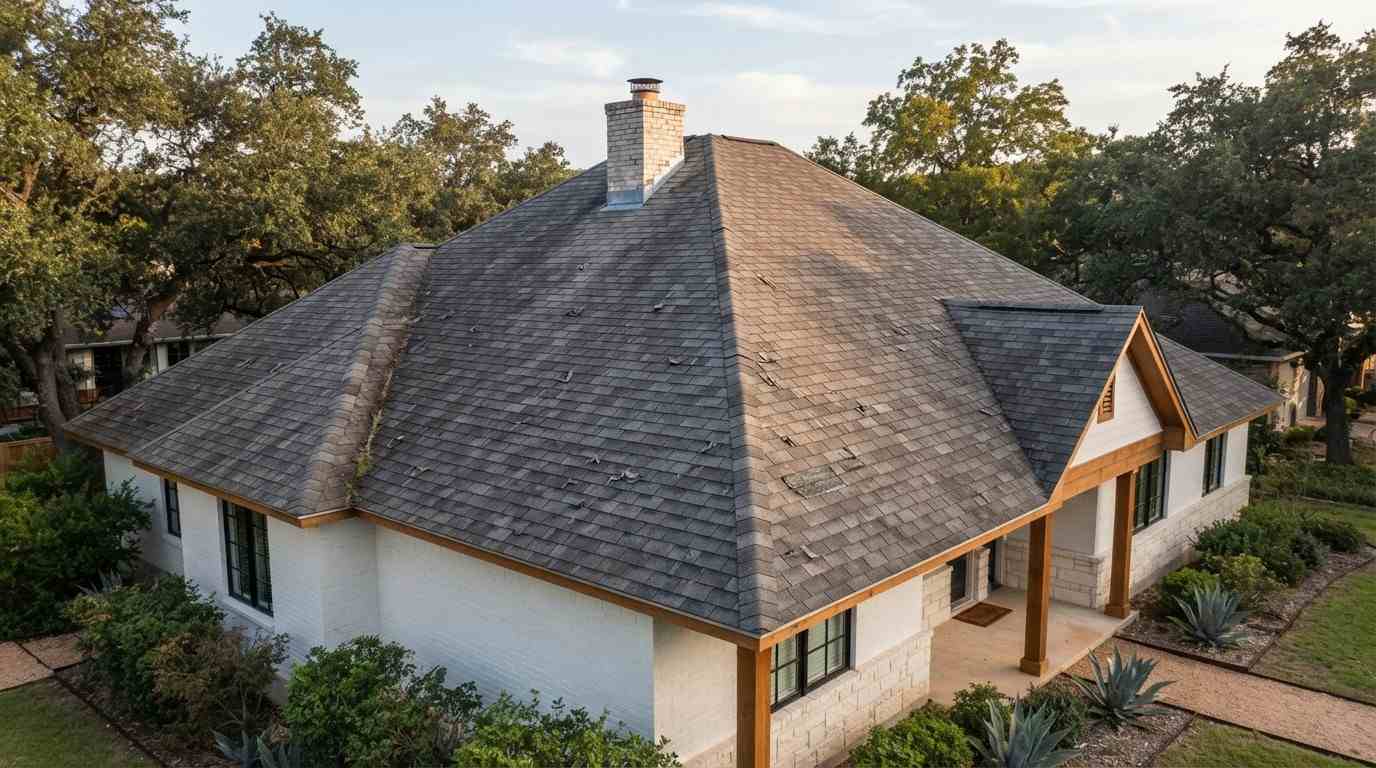
Replace the roof if any of these are true: shingles are 20+ years old on a 25-year rated roof, more than 30% of the surface is damaged, three or more leak-source repairs have already been done, decking is delaminated across multiple sections, or the cost of the needed repair exceeds 25% of a full replacement. Otherwise, targeted repair is usually the better economic choice.
Replace the roof if any of these are true: shingles are 20+ years old on a 25-year rated roof, more than 30% of the surface is damaged, three or more separate leak-source repairs have already been done, decking is delaminated across multiple sections, or the cost of the needed repair exceeds 25% of a full replacement. Otherwise, targeted repair is usually the better economic choice, most Austin repair jobs run $300 to $2,500 and buy 5 to 10 more years of roof life.
When should I repair my roof instead of replacing it?
Choose repair when: the roof is less than half its expected life, damage is confined to fewer than 3 defined areas, the roof deck below the damage is dry and solid, the shingle color and texture can still be matched from stock, and no previous repairs have been done in the same area. In these cases, a properly-executed repair holds for 5 to 10 years and costs roughly one-tenth of a full replacement.
Here is the decision checklist we walk homeowners through on every Tarrytown Roofing inspection. Score 3 or more "yes" answers and full replacement is almost always the better economic decision:
Is your roof more than 20 years old on a 25-year rated system, or more than 30 years old on a 40-year rated system?
2. Has the same slope had a leak repair before? 3. Are more than 3 discrete areas of the roof damaged? 4. Are shingles in your gutters and downspouts (granule loss beyond normal)? 5. Are multiple shingles curling, cupping, or clawing across multiple slopes? 6. Is the roof deck visibly sagging or soft when walked? 7. Does the attic show water staining on the underside of the decking? 8. Would the quoted repair cost more than 25% of a full replacement? 9. Is your homeowner's insurance carrier flagging the roof for age at renewal? 10. Are you planning to sell within 12 months?
At what age is a roof no longer worth repairing?
For architectural asphalt shingle, the practical threshold is 18 years in Central Texas, after that, matching the existing shingle color becomes difficult, individual repairs highlight rather than blend, and the surrounding shingles are close enough to end-of-life that patching becomes a temporary fix. For 3-tab, the threshold drops to 12 years. For standing-seam metal, individual panel repairs remain viable for the full 40 to 60 year lifespan. For clay or concrete tile, individual tile replacement is possible for as long as matching stock is available (often the full 50+ year lifespan).
How do I know if my roof damage is repairable?
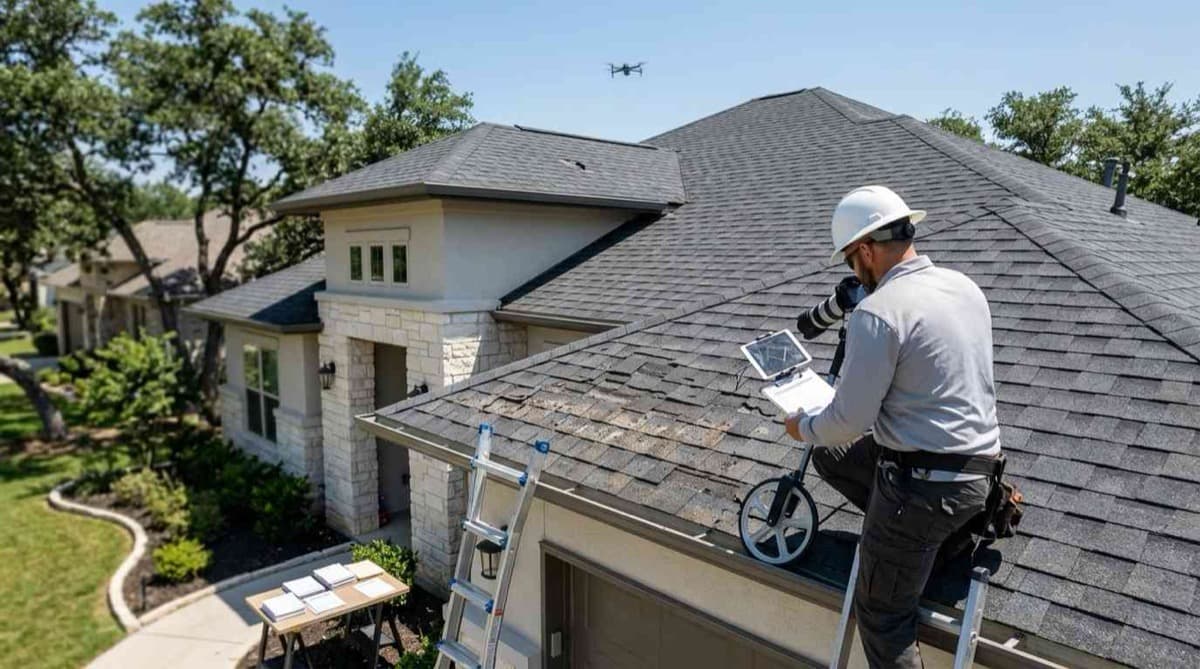
Repairable damage is: (1) confined to a discrete area, a single slope, a single valley, or a chimney flashing; (2) not accompanied by decking rot below; (3) present in materials that can be matched from stock; (4) not the third or later repair in the same location. If any of those conditions fail, the repair is likely to fail too or to be a poor use of money. A senior estimator inspection identifies which category your damage falls into, Tarrytown Roofing does this at no cost across Greater Austin.
What's the math on repair vs replacement?
Cost per year of remaining service life is the cleanest metric. If your roof has 8 years of expected life left and repair costs $1,200, that is $150/year of buying time. If replacement costs $15,000 and lasts 22 years, that is $680/year. In this case, repair is 4.5× more cost-effective. Flip the numbers: if your roof has 4 years of expected life left and repair costs $2,500, that is $625/year, versus $680/year for replacement. Now replacement is clearly the smarter economic choice.
Does insurance affect the decision?
Yes, significantly. Under a Replacement Cost Value (RCV) policy after a covered hail or wind event, insurance often pays for full replacement even when partial repair would technically be sufficient, because carriers require matching shingle color for aesthetic replacement (Texas Building Code + carrier practice). If you have a claim-worthy damage event, the answer is almost always full replacement funded by insurance. If damage is wear-and-tear (not weather-related), insurance won't pay and you're back to the cost-per-year framework.
What are the hidden costs of choosing repair when replacement is warranted?
Three risks add up quickly: (1) the repair fails within 12 to 24 months and you pay twice, often a total loss of the initial repair investment; (2) the roof deck below rots undetected, adding $500 to $5,000 in decking replacement to the eventual full reroof; (3) interior water damage causes drywall, insulation, and flooring damage far more expensive than the roof itself. These are why we advise replacement for roofs that fail 3+ items on the decision checklist.
How do I know if the roof deck is compromised without tearing off the roof?
Two inspection cues: (1) walking the roof, the deck feels "soft" or gives underfoot in places (a professional walk is safer than a homeowner attempt); (2) attic inspection shows dark or wet staining on the underside of the decking, visible rafter or truss compression, or crumbling OSB at the edges. When either shows up, we recommend at minimum a section teardown to expose the decking for direct visual inspection before quoting.
Can I repair one slope and replace the other slopes later?
Sometimes, but usually not a good idea. If one slope was replaced 8 years ago while the others are original, matching the material is generally straightforward. But replacing incrementally means paying multiple mobilization fees (each roofing project has $1,000 to $2,500 in fixed setup cost), potentially two dumpster fees, two permit fees, and two rounds of neighborhood disruption. Full-roof replacement done once is typically 15% to 25% cheaper per square than replacing in phases.
What is a "partial replacement" and when does it make sense?
Partial replacement refers to reroofing one or two slopes while leaving the others in place. Legitimate use cases: a hail claim only approved damage on the north- and east-facing slopes (with the insurer specifically excluding the south and west slopes), or a discrete structural failure on one section. Illegitimate use case: a contractor who quotes partial replacement to hit a lower price point while leaving 15-year-old shingles on adjacent slopes, a poor value that leads to full replacement within 5 to 7 years.
What about ShingleRx as a middle ground between repair and replacement?
ShingleRx is a maintenance-grade asphalt shingle restoration coating that Tarrytown Roofing is the exclusive Central Texas provider for. On roofs with 6 to 15 years of remaining service life and no structural damage, ShingleRx can extend that lifespan another 5 to 15 years at roughly 40% of full replacement cost. It's not a solution for storm-damaged or end-of-life roofs, but for mid-life roofs with UV degradation, it's often the smartest choice.
Should I get multiple opinions before committing?
Yes, for both repair and replacement, get at least two written estimates from licensed, insured Central Texas contractors. Look for: proof of Texas contractor registration, current workers' comp, general liability of at least $1M, manufacturer certifications, and written warranty terms. Beware of any contractor who provides only a verbal estimate or won't leave a written scope of work. Tarrytown Roofing provides a written scope with material, warranty, and workmanship terms on every visit.
Ready to know whether repair or replacement makes sense for your specific roof?
Book a free inspection with Tarrytown Roofing, a senior estimator walks your roof, inspects the attic, and gives you an honest written assessment. Call (512) 777-1219 or schedule online.
Related
Guide
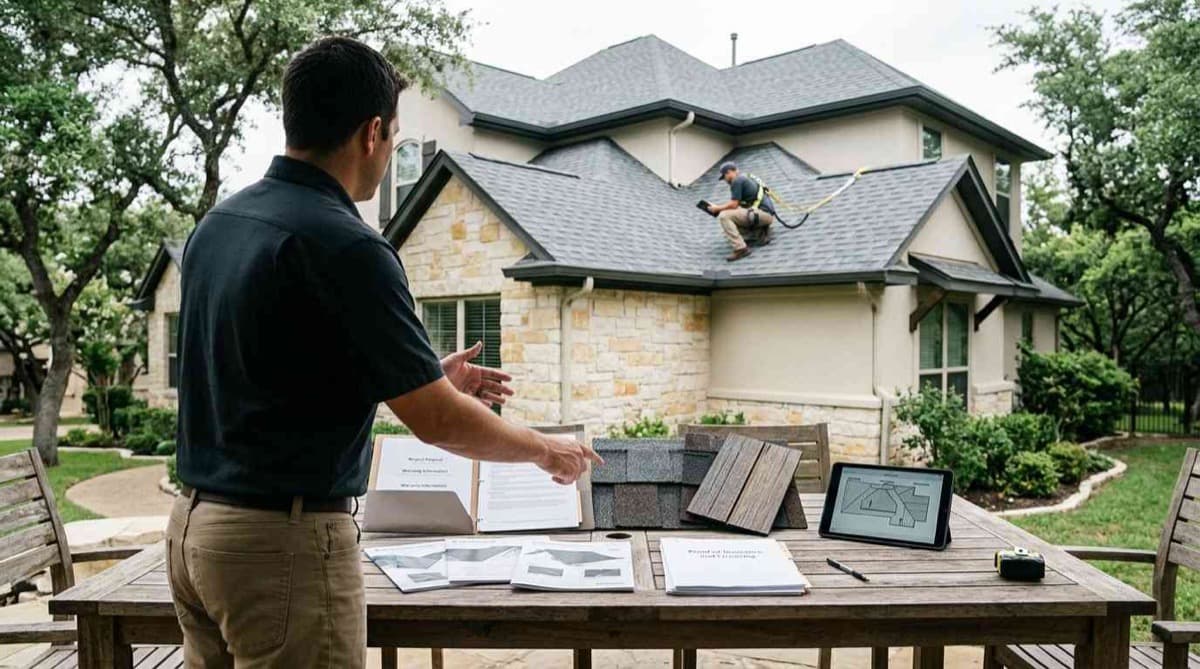
What to Look for When Hiring a Roofer
Hiring a roofer in Austin, TX? Learn what to check before signing anything licensing, insurance, warranties, red flags, and more. Get it right the first time.
Guide
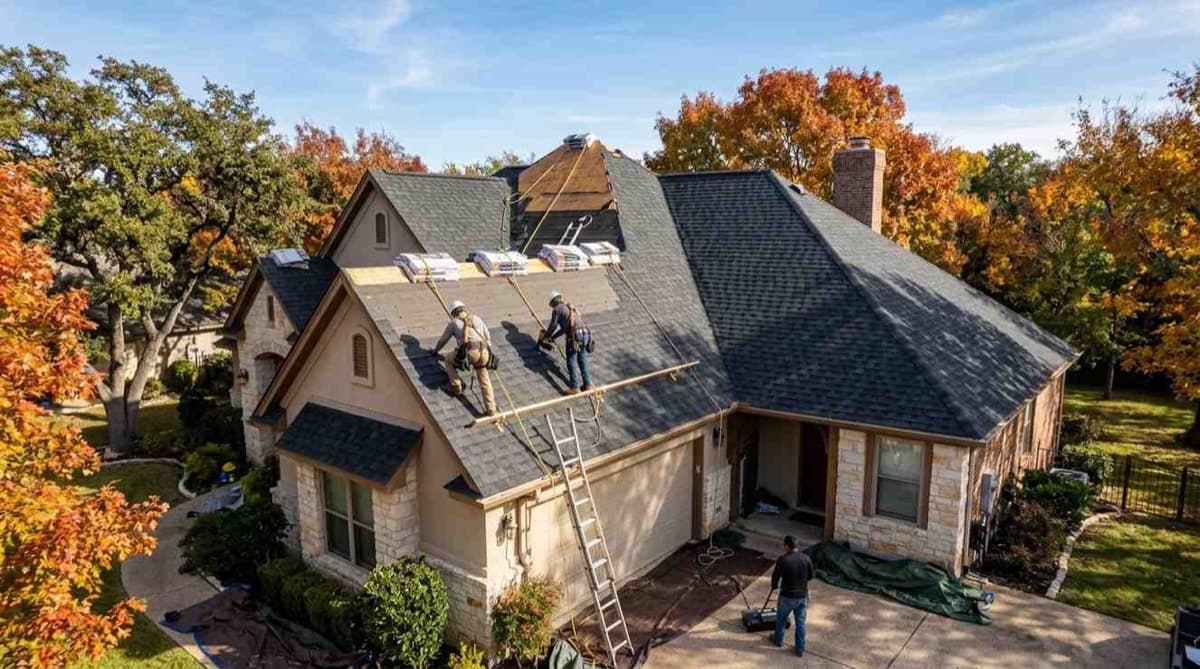
What Is the Best Time of Year to Replace a Roof?
Wondering when to replace your roof? Fall is the industry's top pick, but Austin's climate changes the math. Here's what every homeowner needs to know.
Guide
What Is the 25% Rule for Roofing?
The 25% rule for roofing determines when a repair triggers a full replacement. Learn how it works, how to calculate it, and what it means for Austin homeowners.
Ready for the next step?
Free inspection, real answers, no pressure.