
Blog
Roof Replacement Cost Factors and Pricing Variables
Published 2026-07-03T00:00:00+00:00
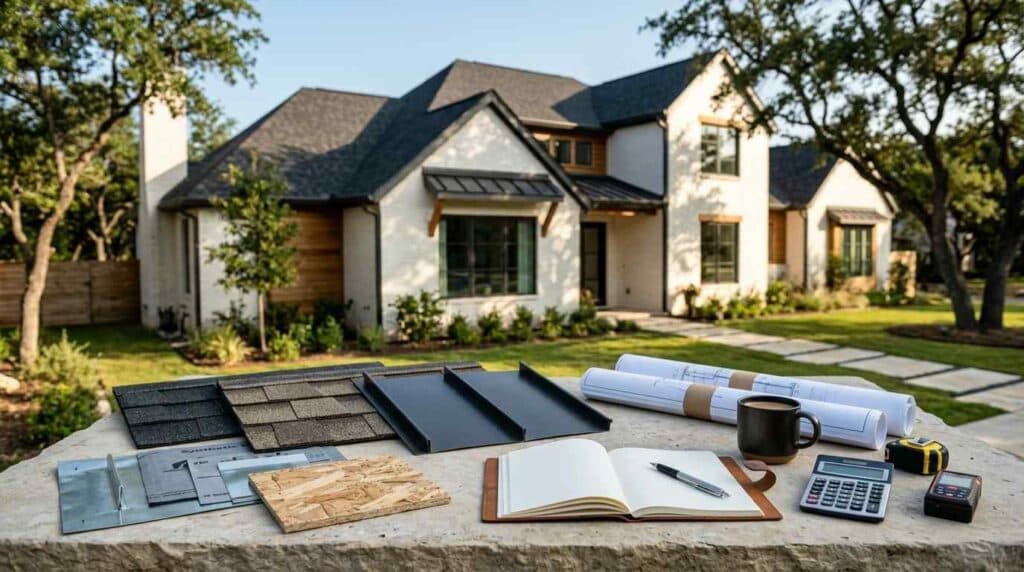
Roof Replacement Cost Factors and Pricing Variables Roof replacement costs in Austin, TX typically range from $8,000 to $25,000 or more, depending on roof size, material choice, labor rates, and structural conditions discovered during installation. Knowing which variables carry the most weight helps you budget accurately and avoid unexpected expenses. Most homeowners begin this process…
Roof replacement costs in Austin, TX typically range from $8,000 to $25,000 or more , depending on roof size, material choice, labor rates, and structural conditions discovered during installation. Knowing which variables carry the most weight helps you budget accurately and avoid unexpected expenses. Most homeowners begin this process without a clear picture of what actually moves the price. Understanding the full range of pricing factors from square footage and pitch to permit fees and decking repairs puts you in a stronger position before the first contractor conversation. This page breaks down every major cost factor, explains how each one affects your final price, and helps you understand what separates a fair estimate from one that leaves money on the table.
Roof replacement pricing is not a single number. It is the sum of several independent variables, each of which can shift your total cost significantly in either direction. The four primary cost drivers are roof size, material selection, labor, and structural complexity. Secondary factors permits, disposal, and existing damage add to the final figure in ways many homeowners do not anticipate. Understanding these variables before you request estimates gives you a framework for evaluating bids accurately and asking the right questions.
Roofing contractors price jobs by the square one roofing square equals 100 square feet of roof surface. A 2,000-square-foot home does not have a 2,000-square-foot roof. The actual roof surface area depends on the pitch, or slope, of the roof. A steeper pitch increases the total surface area and adds labor time because crews work more slowly and require additional safety equipment on steep surfaces. A low-slope roof on a 2,000-square-foot home might measure 22 squares. The same footprint with a steep 10/12 pitch could measure 30 squares or more. That difference in surface area directly multiplies both material and labor costs.
Material choice is one of the largest single variables in replacement pricing. Asphalt architectural shingles the most common residential roofing material in Austin typically cost between $4.50 and $7.00 per square foot installed. Metal roofing systems range from $9.00 to $18.00 per square foot depending on panel type and gauge. Tile and slate systems carry the highest upfront costs but also the longest service lives. Each material carries its own cost profile, lifespan, and performance characteristics our roofing materials comparison breaks down every major option side by side so you can match the right material to your budget and climate.
Labor typically accounts for 40 to 60 percent of a total roof replacement cost. In the Austin market, roofing labor rates have risen steadily alongside broader construction demand. Experienced, licensed roofing crews command higher rates than unlicensed or out-of-market contractors, and that difference in price reflects a meaningful difference in workmanship quality, warranty coverage, and liability protection. A standard asphalt shingle replacement on a single-story home in Austin might carry a labor cost of $2.50 to $4.50 per square foot. Multi-story homes, steep pitches, and complex roof designs push labor costs higher because of increased installation time and safety requirements. Labor pricing varies significantly based on contractor experience, licensing, and local market conditions understanding what to look for when choosing a roofing contractor helps ensure you get fair pricing and quality workmanship. Seasonal timing also affects labor availability and pricing. Austin's storm season typically spring and early summer creates high demand for roofing crews, which can extend project timelines and, in some cases, affect pricing. Scheduling replacements outside peak demand periods can improve both availability and negotiating position.
A simple gable roof with two planes is the least expensive design to replace. Every additional feature valleys, dormers, skylights, chimneys, multiple roof levels, or complex hip configurations adds labor time and material waste. Waste factor, the percentage of material cut away during installation, increases with design complexity and is factored into material estimates by experienced contractors. Single-story homes with accessible rooflines are faster and safer to work on than two-story or three-story structures. Height adds time, equipment requirements, and risk, all of which are reflected in labor pricing.
The decking the plywood or OSB substrate beneath the roofing material is not visible until the old roof is removed. Damaged, rotted, or soft decking must be replaced before new materials are installed. Decking repairs are typically priced per sheet, with each 4×8 sheet of OSB or plywood adding $75 to $150 in material and labor costs depending on current lumber pricing. Underlayment selection also affects cost. Standard felt underlayment is the baseline. Synthetic underlayment offers better moisture resistance and tear strength at a moderate price premium. Self-adhering ice-and-water shield, required in certain areas and around penetrations, carries a higher per-square cost but provides superior protection at vulnerable points.
Roofing permits in Austin are required for full replacements and are pulled by the contractor, not the homeowner. Permit fees vary based on project scope and are typically passed through to the homeowner as a line item in the estimate. Skipping permits is not a cost-saving strategy unpermitted work creates liability issues, can void manufacturer warranties, and may complicate future home sales. Tear-off and disposal of the existing roofing material adds cost that is sometimes underrepresented in initial estimates. Removing one layer of asphalt shingles is standard. Removing two or more layers which is common on older Austin homes requires additional labor and generates more disposal weight, increasing dumpster and landfill fees. Other costs that appear in final invoices but are sometimes absent from initial estimates include flashing replacement around chimneys, skylights, and pipe boots; ridge vent installation or replacement; and drip edge material along eaves and rakes. A thorough estimate from a reputable contractor itemizes all of these components rather than bundling them into a single line.
Not every roofing problem requires a full replacement. The decision between repair and replacement depends on the age of the roof, the extent of damage, the condition of the decking, and the cost relationship between the two options. A general industry guideline holds that when repair costs exceed 30 percent of the replacement cost, replacement typically delivers better long-term value. For Austin homeowners, a roof approaching 20 years of age with recurring leak issues or widespread granule loss is often a stronger candidate for replacement than repair, even when the immediate damage appears localized. A thorough inspection by a qualified contractor reveals whether the underlying system can support additional years of service or whether the visible damage reflects broader deterioration. The decision between repairing and replacing a roof involves more variables than age alone our dedicated page on repair vs. replacement costs walks through the exact thresholds, cost comparisons, and scenarios where each option makes financial sense.
Upfront cost is only one dimension of roofing value. A material that costs more per square foot but lasts 40 years may carry a lower cost per year of service than a less expensive material with a 20-year lifespan. This cost-per-year framework is particularly useful when comparing asphalt shingles to metal roofing or tile systems. In Austin's climate characterized by intense UV exposure, high summer temperatures, and periodic hail events material durability is a meaningful variable. Impact-resistant shingles rated Class 4 by UL 2218 standards may qualify for insurance premium discounts in Texas, partially offsetting their higher upfront cost. Long-term value depends heavily on how long a material actually lasts under real-world conditions our guide to roof lifespan by material provides expected service life ranges, maintenance requirements, and cost-per-year breakdowns for every major roofing type.
Austin's weather patterns including hail storms, high winds, and occasional severe weather events mean that insurance plays a significant role in many roof replacement projects. When storm damage is the trigger for replacement, the homeowner's insurance policy may cover a substantial portion of the cost, subject to the deductible and the policy's actual cash value or replacement cost value provisions. Replacement cost value (RCV) policies pay the full cost to replace the damaged roof with a comparable new system. Actual cash value (ACV) policies depreciate the payout based on the roof's age and condition, which can leave homeowners responsible for a larger out-of-pocket amount on older roofs. Navigating an insurance claim after storm damage adds a layer of complexity to an already stressful situation our roof insurance claims guide explains how the claims process works, what documentation you need, and how to avoid common mistakes that delay payouts. Understanding what drives replacement costs is only one part of the planning process our complete roof replacement guide covers every stage of the project, from choosing a contractor to final inspection, so you can move forward with confidence.
Roof replacement costs are shaped by a combination of measurable variables size, pitch, material, labor, and structural conditions along with secondary factors like permits, disposal, and existing damage. Each variable is knowable before you commit to a project. In Austin's active roofing market, understanding these pricing factors helps you evaluate contractor estimates accurately, ask the right questions, and avoid surprises that inflate your final cost beyond what the project actually requires. At Tarrytown Roofing , we provide detailed, itemized estimates that explain every cost factor clearly so you can make a confident, informed decision about protecting your home and your budget.
Most residential roof replacements in Austin range from $8,000 to $25,000 depending on roof size, material selection, and structural conditions. Larger homes, steeper pitches, and premium materials push costs toward the higher end of that range.
Asphalt architectural shingles are the most cost-effective option for most Austin homeowners, with installed costs typically ranging from $4.50 to $7.00 per square foot. They offer a reliable balance of upfront affordability, durability, and manufacturer warranty coverage.
Yes. A steeper pitch increases the total roof surface area and requires additional labor time and safety equipment. A high-pitch roof on the same home footprint can cost 20 to 40 percent more to replace than a low-slope version of the same structure.
Common costs that are sometimes absent from initial estimates include decking repairs, flashing replacement, ridge vent installation, drip edge material, and disposal fees for multiple shingle layers. A thorough estimate itemizes each of these components separately.
When repair costs exceed approximately 30 percent of the full replacement cost, or when the roof is approaching the end of its expected service life with recurring issues, replacement typically delivers better long-term value than continued repairs.
It depends on the cause of damage and the policy type. Storm damage from hail or wind is typically covered. Replacement cost value policies pay the full replacement amount; actual cash value policies depreciate the payout based on roof age, which can increase out-of-pocket costs on older roofs.
Most residential roof replacements in Austin are completed in one to three days depending on roof size, complexity, and weather conditions. Larger or more complex projects, or those requiring significant decking repairs, may take longer.
Related
Blog
Underlayment Systems for New Roof Installations
Underlayment Systems for New Roof Installations Roofing underlayment is the protective layer installed directly on your roof deck beneath the shingles and choosing the right system is one of the most important decisions in any new roof installation. Most homeowners focus on shingle color or material, but underlayment is what stands between your home and…
Blog
Warranty Coverage for Roof Replacement Materials and Labor
Warranty Coverage for Roof Replacement Materials and Labor Most roof replacement warranties split into two separate coverages: one from the manufacturer protecting the materials, and one from your contractor protecting the installation work. Knowing what each covers, how long each lasts, and what can void them is essential before you sign any roofing contract. When…
Blog
Signs That a Roof Needs Full Replacement Rather Than Repair
Signs That a Roof Needs Full Replacement Rather Than Repair Not every roofing problem can be fixed with a patch. When damage is widespread, structural, or tied to a roof that has simply reached the end of its service life, repairs become a short-term solution to a long-term problem and the costs add up fast….
Ready for the next step?
Free inspection, real answers, no pressure.