
Blog
Permits and Building Code Compliance for New Roof Installation
Published 2026-07-01T00:00:00+00:00
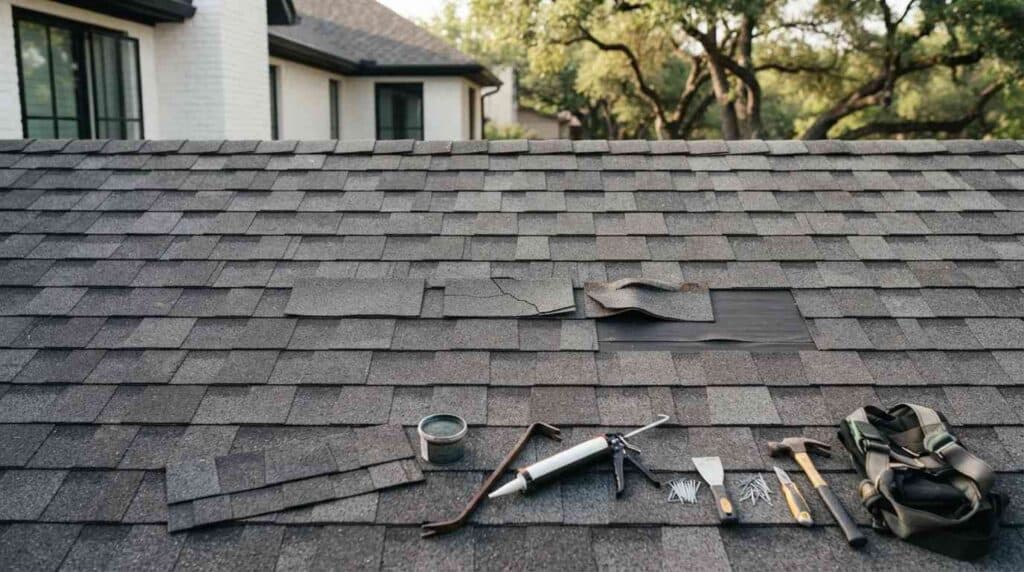
Permits and Building Code Compliance for New Roof Installation Installing a new roof in Austin requires a building permit in most cases, and skipping that step can cost homeowners far more than the permit itself. Permit requirements, inspection checkpoints, and local code standards exist to protect your home's structural integrity, your insurance coverage, and your…
Installing a new roof in Austin requires a building permit in most cases, and skipping that step can cost homeowners far more than the permit itself. Permit requirements, inspection checkpoints, and local code standards exist to protect your home's structural integrity, your insurance coverage, and your ability to sell the property in the future.
Understanding the permit process before work begins helps you avoid costly surprises and ensures your roof is installed to the standards Austin requires. This guide covers everything you need to know.
This page explains permit requirements, Austin building codes, the application process, inspection expectations, and how a licensed contractor manages compliance on your behalf. What Is a Roofing Permit and Why Is It Required in Austin? A roofing permit is an official authorization issued by the City of Austin Development Services Department that allows construction work to proceed on a residential roof. The permit system exists so that a licensed inspector can verify the work meets local building codes before the project is considered complete.
Austin requires permits for roofing work because a roof is a structural component of your home. Improper installation can lead to water intrusion, structural failure, and fire hazards. The permit process creates a documented record that the work was performed correctly and inspected by a qualified official.
Understanding permit requirements starts with knowing what a new roof installation involves, our complete guide to new roof installation in Austin covers every phase of the process, from material selection through final inspection. When Austin Homeowners Are Legally Required to Pull a Permit In Austin, a permit is required any time a roof is being replaced in full, when structural decking is being repaired or replaced, or when the roofing system is being altered in a way that affects its load-bearing capacity or weatherproofing function. Cosmetic repairs such as replacing a small number of shingles on an otherwise intact roof may not require a permit, but the threshold is narrow.
The City of Austin's Development Services Department determines permit requirements based on the scope of work. When in doubt, the safest approach is to confirm with your contractor before work begins. Proceeding without a required permit creates legal and financial exposure that far outweighs the cost of the permit itself. Austin Building Codes That Apply to New Roof Installations Austin adopts the International Residential Code with local amendments, and roofing work must comply with the version currently in effect at the time of permit application. The code governs everything from minimum fastener requirements and underlayment specifications to ventilation standards and fire resistance ratings.
Key code requirements for new roof installations in Austin include minimum two layers of underlayment in certain applications, specific nail patterns for shingle attachment based on wind zone classifications, and attic ventilation ratios that must be maintained or improved during a re-roof. Austin's climate and wind exposure mean that code requirements here are more stringent than in lower-risk regions.
Austin's building code requirements apply across all roofing work, and our roofing services Austin page outlines how Tarrytown Roofing approaches every project in full compliance with local standards. IRC and Local Amendments That Affect Roofing in Austin, TX The International Residential Code Chapter 9 governs roof assemblies and roofing materials for residential construction. Austin's local amendments modify certain provisions to account for regional wind speeds, hail exposure, and energy efficiency requirements under the Texas Energy Code.
One significant local consideration is the requirement for impact-resistant roofing materials in certain insurance contexts, which intersects with code compliance when homeowners are replacing roofs after storm damage. Your contractor should be familiar with both the base IRC requirements and Austin's current local amendments to ensure the installation passes inspection on the first attempt.
For a plain-language breakdown of how these code requirements apply to your specific project, see our guide to IRC Chapter 9 roofing code requirements. How to Apply for a Roofing Permit in Austin, TX Roofing permits in Austin are applied for through the City of Austin's online permitting portal, Austin Build + Connect (AB+C). Most licensed roofing contractors handle the permit application on behalf of the homeowner as part of the project scope, but homeowners can also apply directly if they are performing the work themselves.
The application requires the property address, a description of the scope of work, the contractor's license number if applicable, and the estimated project value. Permit fees are calculated based on the valuation of the work. Processing times vary depending on current application volume, but residential roofing permits are typically issued within a few business days for straightforward replacement projects.
Permit fees are one component of your total project budget, if you are planning a full replacement, our breakdown of roof replacement cost in Austin helps you understand every line item before work begins. Documents and Information Required for Permit Submission To complete a roofing permit application in Austin, you will typically need the following: Property address and legal description Contractor license number and insurance certificate Scope of work description including materials to be used Estimated project value Site plan or roof diagram for complex projects For standard residential re-roofing projects, the documentation requirements are straightforward. More complex projects involving structural changes, additions, or solar integration may require engineered drawings or additional review.
For a detailed breakdown of permit fees and typical processing timelines in Austin, see our guide to Austin roofing permit fees and timeline. What Happens During a Roofing Inspection in Austin?
After the permit is issued and work is underway, the City of Austin requires one or more inspections depending on the scope of the project. For a standard re-roof, the inspection typically occurs after the old roofing material has been removed and the decking is exposed, and again after the new roofing system is fully installed.
The inspector verifies that the decking is in acceptable condition, that underlayment has been installed correctly, that fastener patterns meet code requirements, and that flashing details at penetrations, valleys, and edges are properly executed. The inspector does not evaluate aesthetics, the focus is entirely on code compliance and structural integrity.
A professional roof inspection process before installation gives your contractor a clear picture of structural conditions that inspectors will evaluate during the permit inspection, reducing the likelihood of failed inspections or required corrections. Common Reasons Roofing Inspections Fail in Austin Most inspection failures in Austin come down to a small number of recurring issues. Improper flashing installation around chimneys, skylights, and roof penetrations is the most common reason for a failed inspection. Insufficient fastener density, incorrect underlayment lapping, and inadequate attic ventilation are also frequent findings.
When an inspection fails, the contractor must correct the deficiency and schedule a re-inspection before the permit can be closed. This adds time and cost to the project. Working with an experienced contractor who understands Austin's inspection standards from the outset is the most reliable way to avoid this outcome. Consequences of Installing a Roof Without a Permit in Austin Installing a roof without a required permit in Austin creates several serious problems that can affect homeowners long after the work is complete. The City of Austin can issue a stop-work order, require the roof to be partially or fully removed for inspection, and impose fines for unpermitted construction.
From an insurance standpoint, a roof installed without a permit may not be covered under your homeowner's policy if a claim arises. Insurance companies can deny claims for damage to structures that were not built or modified in compliance with local codes. This exposure is particularly significant in Austin, where hail and wind events regularly generate roofing claims.
The most serious long-term consequence is the impact on your ability to sell the home. Unpermitted work must be disclosed during a real estate transaction, and buyers' lenders may require the work to be permitted retroactively before closing. Retroactive permitting is more expensive and more disruptive than obtaining the permit before work begins. For a full explanation of how an unpermitted roof affects your home sale, see our guide to how an unpermitted roof affects your home sale.
Working with a licensed roofing contractor from the start eliminates permit risk entirely, this guide explains what to look for when choosing a contractor in Austin. How a Licensed Roofing Contractor Handles Permits for You When you hire a licensed roofing contractor in Austin, permit management is part of the service. A reputable contractor will pull the permit before work begins, schedule all required inspections, and ensure the project is closed out with a final inspection approval before considering the job complete.
This matters because the permit is tied to the contractor's license. A contractor who skips the permit process is putting their license at risk, which is a strong signal about how they approach quality and compliance across the entire project. At Tarrytown Roofing, every new roof installation in Austin is permitted, inspected, and closed out in full compliance with City of Austin requirements.
Homeowners should ask to see the permit before work begins and confirm that the final inspection has been completed and approved before making final payment. These two steps protect your investment and ensure the work is documented correctly in the city's records.
For homeowners dealing with storm damage or partial failures, our roof repair Austin page explains how Tarrytown Roofing manages permits for repair work alongside full replacements. Conclusion Roofing permits and building code compliance in Austin are not bureaucratic formalities, they are the documented proof that your roof was installed correctly and inspected by a qualified official. Understanding what is required before work begins protects your home, your insurance coverage, and your investment.
Choosing a contractor who manages the permit process from application through final inspection is one of the most important decisions you make during a roofing project. It eliminates risk and creates a clear record of compliant work.
At Tarrytown Roofing , we handle every permit, every inspection, and every code requirement so you do not have to. Contact us today to get started on your Austin roof installation with full compliance built in from day one. Frequently Asked Questions Do I need a permit to replace my roof in Austin, TX? Yes, a permit is required for full roof replacements in Austin. The City of Austin Development Services Department requires a permit any time the roofing system is being replaced in its entirety or when structural decking is being repaired or altered. How long does it take to get a roofing permit in Austin? Most residential roofing permits in Austin are issued within two to five business days when submitted through the Austin Build + Connect online portal. Complex projects or those requiring additional review may take longer depending on current application volume. Who is responsible for pulling the roofing permit? In most cases, the licensed roofing contractor pulls the permit on behalf of the homeowner. The permit is tied to the contractor's license number. Homeowners performing their own work can also apply directly, but hiring a licensed contractor is strongly recommended. What building code applies to roofs in Austin? Austin follows the International Residential Code with local amendments adopted by the City of Austin. Chapter 9 of the IRC governs roof assemblies and roofing materials, and Austin's local amendments address wind exposure, hail resistance, and energy efficiency requirements specific to the region. Can I sell my home if the roof was installed without a permit? Unpermitted roofing work must be disclosed during a real estate transaction in Texas. Buyers' lenders may require retroactive permitting before closing, which is more expensive and disruptive than obtaining the permit before the original installation. It can also affect your ability to make insurance claims. How much does a roofing permit cost in Austin? Roofing permit fees in Austin are calculated based on the estimated value of the construction work. For a typical residential re-roof, permit fees generally range from $150 to $400, though the exact amount depends on project scope and current fee schedules set by the City of Austin. What does a roofing inspection check for in Austin? A roofing inspection in Austin verifies that decking is structurally sound, underlayment is correctly installed, fastener patterns meet code requirements, and flashing details at penetrations and edges are properly executed. The inspection focuses entirely on code compliance and structural integrity, not aesthetics.
Related

Blog
Underlayment Systems for New Roof Installations
Underlayment Systems for New Roof Installations Roofing underlayment is the protective layer installed directly on your roof deck beneath the shingles and choosing the right system is one of the most important decisions in any new roof installation. Most homeowners focus on shingle color or material, but underlayment is what stands between your home and…
Blog
Warranty Coverage for Roof Replacement Materials and Labor
Warranty Coverage for Roof Replacement Materials and Labor Most roof replacement warranties split into two separate coverages: one from the manufacturer protecting the materials, and one from your contractor protecting the installation work. Knowing what each covers, how long each lasts, and what can void them is essential before you sign any roofing contract. When…
Blog
Signs That a Roof Needs Full Replacement Rather Than Repair
Signs That a Roof Needs Full Replacement Rather Than Repair Not every roofing problem can be fixed with a patch. When damage is widespread, structural, or tied to a roof that has simply reached the end of its service life, repairs become a short-term solution to a long-term problem and the costs add up fast….
Ready for the next step?
Free inspection, real answers, no pressure.