What Are Signs a Roof Needs Replacing?

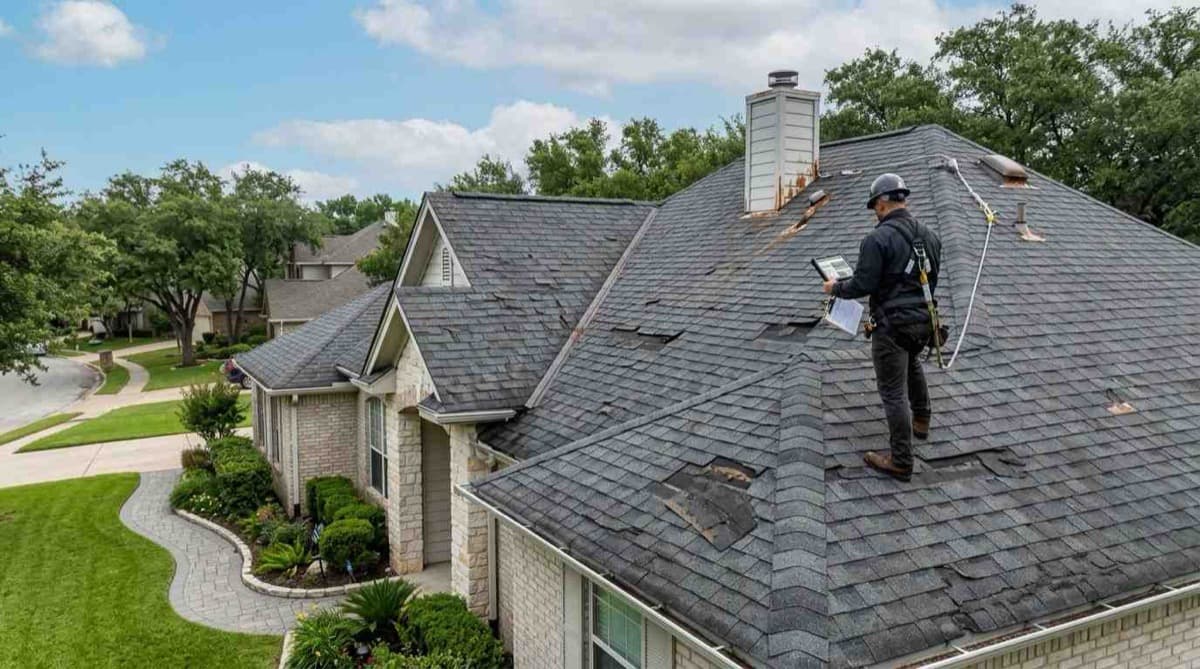
Professional inspection of an aging asphalt shingle roof showing curling shingles, granule loss, missing shingles, and other common signs that a roof may need replacement.The clearest signs a roof needs replacing include missing or curling shingles, a sagging deck, recurring leaks, granule loss, and a roof that’s pushing past its expected lifespan. Most homeowners don’t catch these signals until the damage is already expensive. Knowing what to look for changes that.

A roof doesn’t fail all at once. It sends warnings for months  sometimes years  before the real problems start. Catching those warnings early is the difference between a planned replacement and an emergency.

I’ll walk through every major sign here, from what you can spot from the ground to what your attic is quietly telling you about your roof’s condition.

How Old Is Your Roof? Age Is the First Signal

Age is the most overlooked replacement signal. Homeowners focus on visible damage and miss the fact that a roof past its prime is already failing  just not dramatically yet.

Most roofing warranties and manufacturer specs are built around expected service life. When a roof approaches or exceeds that window, the materials are degrading at an accelerating rate regardless of how it looks from the street.

Asphalt Shingle Lifespan in Austin’s Climate

Standard three-tab asphalt shingles last 15 to 20 years. Architectural shingles push that to 25 to 30 years under normal conditions. Austin’s climate compresses those numbers  the combination of intense summer heat, UV exposure, and periodic severe hail puts more stress on roofing materials than moderate climates do.

According to the Insurance Information Institute, roof age is one of the primary factors insurers use to evaluate coverage and claims. A roof over 20 years old in Central Texas deserves a professional inspection even if it looks intact from the ground.

When Age Alone Justifies a Replacement Conversation

A 25-year-old roof that has survived multiple hail seasons and Texas summers is not the same as a 25-year-old roof in a mild climate. The materials are more brittle, the sealants are dried out, and the granule coating that protects shingles from UV is largely gone.

At that point, the question isn’t whether the roof will fail. It’s when.

Visible Damage You Can See From the Ground

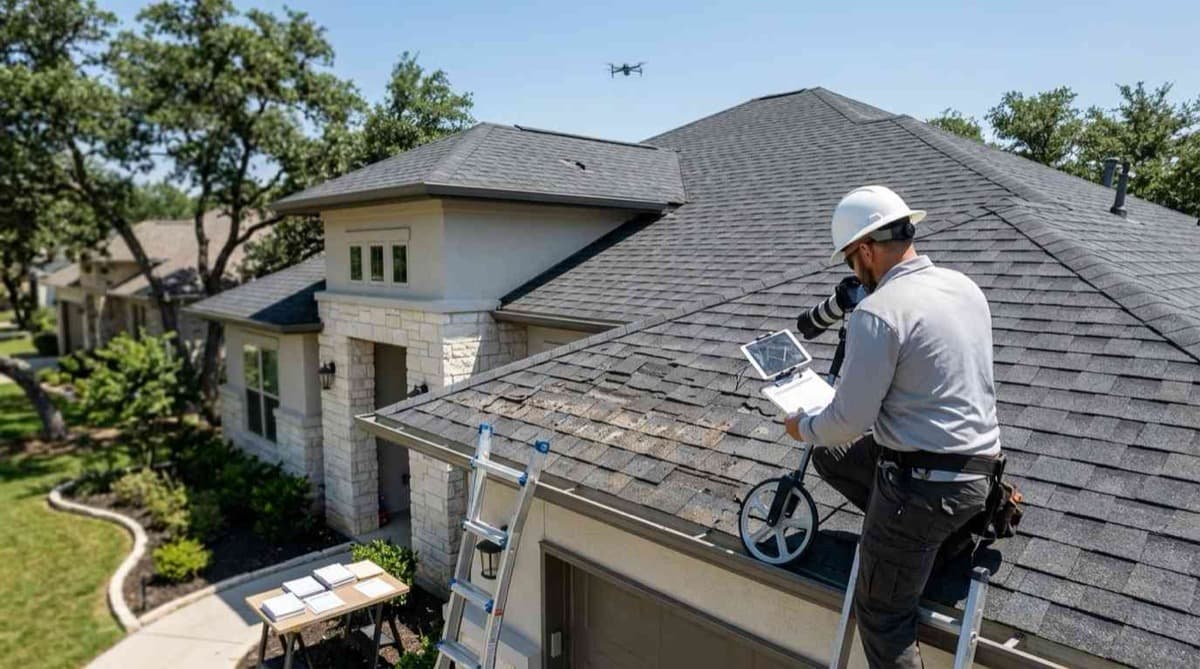
You don’t need to climb on the roof to spot most of the major warning signs. A pair of binoculars and a slow walk around the perimeter of your home tells you a lot.

Look at the shingles, the ridge line, the valleys, and the areas around any penetrations like chimneys or vents. These are the spots where problems show up first.

Missing, Curling, and Cracked Shingles

Missing shingles are the most obvious sign, but curling and cracking are just as serious. Shingles curl in two ways  cupping, where the edges turn upward, and clawing, where the middle lifts while the edges stay flat. Both indicate the shingles have lost their flexibility and are no longer sealing properly.

Cracked shingles are typically wind damage. A few cracked shingles in one area might be repairable. Cracking spread across multiple sections of the roof points to widespread material deterioration that repair work won’t solve long-term.

Granule Loss and What It Means for Your Roof’s Future

Asphalt shingles are coated with granules  the rough, sand-like surface you can feel when you touch one. Those granules protect the asphalt layer underneath from UV radiation. When they wear off, the asphalt degrades rapidly.

You’ll see granule loss as bald patches on the shingles themselves, or as a buildup of granules in your gutters after rain. New roofs shed some granules during the first few months  that’s normal. Heavy granule loss on an older roof is a sign the shingles are near the end of their protective life.

Sagging Roof Deck  the Most Urgent Warning Sign

A sagging roof deck is not a cosmetic issue. It means the structural layer beneath the shingles  the decking  has been compromised by moisture, rot, or prolonged weight stress.

This is the one sign that moves a replacement from “soon” to “now.” A sagging deck left unaddressed risks structural failure, and in severe cases it becomes a safety issue for everyone inside the home.

What’s Happening Inside Your Attic

The attic is where a roof’s condition shows up before it becomes visible from the outside. Most homeowners never check it. That’s a mistake.

A quick inspection with a flashlight  looking at the underside of the roof decking, the insulation, and the rafters  reveals problems that the exterior hides completely.

Daylight Coming Through the Roof Boards

If you can see daylight through the roof boards when you’re standing in a dark attic, water gets through those same gaps. Light and water follow the same paths.

Small gaps around flashing or at the ridge are sometimes repairable. Widespread light penetration across the decking means the roof’s integrity is compromised at a structural level.

Moisture, Mold, and Insulation Damage

Dark staining on the rafters or decking, wet insulation, and visible mold growth are all signs of chronic moisture intrusion. A single leak event can sometimes be traced and repaired. Mold growth and widespread moisture staining indicate the roof has been leaking in multiple places over an extended period.

Wet insulation also loses its R-value, which means your HVAC system works harder and your energy bills climb. The U.S. Department of Energy notes that moisture-damaged insulation can lose up to 40% of its thermal performance  a cost that compounds every month the roof goes unaddressed.

Leaks That Keep Coming Back

A single leak after a major storm is a repair situation. A leak that comes back in the same spot  or new spots  after multiple repair attempts is a different problem entirely.

Recurring leaks mean the underlying issue was never fully resolved. Patching the surface doesn’t fix deteriorated flashing, failed sealants, or decking that’s already absorbed moisture damage.

When Repeated Repairs Signal a Systemic Problem

The rule I use with homeowners is straightforward: if you’ve had the same area repaired twice and it leaks again, the repair is treating a symptom, not the cause. At that point, a full roof inspection is the right next step  not another patch.

Repair costs add up fast. Three or four repair visits over two years often total more than a fraction of a replacement cost, with none of the long-term protection a new roof provides.

Storm Damage and the Austin Weather Factor

Austin sits in a region that sees some of the most active severe weather in the country. Central Texas averages multiple significant hail events per year, and the storms that move through the Hill Country corridor regularly produce wind gusts that stress roofing systems well beyond their design tolerances.

Storm damage doesn’t always look dramatic from the ground. That’s what makes it dangerous  a roof can sustain significant hail or wind damage that isn’t visible without a close inspection, but that damage accelerates deterioration and voids manufacturer warranties.

Hail Damage Signs Specific to Central Texas

Hail damage on asphalt shingles shows up as dark, circular impact marks  bruising that knocks granules loose and dents the asphalt layer beneath. On metal components like flashing and vents, you’ll see visible dents.

The National Weather Service documents Austin’s hail history extensively, and Central Texas consistently ranks among the most hail-active regions in the U.S. After any storm that produced hail larger than a quarter, a professional inspection is worth scheduling before filing an insurance claim.

Wind Damage Patterns After Severe Storms

Wind damage typically shows up at the edges and corners of the roof first  the areas where uplift forces are strongest. Lifted shingles, broken seals along the edges, and missing ridge cap shingles are the most common patterns after high-wind events.

Wind damage that isn’t addressed allows water to get under the shingles during the next rain event, compounding the original damage quickly.

Flashing Failures and Gutter Signals

Flashing  the metal strips that seal the joints around chimneys, skylights, vents, and roof valleys  is one of the most common failure points on an aging roof. It corrodes, pulls away from the surface, and loses its seal long before the shingles around it show obvious wear.

Failed flashing is responsible for a significant percentage of residential roof leaks. It’s also one of the most frequently missed signs during a homeowner’s visual inspection because it requires getting close to the roof surface to evaluate properly.

Granules in the Gutters and What They Tell You

Cleaning your gutters after a rain and finding a heavy accumulation of granules is a direct signal from your roof. A small amount of granule shedding is normal on newer roofs. Heavy, consistent granule buildup in the gutters on a roof that’s more than 10 years old means the shingles are actively degrading.

Check the downspout discharge area after rain as well. Granule accumulation there confirms the gutters are collecting significant runoff from the shingles above.

The Repair vs. Replace Decision

Most homeowners want to repair if they can. That’s a reasonable instinct  replacement is a significant investment. But the repair-vs.-replace calculation isn’t just about the immediate cost. It’s about what you’re buying with each option.

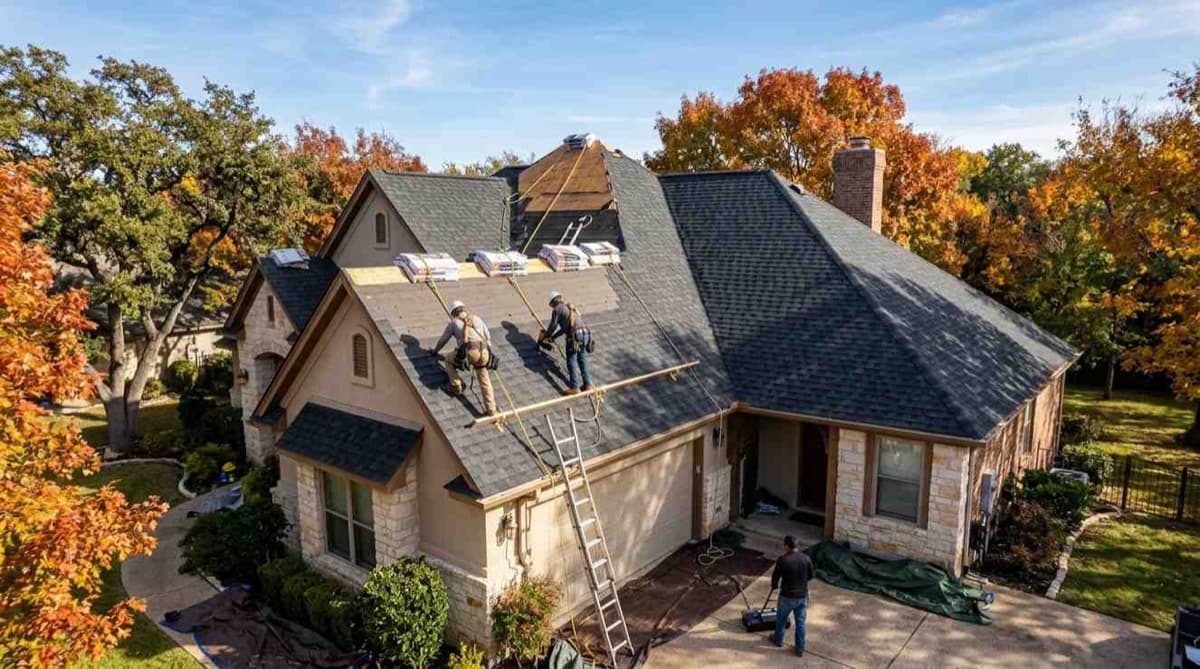
A repair buys time on a specific problem. A replacement buys 25 to 30 years of protection, a manufacturer warranty, and the elimination of every existing failure point on the roof at once.

When the Cost of Repairs Exceeds Replacement Value

The general threshold most roofing professionals use is the 50% rule: if the cost of repairs exceeds 50% of the cost of a full replacement, replacement is the better financial decision. You’re spending half the money for none of the long-term benefit.

Age factors into this calculation heavily. Spending $4,000 on repairs to a 22-year-old roof that has 3 to 5 years of useful life remaining is rarely the right call. That same $4,000 applied toward a roof replacement cost estimate gives you a clear picture of what full protection actually costs  and most homeowners find the gap is smaller than they expected.

Conclusion

The signs a roof needs replacing range from obvious  a sagging deck, missing shingles, active leaks  to subtle, like granule loss and attic moisture that builds quietly over years. Age, storm history, and repeated repair cycles all factor into the decision.

Catching these signals early gives you options. Waiting until the damage is severe takes those options away and turns a planned project into an emergency.

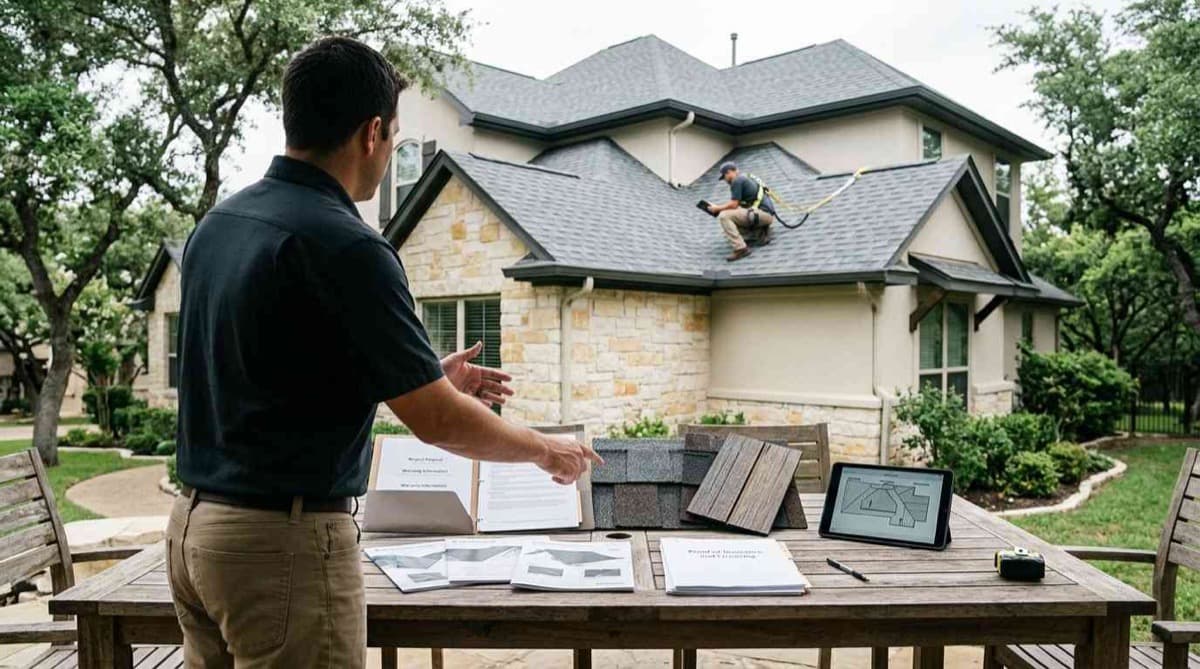
We’re here to help Austin homeowners make that call with confidence. Contact Tarrytown Roofing for a professional roof inspection and an honest assessment of where your roof stands.

Frequently Asked Questions

How do I know if my roof needs replacing or just repairing?

The key factors are age, the extent of damage, and repair history. A roof under 15 years old with isolated damage is usually a repair candidate. A roof over 20 years old with recurring leaks or widespread shingle deterioration is typically a replacement situation.

What is the average lifespan of a roof in Austin, TX?

Asphalt shingles in Austin typically last 15 to 25 years depending on the material grade. Austin’s heat, UV exposure, and hail activity shorten that lifespan compared to milder climates. Architectural shingles perform better here than standard three-tab shingles.

Can I replace my roof after storm damage in Texas?

Yes. Most homeowner’s insurance policies in Texas cover storm-related roof damage. After a significant hail or wind event, schedule a professional inspection before filing a claim. Documentation from a licensed roofer strengthens the claim and ensures the full scope of damage is captured.

What does granule loss on shingles mean?

Granule loss means the protective coating on your shingles is wearing away. Those granules shield the asphalt layer from UV radiation. Heavy granule loss accelerates shingle deterioration and is a reliable indicator that the roof is approaching the end of its service life.

How much does a roof replacement cost in Austin?

Roof replacement costs in Austin vary based on roof size, pitch, material choice, and the extent of any decking damage. Most residential replacements fall in the range of $8,000 to $20,000 or more for larger or more complex roofs. A professional estimate gives you an accurate number for your specific home.

What happens if I wait too long to replace my roof?

Delaying a needed replacement allows water intrusion to damage the decking, insulation, rafters, and interior ceilings. What starts as a roofing problem becomes a structural and mold remediation problem. The total repair cost grows significantly the longer the replacement is postponed.

WHY WAIT! GET A FREE ESTIMATE & CONSULTATION