What Roof Never Leaks?
The answer to the riddle is your mouth the “roof” of your mouth never leaks. But if you’re a homeowner asking this question seriously, you’re really asking something more important: which roofing materials hold up the longest without letting water in?
That question has a real answer, and it matters more than most people realize before a leak shows up on their ceiling.
I’ll walk you through the most leak-resistant materials available, why every roof eventually fails, and what Austin homeowners can do right now to stay ahead of it.
The Riddle Answer And Why It Actually Matters for Homeowners
The classic riddle answer is your mouth. The roof of your mouth never leaks because it isn’t exposed to rain, UV rays, hail, or decades of thermal expansion.
Real roofs don’t get that luxury. Every roofing system faces constant environmental stress, and the gap between a roof that lasts 15 years and one that lasts 50 comes down to material quality, installation precision, and maintenance.
So when homeowners ask what roof never leaks, what they’re really asking is: what’s the closest thing to a permanent, worry-free roof? That’s the question worth answering.
Roofing Materials That Come Closest to Never Leaking
No roofing material is truly leak-proof forever. But some come remarkably close when installed correctly and maintained properly.
Metal Roofing
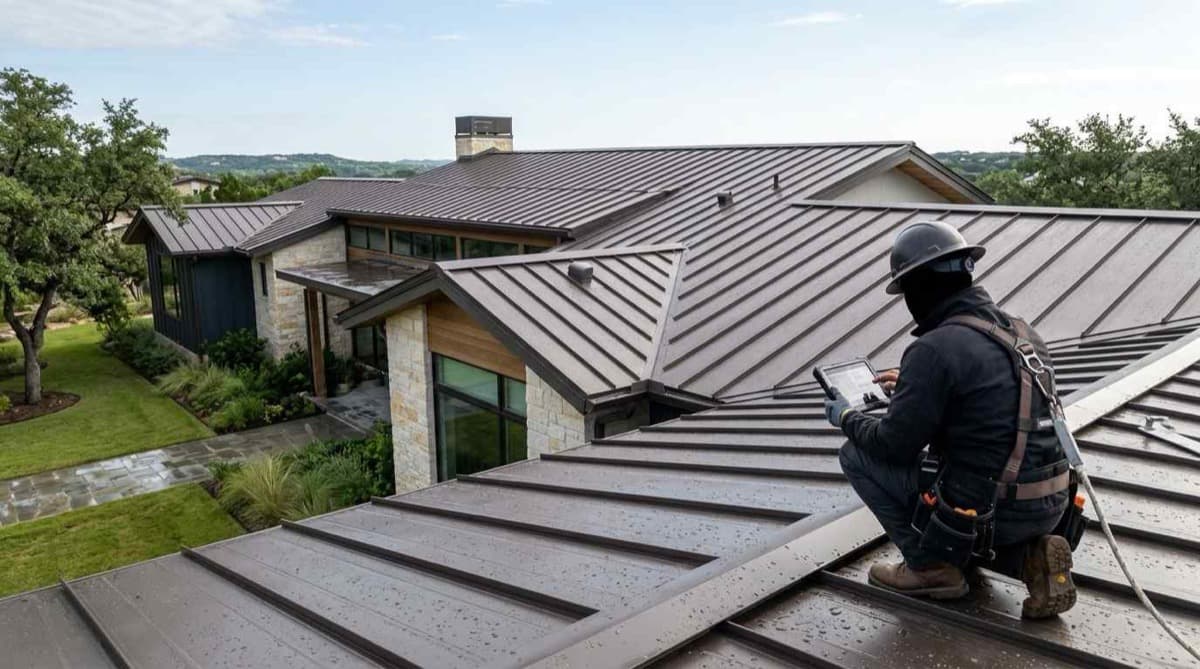
Metal roofing particularly standing seam metal is the gold standard for leak resistance among residential roofing systems. The panels interlock along raised seams, which means there are no exposed fasteners for water to penetrate.
A properly installed metal roof carries a lifespan of 40 to 70 years. In Austin’s climate, where hail and intense UV exposure are both real threats, metal holds up better than almost any alternative.
Slate Roofing
Natural slate is one of the oldest roofing materials in existence, and it earns that reputation. Slate is naturally waterproof, fire-resistant, and dense enough to shed water cleanly without absorbing it.
A slate roof installed correctly lasts 75 to 150 years. The trade-off is weight your home’s structure needs to support it and the upfront cost is significantly higher than other materials.
TPO and PVC Membrane Roofing (Flat Roofs)
For flat or low-slope roofs, TPO (thermoplastic polyolefin) and PVC membranes are the most leak-resistant options available. These single-ply membranes are heat-welded at the seams, creating a continuous waterproof barrier with no gaps.
They’re common on commercial buildings but increasingly used on residential flat roofs in Texas. Both materials handle UV exposure well, which matters in Austin’s sun-heavy climate.
Asphalt Architectural Shingles (Properly Installed)
Architectural shingles also called dimensional shingles are the most common residential roofing material in the country, and they perform well when installed correctly. They’re thicker and more durable than three-tab shingles, with better wind and impact resistance.
The key phrase is “properly installed.” Asphalt shingles installed with incorrect nail placement, inadequate underlayment, or poor flashing work will leak regardless of their quality rating. Installation quality matters as much as the material itself.
Why Every Real Roof Eventually Leaks And What Causes It
Even the best roofing materials fail eventually. Understanding why helps you catch problems before they become expensive.
Flashing Failures
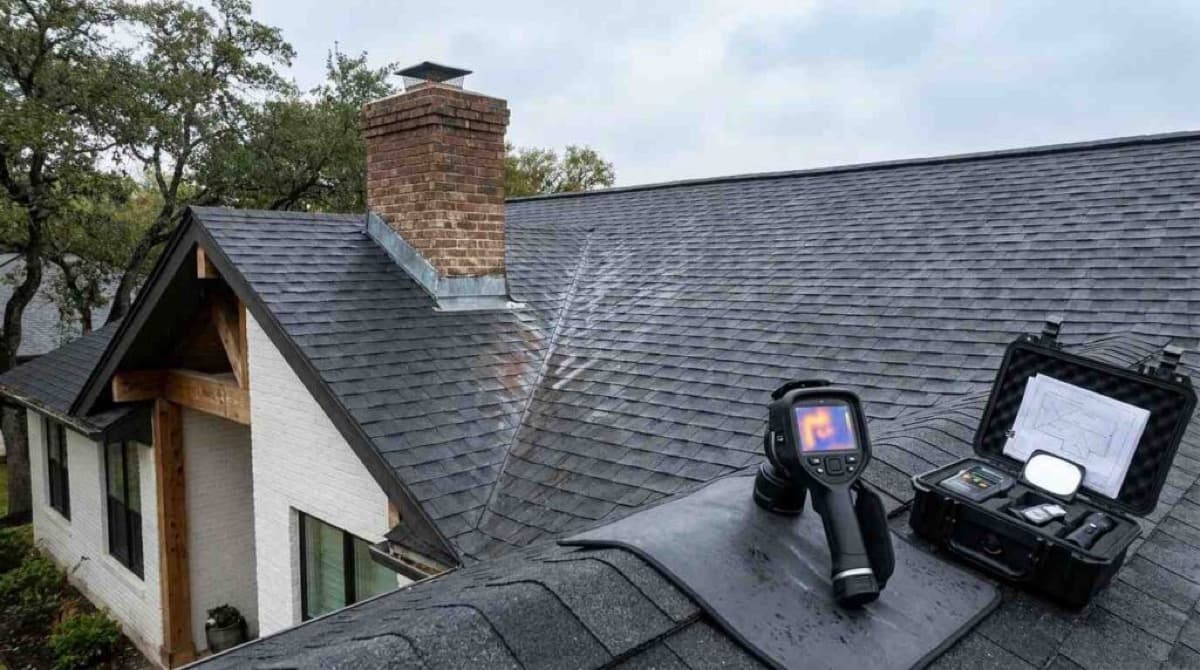
Flashing is the metal material installed around chimneys, skylights, vents, and roof valleys anywhere two surfaces meet. It’s the most common source of roof leaks, and it’s often the first thing to fail.
Step flashing, valley flashing, and chimney flashing all require precise installation and periodic inspection. When flashing lifts, corrodes, or separates, water finds its way in fast.
Improper Installation
A high-quality material installed poorly performs worse than a mid-grade material installed correctly. Nail placement too high on a shingle, missing underlayment at the eaves, or improperly sealed penetrations all create leak pathways that show up months or years later.
This is why contractor selection matters as much as material selection. The installation is the roof.
Age and Material Degradation
Every roofing material has a lifespan, and Austin’s climate accelerates the aging process. Intense UV exposure breaks down asphalt shingles faster than in cooler climates granule loss, cracking, and curling all signal a roof approaching the end of its service life.
Thermal expansion from extreme heat cycles also stresses fasteners and seams over time. A roof that looked fine at 15 years can deteriorate quickly between years 18 and 22.
How to Get as Close to a Leak-Proof Roof as Possible in Austin, TX
Austin’s climate creates specific roofing challenges that homeowners in other regions don’t face at the same intensity. Getting ahead of leaks here requires matching your material to the environment and investing in professional work from the start.
Choose the Right Material for the Texas Climate
Metal roofing and high-impact-rated architectural shingles are the two strongest choices for Austin homeowners. Metal handles UV exposure and hail better than any other residential option. Impact-resistant shingles rated Class 3 or Class 4 are specifically designed to withstand the hail events that hit Central Texas regularly.
Flat roof sections benefit most from TPO or PVC membranes, which resist UV degradation and thermal movement better than older built-up roofing systems.
Prioritize Professional Installation and Regular Inspections
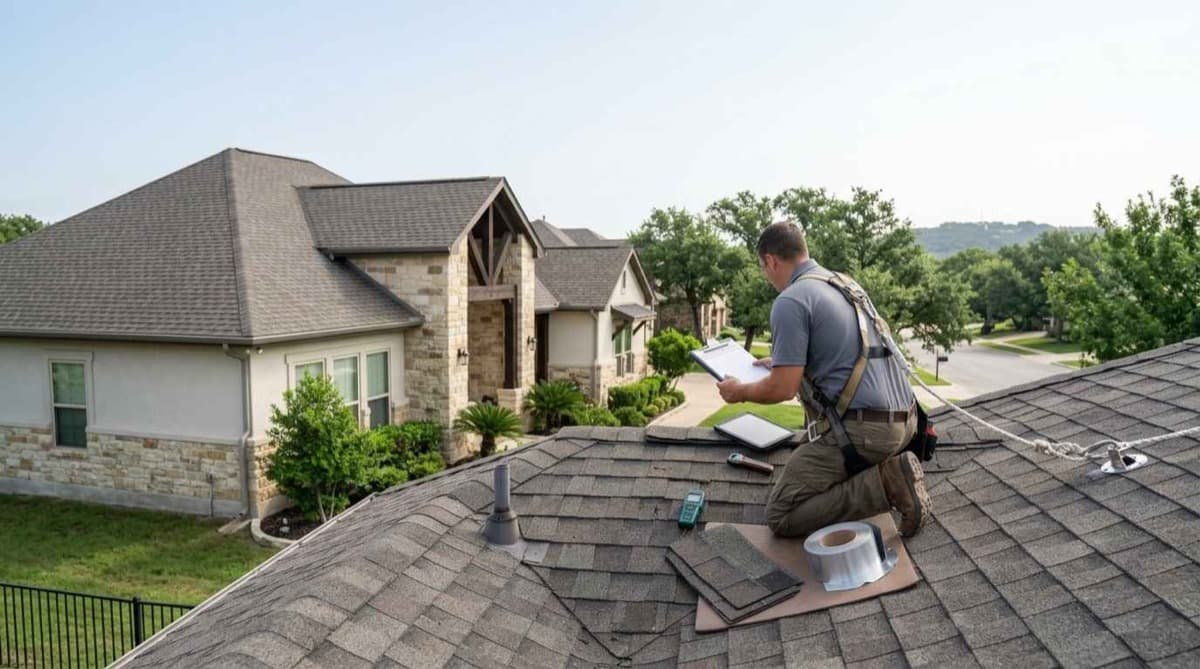
The single most effective thing an Austin homeowner can do to prevent leaks is hire a licensed, experienced roofing contractor for both installation and ongoing roof inspections. A professional inspection catches flashing issues, granule loss, and minor damage before they become interior water damage.
We recommend inspections at least once a year and immediately after any significant hail event. Catching a $300 flashing repair before it becomes a $4,000 interior repair is exactly what regular maintenance is designed to do.
Signs Your Roof Is About to Leak (Before It Does)
Catching a leak before it happens saves thousands of dollars and weeks of stress. These are the warning signs that tell you a roof is failing before water appears on your ceiling.
Granules in your gutters. Asphalt shingles shed granules as they age. A sudden increase in granule buildup in your gutters means the shingles are breaking down and losing their protective coating.
Water stains on interior ceilings or walls. A stain doesn’t always mean an active leak but it always means water got in at some point. Track it down before it happens again.
Missing, cracked, or curling shingles. Any shingle that isn’t lying flat and intact is an open door for water. Wind damage, age, and improper installation all cause shingles to fail.
Sagging roof deck sections. A sagging area means the decking beneath the shingles has absorbed moisture. This is a structural issue that needs immediate attention.
Daylight visible in the attic. If light comes through your attic during the day, water can come through the same gaps at night.
Frequently Asked Questions
What is the most leak-resistant roofing material?
Standing seam metal roofing is the most leak-resistant residential roofing material available. Its interlocking panel design eliminates exposed fasteners, and it carries a lifespan of 40 to 70 years with minimal maintenance required.
How long does a metal roof last without leaking?
A properly installed metal roof typically lasts 40 to 70 years. With routine inspections and minor maintenance primarily around penetrations and fasteners most metal roofs go decades without a single leak.
Does a new roof guarantee no leaks?
A new roof does not guarantee zero leaks. Installation quality, flashing work, and material selection all affect performance. A new roof installed by an inexperienced contractor can leak within the first year, while a well-installed roof lasts decades without issues.
What causes most roof leaks in Austin, TX?
Flashing failures and hail damage are the two leading causes of roof leaks in Austin. The city’s intense UV exposure also accelerates shingle degradation, which creates leak vulnerabilities faster than in cooler climates.
How often should I have my roof inspected to prevent leaks?
I recommend a professional roof inspection at least once per year, plus an additional inspection after any significant hail or wind event. Annual inspections catch small problems loose flashing, cracked shingles, compromised sealant before they become interior water damage.
Conclusion
The riddle answer is your mouth, but the real answer for homeowners is that no roof lasts forever without attention. Metal, slate, and quality membrane systems come closest to leak-proof performance.
Material choice and installation quality are the two variables that separate a roof that lasts 20 years from one that lasts 60. Austin’s climate makes both decisions more consequential than in most markets.
We’re here to help you make the right call. Contact Tarrytown Roofing today for a professional roof inspection and honest guidance on the best roofing solution for your home and budget.