When Should You NOT Replace a Roof?

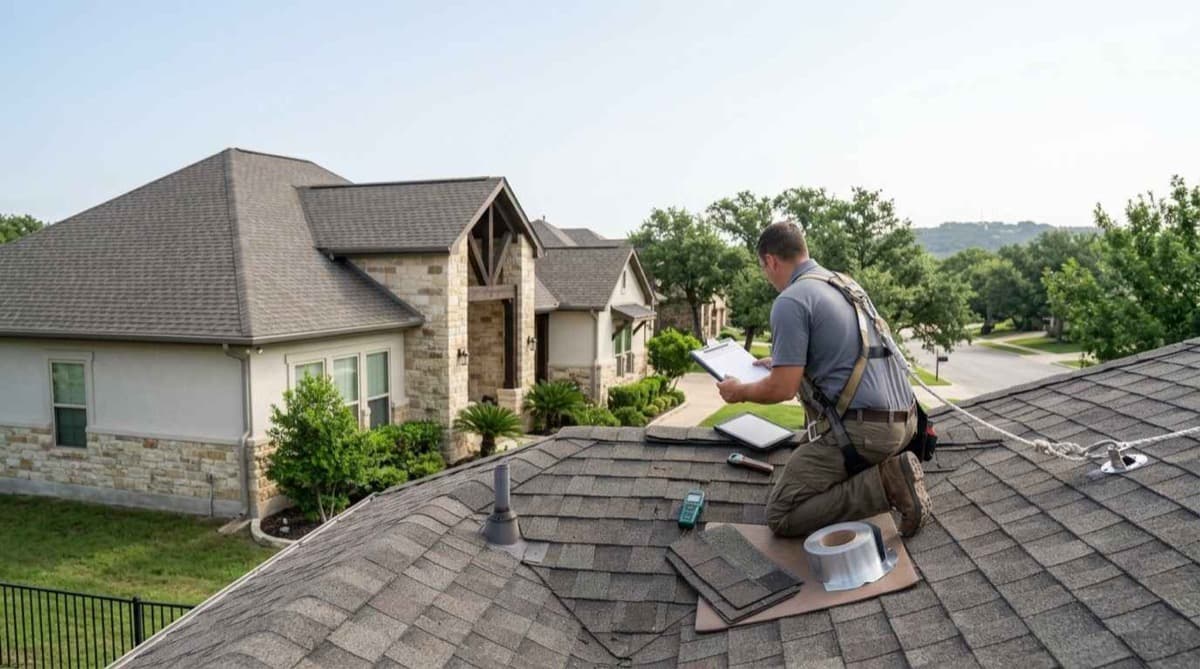
Professional inspection of a well-maintained asphalt shingle roof at an Austin home, illustrating when roof repairs and maintenance are more appropriate than a full roof replacement.Replacing a roof when you don’t need to is one of the most expensive mistakes a homeowner can make. In many cases, a targeted repair, a maintenance plan, or simply waiting on a roof that’s still doing its job is the right call. Knowing the difference saves you thousands.

Roof replacement is a major investment, and the pressure to act fast  from contractors, storm chasers, or a neighbor’s recent project  can push homeowners into decisions they’ll regret.

This guide walks through the specific situations where replacement is NOT the answer, what to do instead, and the one set of conditions that overrides everything.

Your Roof Is Old But Still Performing

Age alone is not a reason to replace a roof. I see homeowners every week who assume a 20-year-old roof is automatically due for replacement. That’s not how roofing works.

A roof’s job is to keep water out, protect the structure beneath it, and hold up under the weather conditions it faces. If it’s doing all three, it’s doing its job.

The question isn’t how old the roof is. The question is whether it’s still performing.

What “Still Performing” Actually Means

A roof is still performing when there are no active leaks, the flashing around chimneys and vents is intact, the decking underneath shows no signs of rot or soft spots, and the attic stays dry after heavy rain.

Granule loss on asphalt shingles is normal over time. Some curling at the edges of older shingles doesn’t automatically mean failure. A professional roof inspection gives you the clearest picture of where things actually stand.

If the inspection comes back with no structural concerns and no active water intrusion, you have a roof that’s still working. Replacing it now is replacing something that isn’t broken.

The Damage Is Minor and Localized

A few missing shingles after a storm. A small section of flashing that’s pulled away from a chimney. One area where a branch came down and cracked a couple of shingles. These are repair scenarios, not replacement scenarios.

Localized damage means the problem is contained to a specific area of the roof. The rest of the system is intact and functioning. Replacing the entire roof to address a problem that covers 5% of the surface makes no financial sense.

This is one of the most common situations where I tell homeowners to stop, take a breath, and get a repair estimate before anyone starts talking about a full replacement.

Repairs That Cost a Fraction of Replacement

A typical roof repair in Austin, TX runs between $300 and $1,500 depending on the scope of work. A full roof replacement on an average Austin home runs $8,000 to $20,000 or more depending on size, pitch, and materials.

Those numbers tell the story. When the damage is minor and localized, a repair addresses the problem completely at a fraction of the cost. The National Roofing Contractors Association consistently notes that proactive repair extends roof life and defers replacement costs significantly.

Get the repair done right, document it, and move on.

Your Roof Has Significant Remaining Lifespan

Material matters here. Asphalt shingles typically last 20 to 30 years. Architectural shingles push toward the higher end of that range. Metal roofing lasts 40 to 70 years. Tile can last 50 years or more.

If your roof was installed 12 years ago with quality architectural shingles and it’s in good condition, you likely have 10 to 18 years of service life remaining. Replacing it now means throwing away a decade or more of value.

The Insurance Institute for Business & Home Safety publishes material-specific guidance on roofing performance and lifespan that’s worth reviewing if you’re trying to benchmark your roof’s expected remaining life.

How to Estimate What’s Left

Start with the installation date and the material type. Pull the original permit or ask the previous owner if you don’t have records. A roofing contractor can often identify the approximate installation era from the shingle style and wear patterns.

From there, a professional inspection tells you whether the roof is aging normally or showing accelerated wear from poor ventilation, inadequate attic insulation, or previous storm damage that wasn’t properly repaired.

Normal aging with significant lifespan remaining is not a replacement trigger. It’s a maintenance and monitoring situation.

You’re Planning to Sell  But the Numbers Don’t Add Up

This one surprises a lot of homeowners. The assumption is that a new roof adds value and makes the home easier to sell. Sometimes that’s true. Often, it isn’t.

Replacing a roof before listing a home costs you the full replacement price upfront. The Remodeling Magazine Cost vs. Value Report consistently shows that roof replacement recoups roughly 60% to 68% of its cost at resale. That means you spend $15,000 and recover around $9,000 to $10,000 in added value.

That’s a significant loss before you’ve even listed the home.

ROI Reality for Pre-Sale Roof Replacement

There are situations where replacement before sale makes sense  when the roof is genuinely at end of life, when a buyer’s inspection will flag it as a major issue, or when the lender requires it for financing approval.

But if the roof has years of life remaining and no active problems, a seller concession or a price adjustment is almost always the smarter financial move. Buyers negotiate. A $2,000 credit toward future roof maintenance is far less expensive than a $15,000 replacement you’ll never fully recoup.

Talk to your real estate agent and get a roofing inspection report in hand before making this call.

A Repair Will Solve the Problem Completely

Some roof problems are genuinely solved by repair. A single leak traced to a failed pipe boot flashing. A section of ridge cap that’s come loose. A valley where the sealant has cracked and separated.

These are defined, addressable problems. A qualified contractor identifies the source, fixes it properly, and the roof performs as it should. There’s no reason to replace a roof when a repair resolves the issue completely and durably.

The key word is completely. A repair that buys you six months before the same problem returns isn’t a solution  it’s a delay. But a repair that addresses the root cause and comes with a workmanship warranty is a legitimate fix.

When a Patch Is the Right Call

A patch is the right call when the damage is isolated to one section or slope, the surrounding materials are in good condition, the repair can be matched reasonably well to the existing roof, and the fix addresses the actual source of the problem rather than just the symptom.

I’ve repaired roofs that went on to perform well for another 10 years after a targeted patch. The repair-versus-replace decision comes down to scope, condition, and honest assessment  not a default toward the more expensive option.

Your Budget Doesn’t Support Replacement Right Now

Roof replacement is a significant financial commitment. Not every homeowner is in a position to spend $10,000 to $20,000 right now, and that’s a real-world constraint that deserves a real-world answer.

If the roof has no active leaks, no structural compromise, and no immediate safety concerns, a strategic maintenance plan buys time. This isn’t ignoring the problem  it’s managing it responsibly until replacement becomes financially feasible.

The worst outcome is deferring maintenance entirely and allowing minor issues to become major ones. Water intrusion that goes unaddressed leads to decking rot, mold, and interior damage that costs far more than the roof replacement itself.

Buying Time Strategically With Maintenance

Annual professional inspections catch small problems before they grow. Keeping gutters clean prevents water backup under the eaves. Applying a quality roof sealant to vulnerable areas  around flashings, pipe boots, and valleys  extends the waterproofing life of an aging roof.

These aren’t permanent solutions. They’re responsible interim steps that protect the home while you plan for replacement. A roofing contractor who gives you an honest maintenance plan rather than pushing immediate replacement is one worth trusting.

Signs That Override Everything  When You DO Need Replacement Regardless

Everything above assumes the roof is fundamentally sound. There are conditions that change the calculation entirely.

Sagging or soft spots in the decking mean the structural substrate has failed  repair won’t fix that. Widespread shingle failure across multiple slopes means the system has reached end of life. Active mold or rot in the attic tied to roof failure is a health and structural issue that demands immediate action.

If your insurance adjuster has documented storm damage that meets the threshold for a full replacement claim, that’s a different conversation  one where replacement is both necessary and covered. And if a roof has been repaired repeatedly in the same areas without lasting results, the underlying system has failed and replacement is the only durable answer.

Knowing when NOT to replace a roof matters. Knowing when you absolutely must is equally important.

Conclusion

Most homeowners face the replace-or-repair decision without a clear framework, and that uncertainty costs them money. Age, minor damage, remaining lifespan, pre-sale timing, repair scope, and budget constraints are all legitimate reasons to hold off on replacement.

The goal is always to make the decision that protects your home and your investment  not the one that’s easiest to sell. A roof that’s still performing deserves a repair, not a replacement.

We help Austin homeowners make that call with confidence. Contact Tarrytown Roofing for an honest inspection and a straight answer about what your roof actually needs.

Frequently Asked Questions

How do I know if my roof needs repair or replacement?

A professional inspection is the most reliable way to find out. I look at the decking condition, shingle wear, flashing integrity, and attic moisture  those four factors together tell the real story.

Can a 20-year-old roof be repaired instead of replaced?

Yes, in many cases. Age alone doesn’t determine the answer. A 20-year-old roof in good structural condition with no active leaks and significant remaining lifespan is a repair candidate, not an automatic replacement.

What is the average cost of roof repair vs. replacement in Austin, TX?

Roof repairs in Austin typically run $300 to $1,500 for localized work. Full replacements range from $8,000 to $20,000 or more depending on size, pitch, and materials. The gap between those numbers is why repair is often the smarter first step.

Does a leaking roof always mean I need a new roof?

No. Most leaks trace back to a specific failure point  a cracked flashing, a failed pipe boot, or a small section of damaged shingles. A targeted repair addresses the source completely in the majority of cases.

How long can I delay roof replacement with repairs and maintenance?

It depends on the roof’s current condition and material type. With annual inspections, proactive repairs, and basic maintenance, a roof in reasonable condition can often be extended by several years. There’s no universal number  an honest inspection gives you the clearest timeline.

WHY WAIT! GET A FREE ESTIMATE & CONSULTATION